Science
Bottom-up permafrost thaw, primed by a 1995 wildfire, drove two of Canada’s largest recent landslides, N.W.T. study finds
Researchers call the 2017 and 2018 failures on the Johnson and Redstone rivers ‘permafrost detachment slides’ and say hundreds of similar landslides have been found in warm, thin permafrost in the Mackenzie Valley.
Published: October 12, 2026 · Updated: October 12, 2026 · 4 min read
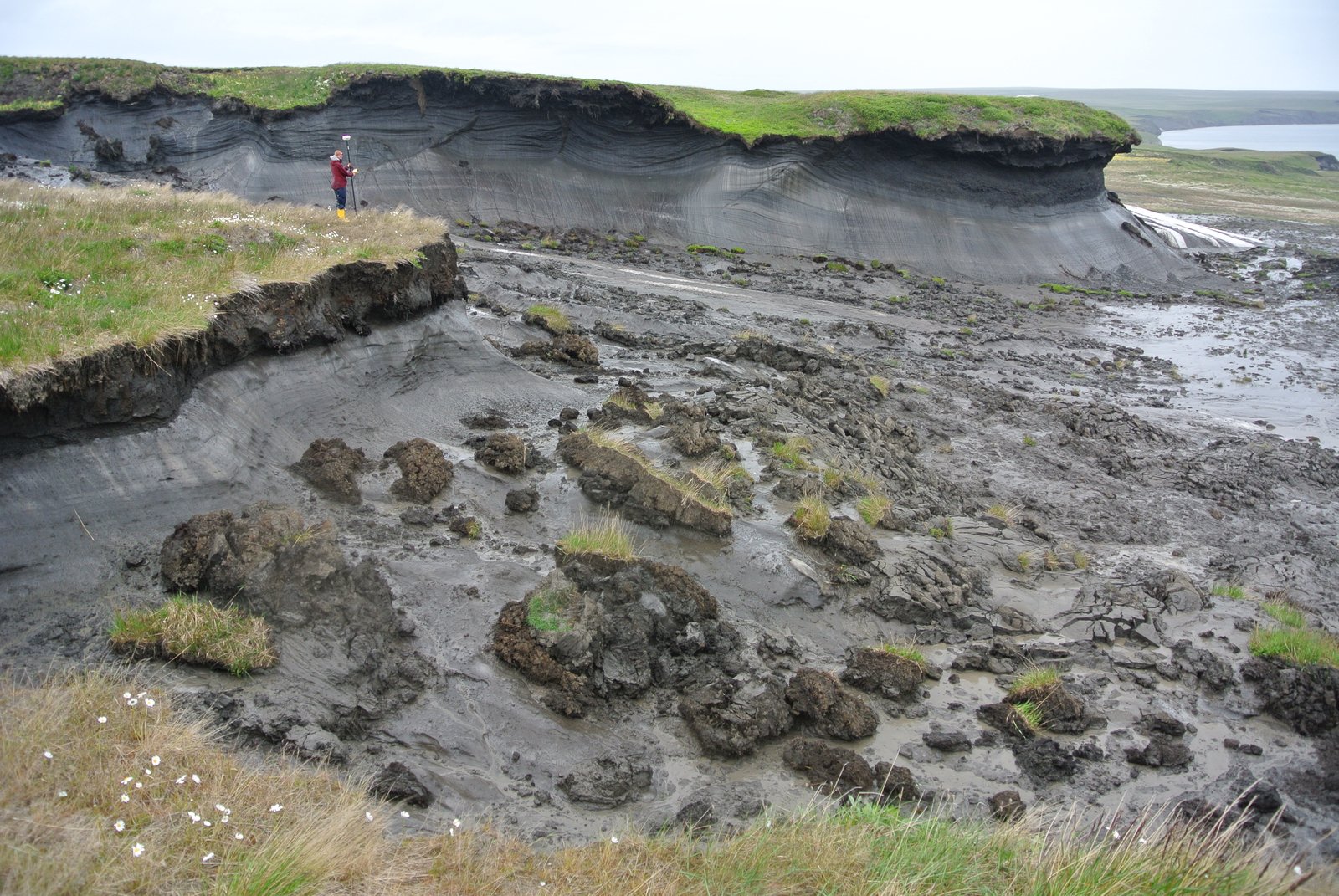
Two massive landslides in the central Mackenzie Valley of the Northwest Territories in 2017 and 2018 were caused by permafrost thawing from the bottom up rather than the top down, according to a study in Geophysical Research Letters. The researchers, from the University of Alberta, the Northwest Territories Geological Survey, Carleton University, the University of Calgary and the Northwest Territories Centre for Geomatics, call the events “permafrost detachment slides” and say they differ fundamentally from traditional permafrost mass wasting. The paper was first published on Sept. 23, and CBC News reported on the findings on Monday.
The slides happened on the Johnson River in August 2017 and the Redstone River in August 2018. The Redstone River landslide moved an estimated 4.5 million cubic metres of ground into the river basin, CBC reported, while the Johnson River slide moved about four times as much, roughly 18 million cubic metres, which CBC said is enough to fill about 7,200 Olympic swimming pools. The study describes the two as among the largest contemporary permafrost failures in Canada, and says their debris dammed downstream drainage, creating lakes 1.1 and 3.5 kilometres long.
“Typically in permafrost regions, failure occurs from the top down,” lead author Joseph Young, who did the research as a PhD student at the University of Alberta, told CBC. Warming air temperatures and more precipitation thaw permafrost near the surface, producing landslides that grow over decades, he said. Detachment slides, by contrast, fail about 20 metres down. “Instead of this progressive enlargement from the surface down, you have a very rapid and abrupt failure from the bottom up,” Young said. The paper says the entire frozen layer detaches and slides downslope as large cohesive blocks.
“They can move the amount of material, which would take standard ways of permafrost failure a few decades to reach, in a matter of days in some cases,” Young told CBC. The study offers a comparison: one of the largest recorded thaw slumps on the Peel Plateau, N.W.T., took six decades to reach a scar-zone volume of about 4.1 million cubic metres, while the Redstone River failure reached a similar magnitude within days.
Wildfire set off the chain of events, the researchers say. “In 1995 this area burned quite severely,” Young said. Co-author Steve Kokelj of the Northwest Territories Geological Survey told CBC the fires wiped out organic material, which immediately affected the top layer of permafrost. “About 15 to 20 years after the fire, all of these larger disturbances start to occur within these old burn areas,” Kokelj said. “That’s about the time it takes for that to permeate 20 metres into the ground.” The paper says thermal modelling shows fire-induced effects can cause thawing at the base of the permafrost over decades, and that climate warming and wildfire work together to drive heat to depth.
The researchers say there are warning signs. “That’s kind of the silver lining,” Young told CBC. “It doesn’t just happen overnight, it kind of happens in a more progressive manner over the course of about 20 years after a fire where you get a slow downslope movement of these slopes.” According to the paper, early signs include gradual downslope movement, tension cracks and surface ponding that let water seep in and speed up thaw at depth. The Johnson River slide failed after more than a decade of precursor movement of 10 to 30 metres a year, the study says.
The two slides are not isolated cases. The authors say hundreds of similar failures have been identified across the Northwest Territories in areas where permafrost is warm, above −1 C, and thin, less than 40 metres, and that satellite imagery shows deep-seated permafrost landslides intensified from 2004 to 2020 in the once thaw-stable central Mackenzie Valley. They warn that such slides could increase hazards, including flooding from debris-dammed lakes. When the Johnson River slide first drew attention in 2018, Kokelj told CBC that “there is of course the potential for that dam to breach and then a flush of water to go downslope.”
Eric McLeod, who flew over the Johnson River slide several times a year until about 2021, told CBC the landscape had changed dramatically. “It looked like the land all of a sudden got stretch marks; it wasn’t like some of the other ones that I’ve seen that look like they just melt away,” he said. In a 2018 CBC report, McLeod described debris “the size of houses” blocking the river, which lies between the communities of Wrigley and Tulita.
The study draws on regional mapping by the Northwest Territories Thermokarst Mapping Collective, a collaborative government and academic mapping project hosted by the territorial geological survey that uses Sentinel-2 satellite imagery to inventory thaw-sensitive permafrost terrain across the N.W.T. The survey says the work is meant to support community climate change adaptation, because permafrost thaw is a primary cause of climate-driven landscape change in the North and has a major effect on ecosystems and infrastructure.
Sources: CBC News (Oct. 12, 2026); Young et al., Geophysical Research Letters (Sept. 23, 2026); CBC News (March 6, 2018); Northwest Territories Geological Survey: Thermokarst Mapping Collective.
Sources
- CBC News · news
- Young et al., Geophysical Research Letters · academic
- CBC News (2018) · news
- Northwest Territories Geological Survey: Thermokarst Mapping Collective · government
Newsletter
News. Context. What matters.
One essential briefing, written for people who would rather understand the story than scroll it.
Unsubscribe anytime. We don’t sell addresses.
Recommended

Science
From the space station, Joshua Kutryk describes the northern lights and relearning daily life as Canadian health studies get under way
In his first news conference from orbit, the Canadian Space Agency astronaut said he has lost five pounds and is taking part in Canadian-led research on astronaut health; a SpaceX cargo ship launched Tuesday with more experiments.
Science
About one in six Canadian doctors reports a disability at least some of the time, CMAJ census study finds
An Ottawa Hospital-led analysis of 2021 long-form census data found mental health and vision were the most commonly reported disabilities, and its authors call for more accessible medical workplaces.
Science
More than half of species assessed at risk since 2017 are overdue for federal listing decisions, SFU-led study finds
Only 17 of 288 COSEWIC-assessed species reached Cabinet on time; none of the marine mammals or marine fish assessed in the period had been forwarded by January 2025, researchers report in FACETS.