Science
From the space station, Joshua Kutryk describes the northern lights and relearning daily life as Canadian health studies get under way
In his first news conference from orbit, the Canadian Space Agency astronaut said he has lost five pounds and is taking part in Canadian-led research on astronaut health; a SpaceX cargo ship launched Tuesday with more experiments.
Published: October 14, 2026 · Updated: October 14, 2026 · 3 min read
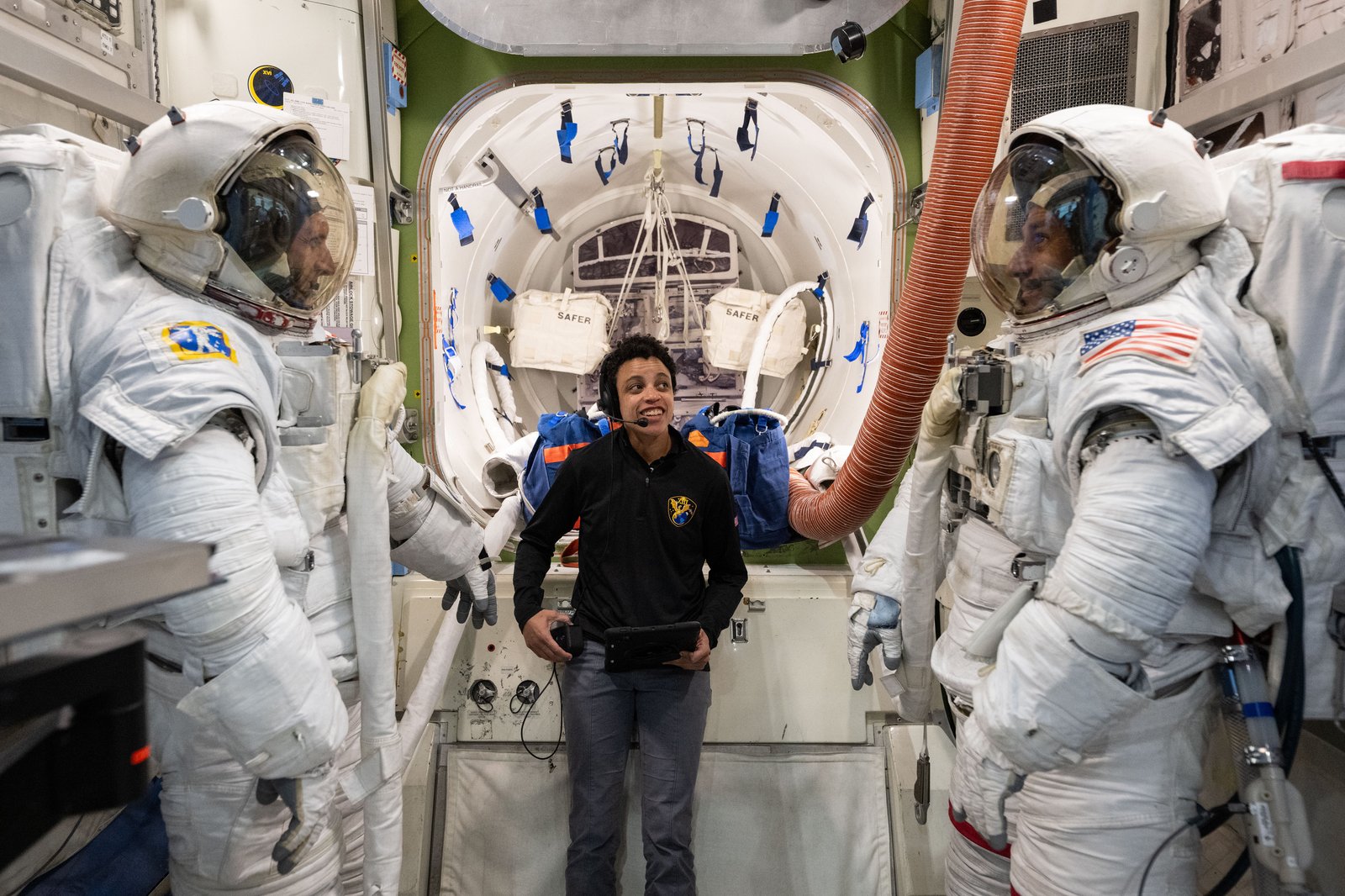
Canadian Space Agency astronaut Joshua Kutryk says he is “having a blast” on the International Space Station, nearly two weeks into a six-month mission, he told reporters on Tuesday in his first question-and-answer session from orbit, CBC News reported. He took the questions from Canadian journalists in Longueuil, Que., according to Global News.
Kutryk, who grew up in northern Alberta, said seeing the northern lights from above was a different experience altogether. “To see the whole Earth, the curvature of the Earth, just embraced by this blanket of dancing fluorescent oranges and yellows and pinks — magical,” he said. Describing his first look at the planet, he added: “It’s just one world. It’s one thing hanging in the blackness of space and you don’t see all the countries and the problems and all the challenges. You just see this little bit of perfection that we should really, really be trying to protect.”
Life in microgravity has meant relearning basics such as sleeping, eating and using tools. “It’s like you’re two or three years old again learning to do the most simple things in life,” he told CBC. “It can be very frustrating, but when you take a step back and look out the window and sort of laugh at yourself, it’s also very fun.” During the session, the station passed over Vancouver and was soon to cross Quebec.
Much of the science on board is about astronaut health. Kutryk said he has lost five pounds since arriving. “Humans on a six-month mission lose a lot of bone, a lot of muscle and come back to Earth, frankly, a lot older physiologically and not very healthy,” he told Global News. He wore equipment for the AstroFit project, which monitors his health with the aim of letting people stay in space longer, and said he has started experiments on mental health and on monitoring his vital signs. A Canadian experiment called T-Bone, which uses 3D technology to study changes in bone health, is to be completed in the coming months, CBC reported.
Kutryk, 44, launched on Oct. 1 with NASA’s SpaceX Crew-13 alongside commander Jessica Watkins and pilot Luke Delaney of NASA and Roscosmos cosmonaut Sergey Teteryatnikov, reaching the station in just under eight hours. According to the Canadian Space Agency, it is the first CSA astronaut mission under NASA’s Commercial Crew Program, and Kutryk is the fourth CSA astronaut on a long-duration station mission, after Robert Thirsk, Chris Hadfield and David Saint-Jacques. He is part of Expedition 75.
More research is on its way. A SpaceX Falcon 9 launched the CRS-35 cargo mission from Cape Canaveral at 6:33 a.m. EDT on Tuesday, carrying more than 6,300 pounds of science and supplies, equipment for more than 40 studies and the last pair of Roll-Out Solar Arrays bound for the station, Spaceflight Now reported. The Dragon is due to dock with the Harmony module on Thursday, with NASA astronaut Anil Menon and Kutryk monitoring its arrival.
Kutryk said having a Canadian aboard shows “what Canada can do” and brings Canadian industry, academia and companies to the leading edge of spaceflight. “That’s how we innovate. That’s how we develop new technologies,” he said. He also brought a family keepsake: a pocket watch his relatives carried from Ukraine to Canada four generations ago, which sits near where he sleeps. His mission comes six months after CSA astronaut Jeremy Hansen flew around the moon on Artemis II.
This article is general science reporting and is not medical advice.
Sources: CBC News (Oct. 13, 2026); Global News (Oct. 13, 2026); Spaceflight Now (Oct. 13, 2026); Canadian Space Agency: Crew-13 mission.
Sources
- CBC News · news
- Global News · news
- Spaceflight Now · news
- Canadian Space Agency: Crew-13 mission · government
Newsletter
News. Context. What matters.
One essential briefing, written for people who would rather understand the story than scroll it.
Unsubscribe anytime. We don’t sell addresses.
Recommended

Science
About one in six Canadian doctors reports a disability at least some of the time, CMAJ census study finds
An Ottawa Hospital-led analysis of 2021 long-form census data found mental health and vision were the most commonly reported disabilities, and its authors call for more accessible medical workplaces.
Science
More than half of species assessed at risk since 2017 are overdue for federal listing decisions, SFU-led study finds
Only 17 of 288 COSEWIC-assessed species reached Cabinet on time; none of the marine mammals or marine fish assessed in the period had been forwarded by January 2025, researchers report in FACETS.

Science
Heart and skeletal muscle inflammation found at five of seven B.C. open-net salmon farms studied, researchers say
A Pacific Salmon Foundation peer-reviewed paper in Aquaculture reports HSMI in the Broughton Archipelago and urges Ottawa to treat piscine orthoreovirus as pathogenic; Fisheries and Oceans Canada says it will review the findings.