Science
Optogenetics pioneers Deisseroth, Hegemann and Nagel win 2026 Nobel Prize in medicine
The prize honours an algal light-sensing protein that became an on-off switch for neurons, a tool that has reshaped brain research and is now being tested to restore some sight.
Published: October 5, 2026 · Updated: October 5, 2026 · 3 min read
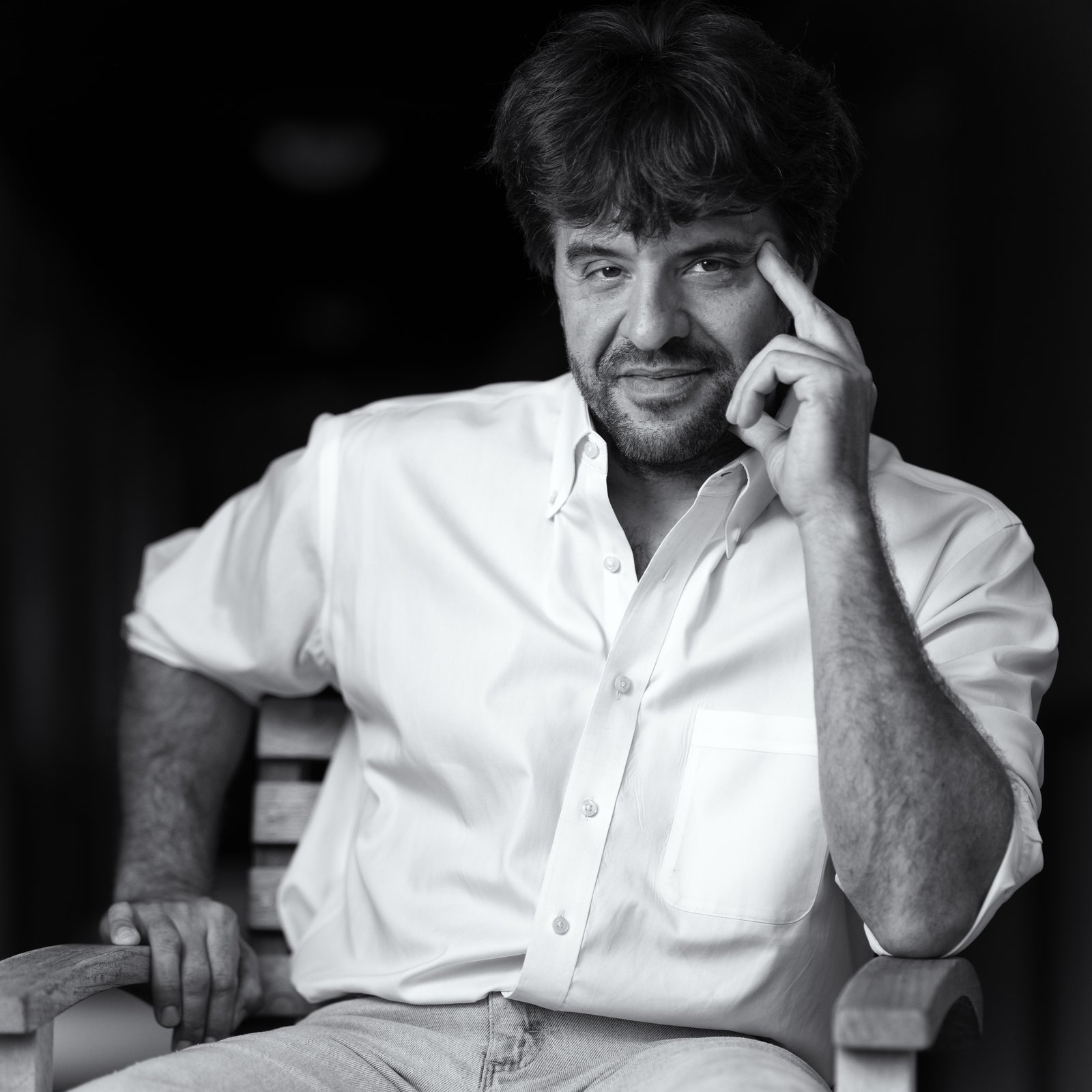
Three scientists whose work turned a light-sensing protein from a single-celled alga into a switch for brain cells have won the 2026 Nobel Prize in Physiology or Medicine. The Nobel Assembly at Karolinska Institutet in Stockholm awarded the prize jointly to Karl Deisseroth of Stanford University and the Howard Hughes Medical Institute, Peter Hegemann of Humboldt University of Berlin and Georg Nagel of the University of Würzburg “for their discoveries concerning light-gated ion channels and optogenetics,” according to the Nobel press release issued Monday.
The story began with Hegemann’s curiosity about how Chlamydomonas, a single-celled alga, swims toward light. In the early 2000s, he and Nagel discovered channelrhodopsin, a protein on the alga’s surface that opens a channel when hit by blue light, letting charged ions flow into the cell and creating an electrical impulse. Whatever cell they placed it in became light-sensitive. The prize-winning discoveries were made at Max Planck institutes in Martinsried and Frankfurt, Karolinska Institutet said.
Deisseroth introduced the channelrhodopsin gene into rat nerve cells and showed that a flash of blue light could trigger a nerve signal, publishing the result in 2005. Two years later, he made the switch work in the brains of living mice. His Stanford team added an ultrathin, flexible optical fibre to deliver light deep into the brain and a yellow-light-activated protein that silences neurons, according to Stanford Medicine. Earlier tools were blunt by comparison: electrical stimulation spills into neighbouring circuits and cannot precisely turn cells off, while drugs diffuse widely and cannot be switched off quickly.
“Optogenetics provides opportunities for mapping the brain in a way that we could once only dream of,” said Per Svenningsson, chair of the Nobel Committee for Physiology or Medicine. Using light, the committee said, researchers can now “switch individual neural circuits on or off in the brain,” bring memories to life, drive behaviours and study the neurons involved in psychiatric and neurological disorders, BBC News reported. Committee member Abdel El Manira said at the announcement that the method has helped reveal how circuits are disrupted in conditions including blindness, depression, addiction and dementia, Scientific American reported.
Clinical use is at an early stage. In ongoing trials, researchers are trying to restore vision in people blinded by retinitis pigmentosa, an inherited disease that destroys the eye’s light-sensing cells. A gene encoding a light-sensitive protein is delivered to surviving retinal neurons, and one patient regained some vision while wearing special light-emitting glasses, the BBC reported. Scientific American described the approach as bypassing dead and damaged cells to send signals to the brain.
Deisseroth missed the Nobel committee’s call at 12:27 a.m. Pacific time; seconds later it reached his wife, Stanford pediatric neuro-oncologist Michelle Monje-Deisseroth. “I lost the ability to form words for about 30 seconds or so,” he told Stanford. “I couldn’t be happier because the trio that the committee picked spans the progression from the early algal explorations all the way to advanced neuroscience experiments.” His lab has used the technique to reverse Parkinson’s symptoms in mice and to identify circuits behind social behaviour, and he still sees patients with treatment-resistant depression and autism spectrum disorders.
The laureates will share 12 million Swedish kronor equally. Deisseroth, born in 1971, has previously won the Lasker Basic Medical Research Award and the Japan Prize; Hegemann was born in 1954 and Nagel in 1953. Asked how he would celebrate, Deisseroth told Scientific American he plans to get back to the lab: “We’ve got a lot of things we want to discover and a lot of people we want to help.” The prize, first awarded in 1901, went in recent years to work behind mRNA COVID-19 vaccines in 2023, microRNA in 2024 and peripheral immune tolerance in 2025, the magazine noted.
This article is for general information and is not medical advice. Talk to a qualified health professional about your own situation.
Sources: NobelPrize.org press release; Karolinska Institutet; BBC News; Stanford Medicine; Scientific American.
Sources
- NobelPrize.org press release · other
- Karolinska Institutet · other
- BBC News · other
- Stanford Medicine · other
- Scientific American · other
Newsletter
News. Context. What matters.
One essential briefing, written for people who would rather understand the story than scroll it.
Unsubscribe anytime. We don’t sell addresses.
Recommended

Science
Tariffs on Ontario and Quebec power would raise New York costs and blackout risk, Cornell study finds
A peer-reviewed analysis of a decade of New York grid data finds a levy above about 55 per cent would all but price out Ontario electricity, pushing the state toward oil and gas plants and thinning its emergency reserves.

Science
CHIME telescope maps cosmic hydrogen glow on its own, opening a dark-energy shortcut
Canadian-built array near Penticton detects 21 cm signal at redshift ~1 without cross-matching galaxy surveys — a first for intensity mapping.
Science
Florence physicists entangle a levitating glass speck with light at room temperature
A Science paper shows stationary quantum links between a 100-nanometre silica nanosphere’s motion and a travelling optical field — no cryogenics required.