Science
Francis Halzen wins the Nobel Prize in physics for IceCube, the South Pole detector that caught cosmic neutrinos
The University of Wisconsin–Madison physicist takes the full 2026 prize for turning a cubic kilometre of Antarctic ice into a neutrino telescope, a collaboration that includes researchers at three Canadian universities.
Published: October 6, 2026 · Updated: October 6, 2026 · 3 min read
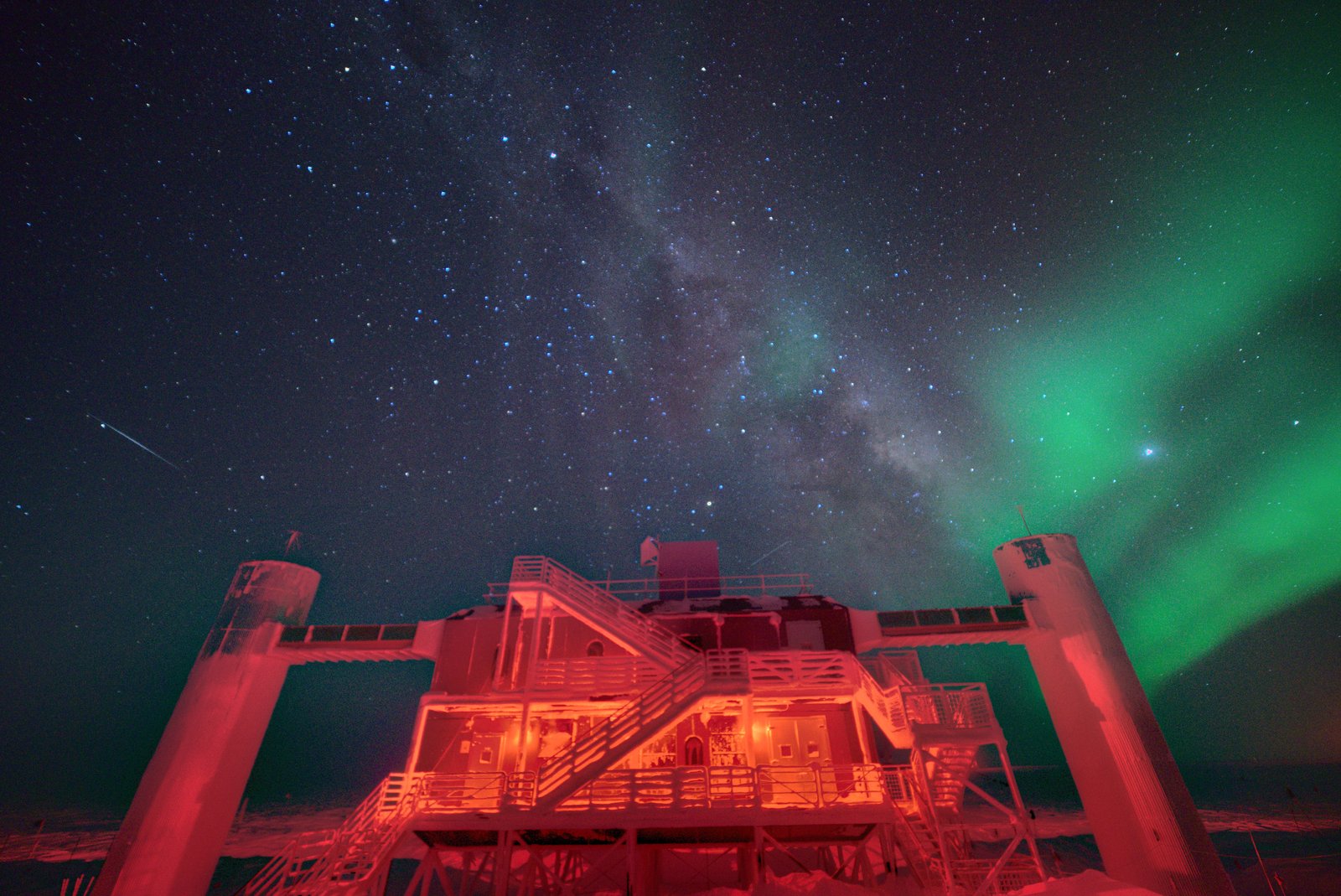
The Royal Swedish Academy of Sciences awarded the 2026 Nobel Prize in Physics on Tuesday to Francis Halzen of the University of Wisconsin–Madison “for decisive contributions to the IceCube Neutrino Observatory and the discovery of high-energy neutrinos of astrophysical origin,” according to the official announcement. Halzen, who was born in 1944 in Tienen, Belgium, and earned his PhD at KU Leuven in 1969, receives the full prize of 12 million Swedish kronor.
Neutrinos are among the hardest particles in physics to catch. They carry no electric charge, have almost no mass and stream through the Earth and our bodies without a trace; the academy’s popular science background notes that about 65 billion neutrinos from the Sun pass through a fingernail every second. Their elusiveness is also their value. Because they are not bent by magnetic fields or absorbed along the way, the rare high-energy neutrinos produced by the universe’s natural particle accelerators arrive pointing back to where they came from, offering information that other cosmic messengers cannot.
Halzen and colleague John G. Learned first presented the idea of a neutrino observatory in the South Pole ice at a conference in Poland in 1988. Researchers made their first attempts to lower light sensors into the glacier in 1992 and, while building a predecessor called AMANDA, found that below about 1,400 metres the ice was so clear that light could travel 300 metres before being absorbed. IceCube reached its full size in 2011, with 5,160 sensors on 86 cables buried between 1,450 and 2,450 metres deep. The sensors look for the faint flashes produced on the rare occasions a neutrino strikes an atomic nucleus in the ice.
In 2013 the IceCube team reported the first evidence of high-energy neutrinos from beyond the solar system, a result later confirmed with more data. According to UW–Madison, IceCube went on to detect a neutrino in 2017 from a supermassive black hole at the centre of a distant galaxy, and found evidence of high-energy neutrinos from an active galaxy 47 million light-years away in 2022 and from the Milky Way in 2023. “His tenacity and scientific vision has paved the way for a new kind of astronomy,” Mark Pearce, chair of the Nobel Committee for Physics, said in the academy’s release.
Halzen, 82, took the academy’s call while travelling in Italy for a committee meeting. “It was a great surprise, and I obviously didn’t expect it,” he said, according to UPI. He credited the more than 450 scientists who joined the effort, saying that while few believed at the start that the idea would work, “many talented people did, and that’s why I’m here.” IceCube is funded by the U.S. National Science Foundation and run by an international collaboration led from UW–Madison, which said Halzen is the sixth physicist connected to the university to win a Nobel.
Canada has a stake in the work. As of April 2025, the IceCube collaboration listed 58 member institutions in 14 countries, including the University of Alberta in Edmonton, Queen’s University in Kingston, Ont., and Simon Fraser University in Burnaby, B.C. The academy’s background also recalls that experiments in Japan and Canada showed neutrinos change type as they travel, work that earned Takaaki Kajita and Arthur B. McDonald the 2015 physics prize.
The field is now expanding. The academy says several water-based neutrino telescopes are in development, including in Lake Baikal, the Mediterranean, the South China Sea and off Canada’s west coast, while a much larger South Pole successor, IceCube-Gen2, is being planned at eight cubic kilometres of ice.
Sources: Nobel Prize press release; Royal Swedish Academy of Sciences popular science background; UW–Madison News; UPI; IceCube collaboration institution list.
Sources
- Nobel Prize press release · organization
- Royal Swedish Academy of Sciences popular science background · organization
- UW–Madison News · university
- UPI · news
- IceCube collaboration institution list · research
Newsletter
News. Context. What matters.
One essential briefing, written for people who would rather understand the story than scroll it.
Unsubscribe anytime. We don’t sell addresses.
Recommended
Science
Black people in Canada face 66 per cent higher risk of severe pregnancy complications, national study finds
The first population-based national analysis, published in CMAJ, found the gap persisted across income levels and immigration status, and widened among higher-income families.
Science
Optogenetics pioneers Deisseroth, Hegemann and Nagel win 2026 Nobel Prize in medicine
The prize honours an algal light-sensing protein that became an on-off switch for neurons, a tool that has reshaped brain research and is now being tested to restore some sight.

Science
Tariffs on Ontario and Quebec power would raise New York costs and blackout risk, Cornell study finds
A peer-reviewed analysis of a decade of New York grid data finds a levy above about 55 per cent would all but price out Ontario electricity, pushing the state toward oil and gas plants and thinning its emergency reserves.