Science
Chemistry Nobel goes to Henri Kagan and Kenso Soai for showing how reactions can favour one mirror-image molecule
The French and Japanese chemists cracked a century-old puzzle about why life’s molecules come in only one “hand,” work the Nobel committee says has been decisive for chemists who design reactions to make medicines.
Published: October 7, 2026 · Updated: October 7, 2026 · 4 min read
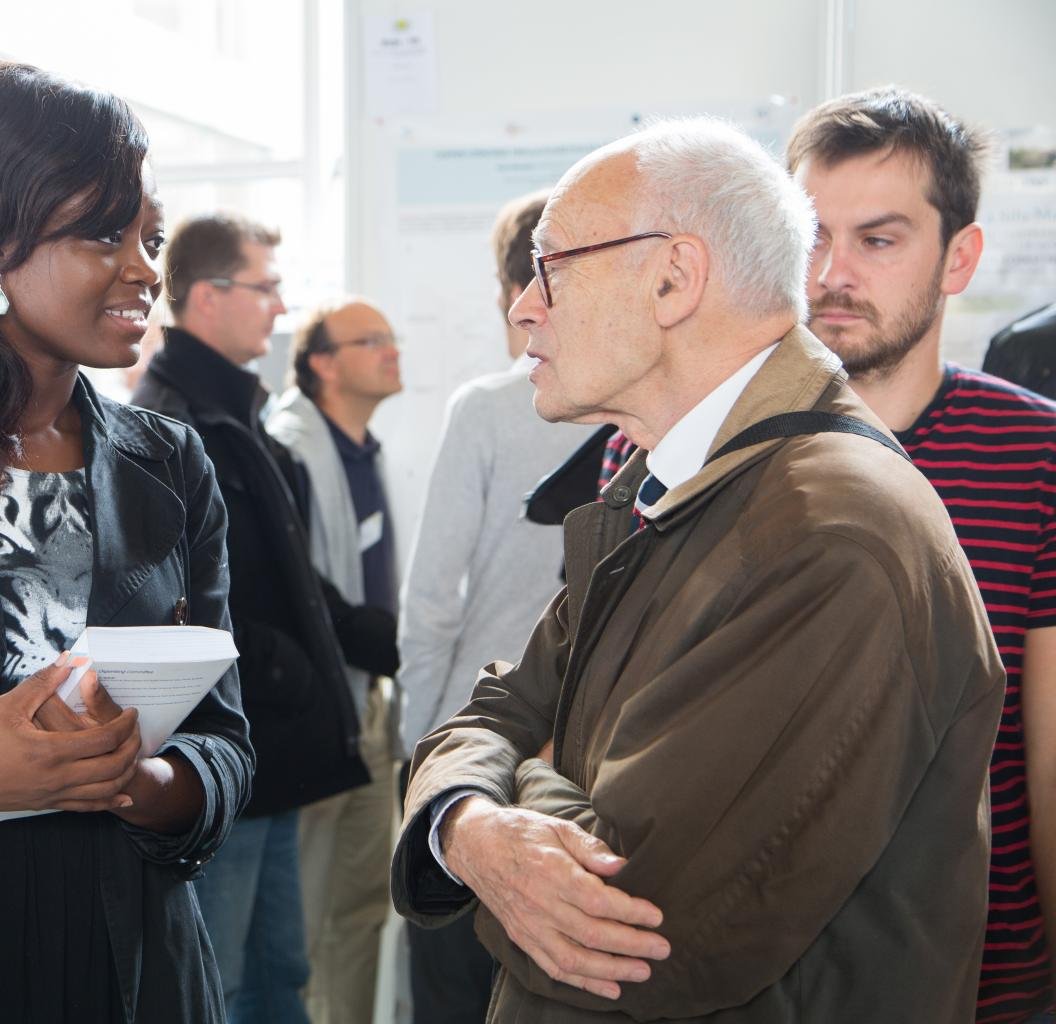
The 2026 Nobel Prize in Chemistry has been awarded to Henri B. Kagan of France and Kenso Soai of Japan “for the discovery of non-linear effects and autocatalysis in asymmetric organic synthesis,” the Royal Swedish Academy of Sciences announced Wednesday. Kagan is professor emeritus at what was then Université Paris-Sud and Soai is professor emeritus at Tokyo University of Science, according to the academy’s press release. The two will share the prize money of 12 million Swedish kronor equally.
Their work concerns chirality, the way some molecules exist in two forms that are mirror images of each other, like a left and a right hand. Amino acids, the building blocks of proteins, come in both forms, but only one is found in the proteins in our cells; the same is true of the sugars in DNA. Chemists call this one-handedness homochirality, and for a long time they could not explain how it arises: reactions in a lab that can make either form usually produce an even mix of both, BBC News explained.
The puzzle matters well beyond the origin of life. In pharmaceuticals, one mirror-image form of a drug molecule may have the therapeutic effect while the other can cause unnecessary and sometimes harmful side effects, the academy says in its popular science background. It points to the thalidomide disaster of the early 1960s, when thousands of children were affected by birth defects caused by a sedative; researchers later found the harm came from the active ingredient’s mirror image. The BBC noted that the original drug was a mixture of both forms, and that the body can convert one into the other.
Kagan took the first decisive step in 1986. Chemists building asymmetric reactions often used catalysts made of a metal atom paired with a chiral molecule, and assumed the purity of the catalyst’s chirality carried over to the product in a straight line. Kagan reasoned that the metal grabs at least two chiral molecules at once, creating right-right, left-left and mixed left-right versions of the catalyst. The mixed version drove the reaction far more slowly, so when he plotted his results the line curved instead of running straight. That non-linear effect let him produce a greater excess of one mirror image than had been thought possible; he described it in three different reactions that year.
Soai built on that discovery. In a 1995 paper, published in Nature according to the BBC, he described a reaction in which the product acts as its own catalyst, starting from a two per cent excess of one form of a compound called 5-pyrimidyl alkanol and ending with an 87 per cent excess. In 2003 he went further, presenting a reaction that begins with no chiral bias at all: chance tips the balance slightly toward one form, which then copies itself until it can make up 99.99 per cent of the product. Repeat the experiment and the other form may win instead. “Other than life itself, no one had previously achieved this feat,” the academy said.
“Henri Kagan and Kenso Soai have provided a solution to a chemical mystery that is over a century old: how homochirality can emerge spontaneously. The chemical reactions they have developed are spectacular,” said Heiner Linke, chair of the Nobel Committee for Chemistry. Speaking to the Nobel press conference by phone, Soai said: “This is one of the most exciting days of my life.” Committee member Peter Somfai said showing how a single mirror image can be created is “probably the most fundamental question in life,” because it happened when life emerged four billion years ago, “and now we have, for the first time, mimicked that in the lab,” the BBC reported.
The academy says Kagan’s non-linear effects have become an everyday tool for chemists, because they reveal how a reaction works and help optimise it to obtain the purest possible product, which matters to every company making substances meant to interact with living things, including drugs, flavours, scents and agricultural chemicals. The Soai reaction itself is artificial, but it has spurred researchers around the world to try to produce homochiral amino acids and sugars the same way. Professor Robert Mokaya, president of the U.K.’s Royal Society of Chemistry, called the prize a “powerful example of how fundamental chemistry can underpin solutions to some of the biggest challenges facing society,” the BBC reported.
Kagan was born on Dec. 15, 1930, in Boulogne-Billancourt, France, according to his Nobel facts page, which makes him 95, and earned his PhD at the Collège de France in 1960. Soai was born in 1950 in Hiroshima and received his PhD from the University of Tokyo in 1979. Earlier prizes for pioneering asymmetric reactions went to chemists in 2001 and 2021, the academy noted. The 2026 Nobel announcements continue through Oct. 12.
This article is for general information and is not medical advice. Talk to a health-care professional about your own situation.
Sources: Royal Swedish Academy of Sciences press release (NobelPrize.org); NobelPrize.org popular science background; NobelPrize.org: Henri B. Kagan facts; BBC News.
Sources
- Royal Swedish Academy of Sciences press release (NobelPrize.org) · organization
- NobelPrize.org popular science background · organization
- NobelPrize.org: Henri B. Kagan facts · organization
- BBC News · news
Newsletter
News. Context. What matters.
One essential briefing, written for people who would rather understand the story than scroll it.
Unsubscribe anytime. We don’t sell addresses.
Recommended
Science
HPV vaccine still protects women living with HIV up to nine years later, Canadian study finds
A UBC-led study of 293 women at 14 clinics across Canada, published in The Lancet HIV, found very low rates of vaccine-type HPV infection and no serious precancerous changes from those strains among women who got all three doses.
Science
As Western Canada locks in daylight time, a CMAJ analysis says permanent standard time is better for health
Clocks won’t fall back on Nov. 1 across much of the West. B.C. researchers warn that later winter sunrises could cost sleep, mood and school performance, and urge governments to plan ahead and track the effects.
Science
Francis Halzen wins the Nobel Prize in physics for IceCube, the South Pole detector that caught cosmic neutrinos
The University of Wisconsin–Madison physicist takes the full 2026 prize for turning a cubic kilometre of Antarctic ice into a neutrino telescope, a collaboration that includes researchers at three Canadian universities.