Explainers
What can a Democratic Congress do about Trump’s tariffs, the Iran war and CUSMA in 2027?
Democrats won both chambers on Nov. 3, but they don’t take over until Jan. 3, 2027, and they can’t override a veto on their own. Here’s what the U.S. Constitution and trade laws let Congress do, and what they don’t.
Published: November 4, 2026 · Updated: November 6, 2026 · 7 min read
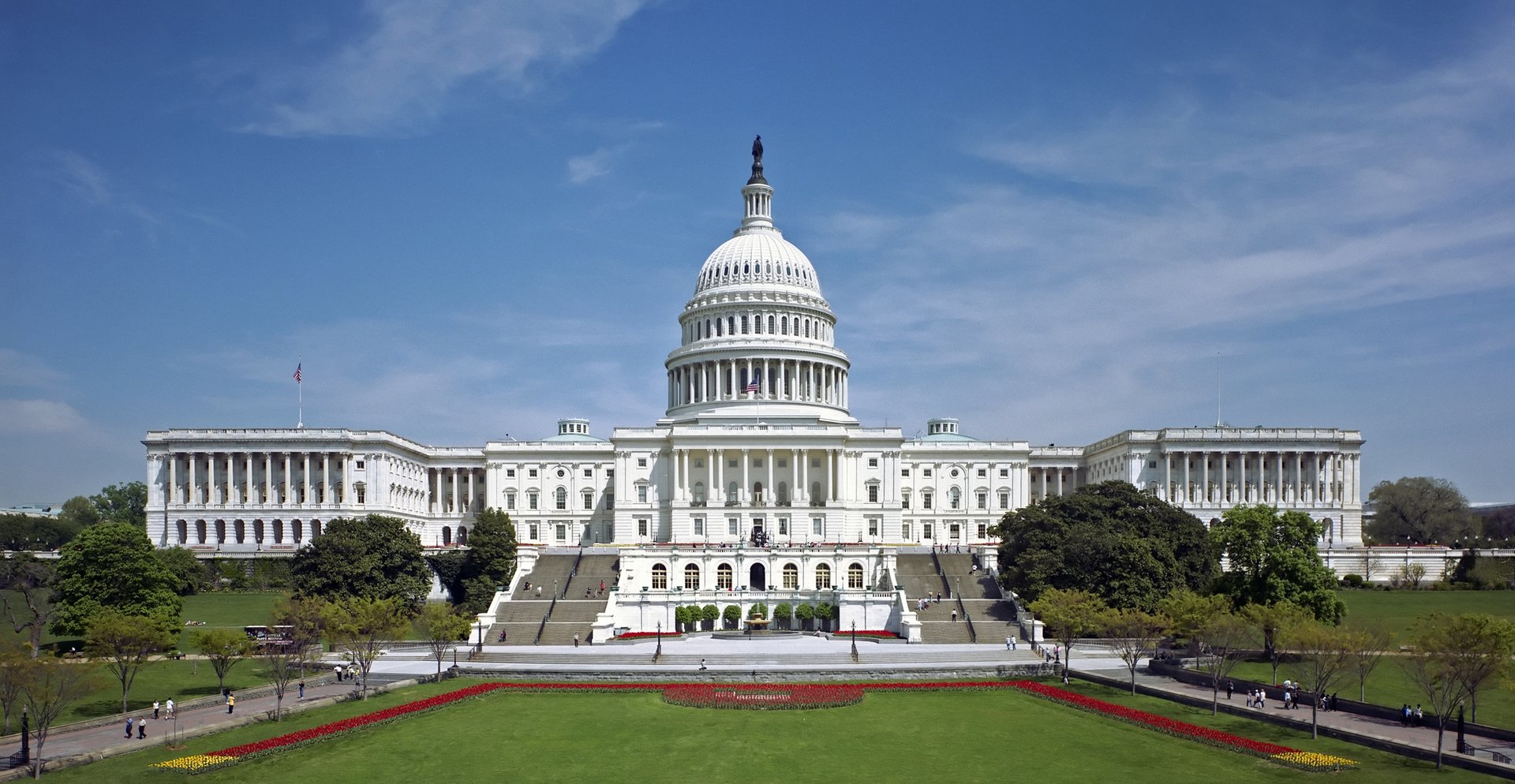
A Democratic Congress can pass bills to end President Donald Trump’s tariffs or the Iran war, but it can’t make those bills law on its own: Trump can veto them, and Democrats don’t have the two-thirds majorities needed to override him. Its strongest tools are the ones that don’t need his signature: oversight and subpoenas, the power over spending, and the Senate’s vote on nominees. The biggest change to his tariffs so far has come from the courts, not Congress.
Key facts
- Democrats won control of the House and Senate on Nov. 3, the Associated Press reported. The new Congress begins at noon on Jan. 3, 2027, under the 20th Amendment.
- Overriding a veto takes two-thirds of each chamber: 67 senators and 290 House members if everyone votes. As of 4:23 a.m. ET Nov. 4, CBS News had projected 54 Democratic Senate seats, with Alaska and Mississippi uncalled. An NBC News analysis estimated Democrats will win at least 258 House seats as of 5:51 a.m. ET Nov. 4, a figure that could shift by a few seats.
- The Supreme Court ruled 6–3 on Feb. 20 that the emergency-powers law, IEEPA, does not authorize tariffs.
- U.S. tariffs on Canada now rest on Sections 232, 301 and 338. Congress can change any of them only by passing a law, which the president can veto.
- Both chambers passed an Iran war-powers resolution in June. A White House official called the Senate vote of “no significance.”
- The USMCA Implementation Act requires the administration to consult Congress on CUSMA reviews. It does not give Congress a vote on them.
What changes on Jan. 3, 2027, and what doesn’t?
Democrats will hold majorities in both chambers, so they will choose committee chairs, set the agenda and decide which bills get a vote. As of 4:23 a.m. ET on Nov. 4, CBS projected the Senate at 54 Democrats and 44 Republicans. The Alaska and Mississippi races were still uncalled. Alaska Public Media reported that if no candidate wins a majority, ranked-choice tabulation is scheduled for Nov. 18.
The president’s veto stays the same. Article I, Section 7 of the Constitution requires two-thirds of each chamber to override one. On election night, Trump posted a red cap reading “veto,” AP reported. Override attempts have already failed this term. On Jan. 8, the House fell short of overriding two vetoes, of bills on a Colorado water pipeline and Everglades land, voting 248–177 and 236–188, according to House roll calls (9, 8).
Can Congress end Trump’s tariffs?
On paper, Congress has the power. Article I, Section 8 says “The Congress shall have Power To lay and collect Taxes, Duties, Imposts and Excises” and to regulate foreign commerce. The Supreme Court leaned on that clause in Learning Resources v. Trump, the Feb. 20 ruling that struck down tariffs imposed under IEEPA.
Over the decades, though, Congress has delegated much of its tariff power to the president through specific statutes, and each one works differently:
- IEEPA and emergencies. Under the National Emergencies Act, Congress can end an emergency through a joint resolution “enacted into law.” That means it needs the president’s signature or a veto override. On Feb. 11, the House voted 219–211 for H.J.Res. 72, which would end the Canada emergency of Feb. 1, 2025. Six Republicans joined 213 Democrats, NBC News reported. Congress.gov shows the resolution was referred to the Senate Finance Committee. Speaker Mike Johnson said at the time that “there’s not a two-thirds majority in both chambers to override the veto.”
- Section 232 (national security). This covers the tariffs on steel, aluminum, autos and other sectors. The statute sets out a fast-track disapproval resolution only for petroleum. For the other sectors, Congress would need an ordinary law.
- Section 301. On July 24, after the court ruling, the administration replaced the Section 122 tariffs with Section 301 tariffs on 60 economies, including 10 per cent on Canada, Steptoe and the Trade Commissioner Service report. Section 122 was the one tool with a built-in clock: it allows 150 days “unless such period is extended by Act of Congress.”
- Section 338. This 1930 law lets the president impose duties of up to 50 per cent on countries he finds discriminate against U.S. commerce. It also lets him ban imports. The statute gives the president, not Congress, the power to suspend or revoke these measures. Congress’s option is to amend or repeal the law.
The Congressional Research Service notes that Congress could pass legislation to codify these tariffs, or to eliminate them for Canada and Mexico. It could also act through appropriations. Either route needs a law. (For the argument that the vote alone won’t end the tariffs, see our opinion piece “Tuesday won’t save Canada from Trump”.)
Can Congress stop the Iran war?
The War Powers Resolution requires the president to end the use of U.S. forces within 60 days of reporting to Congress, unless Congress authorizes them. Trump notified Congress on March 2, after the war began Feb. 28, CBS News reported. That put the deadline at May 1. The administration said the April 7 ceasefire had “terminated” hostilities for the law’s purposes, according to Reuters. Democrats and some legal experts disputed that a ceasefire stops the clock, NBC News reported. Congress has not passed an authorization for use of military force (AUMF) for Iran.
Congress has three main tools:
- Concurrent resolutions. These are not sent to the president for signature. H.Con.Res. 86 passed the House 215–208 and the Senate 50–48 in June, NBC News reported. Lawfare notes that such resolutions lack the force of law, and that most experts believe the War Powers Resolution provision making them binding is unconstitutional after the Supreme Court’s 1983 INS v. Chadha decision, though no court has ruled on it.
- Joint resolutions. These get expedited handling in the Senate but are subject to a veto.
- Funding. The Constitution provides that “No Money shall be drawn from the Treasury, but in Consequence of Appropriations made by Law.” Lawfare points to past limits written into annual defence legislation. The White House requested supplemental war funding in June, and the Committee for a Responsible Federal Budget lists that request among items Congress could still take up in the lame-duck session.
U.S. strikes on Iran’s Qeshm Island on Nov. 2 were described by officials as limited and “defensive,” as Serious Pick reported. (Background: our opinion piece on the eight-month-old war.)
What role does Congress have in the CUSMA review?
At the July 1 joint review under Article 34.7, the U.S. “did not agree to renew” the pact, USTR said. That triggered yearly reviews. (Our explainer covers what happens next, and this story covers where talks on a Canada deal stand.)
Section 611 of the USMCA Implementation Act requires the president to consult the trade committees before each review, including on “the decision whether or not to confirm” an extension. USTR must report at least 70 days before each annual review, brief the committees within 20 days after it and share any proposed text on request. With control of Ways and Means and Senate Finance, Democrats will be the ones receiving those briefings.
The CRS says Congress “may decide whether revisions to USMCA should require congressional approval,” and that changes to U.S. law would need implementing legislation. Whether Congress must approve an extension is a separate question. CRS treats it in another report. CUSMA was approved by both chambers as a congressional-executive agreement, not as a treaty, so the Senate’s two-thirds treaty vote does not apply to it.
What else can the Senate and committees do?
Under Article II, Section 2, a Senate majority decides whether to confirm cabinet secretaries, judges and trade officials. Treaties need two-thirds. Committees can hold hearings and issue subpoenas. In Trump v. Mazars (2020), the Supreme Court recognized that power but set new limits on subpoenas for a president’s personal records, and sent the case back to lower courts. Party leaders have signalled they will use their majorities to launch investigations, the Associated Press reported.
What happens before Jan. 3?
The outgoing Congress, with Republican majorities, sits until then. Government funding runs out on Dec. 11, CRFB notes. That makes the lame duck the next deadline for any war funding.
What does it mean for Canadian exporters?
The rules stay the same for now. CUSMA-compliant goods are exempt from the 10 per cent Section 301 tariff but not fully exempt from Section 232 duties on steel, aluminum, autos and other sectors, and not exempt from Section 338, the Trade Commissioner Service says. The White House can also reshuffle which Canadian goods face 50 per cent duties without Congress, as it did in an Oct. 23 order. (See our Section 338 vs. Section 232 explainer.) Section 338 is being challenged at the U.S. Court of International Trade in Gellert Global Group v. Trump. Gellert has asked the court to block collection of the duties and order refunds with interest; briefs supporting that motion are due Nov. 13, according to Davis Wright Tremaine.
Who controls what
| Issue | Congress | President | Courts |
|---|---|---|---|
| Tariffs | Can repeal or amend Sections 232, 301 and 338 by law; end emergencies by joint resolution; both subject to veto | Imposes, changes and lifts tariffs under delegated laws | Struck down IEEPA tariffs; Section 338 case pending at CIT; Section 301 challenge pending at CIT |
| Iran war | Declares war, authorizes force, controls funding; resolutions face veto or doubts about their legal force | Commands forces; can veto | — |
| CUSMA | Gets consultation, reports and briefings; would approve changes to U.S. law | Negotiates, decides on extension, can give withdrawal notice | — |
| People | Senate confirms nominees; committees subpoena | Nominates | Settle subpoena disputes |
Bottom line
From Jan. 3, Democrats will control the agenda, the committees and the purse. But ending tariffs or the war by statute requires either Trump’s signature or Republican votes to reach two-thirds. Until then, the lame-duck Congress, the Dec. 11 funding deadline and the Section 338 court case are the next dates to watch.
This explainer is for general information and is not legal or trade advice. Exporters should consult a customs broker or trade lawyer.
Sources
- Constitution of the United States (transcript), Art. I §7–9, Art. II §2 — National Archives · legal text
- 20th Amendment — Cornell Legal Information Institute · legal text
- 50 U.S.C. 1622 — National emergencies; termination — Cornell LII · legal text
- 19 U.S.C. 1862 — Section 232 — Cornell LII · legal text
- 19 U.S.C. 2132 — Section 122 — Cornell LII · legal text
- 19 U.S.C. 1338 — Section 338 — Cornell LII · legal text
- 50 U.S.C. 1544 — War Powers Resolution §5 — Cornell LII · legal text
- 50 U.S.C. 1546a — Expedited procedures — Cornell LII · legal text
- Trump v. Mazars USA, LLP (2020) — Supreme Court of the United States · court document
- Roll Call 65, H.J.Res. 72 (Feb. 11, 2026) — Office of the Clerk, U.S. House · official data
- H.J.Res. 72 — All info — Congress.gov · official data
- USMCA: 2026 Joint Review (R48787, Sept. 29, 2026) — Congressional Research Service · research
- Ambassador Greer statement on USMCA joint review (July 1, 2026) — Office of the U.S. Trade Representative · government
- Letter to Speaker Johnson on supplemental funding (June 24, 2026) — The White House · government
- Understanding CUSMA compliance — Trade Commissioner Service (Government of Canada) · government
- Lame Duck Session Shouldn’t Be an Excuse to Borrow More (Nov. 3, 2026) — Committee for a Responsible Federal Budget · research
- What congressional resolutions mean for the war in Iran — Lawfare · research
- From IEEPA to Section 301: USTR reimplements Trump’s global tariff regime — Steptoe · law firm
- Section 338 Canadian tariff updates (October 2026) — Davis Wright Tremaine · law firm
- Democrats win control of the U.S. House (Associated Press) — PBS NewsHour · news
- Live 2026 Senate election results (updated 4:23 a.m. ET Nov. 4, 2026) — CBS News · news
- Election results 2026 live updates (updated 5:51 a.m. ET Nov. 4, 2026) — NBC News · news
- Sullivan and Peltola locked in tight U.S. Senate race as more results come in — Alaska Public Media · news
- Roll Call 9, veto override vote on H.R. 131 (Jan. 8, 2026) — Office of the Clerk, U.S. House · official data
- Roll Call 8, veto override vote on H.R. 504 (Jan. 8, 2026) — Office of the Clerk, U.S. House · official data
- House votes to end Trump tariffs on Canada — NBC News · news
- Iran war powers 60-day deadline — CBS News · news
- For War Powers Resolution purposes, U.S. hostilities with Iran have terminated (May 1, 2026) — Reuters · news
- Senate rebukes Trump, approving House-passed Iran war powers resolution — NBC News · news
- Trump says he doesn’t need congressional authorization for Iran operations, citing ceasefire (May 1, 2026) — NBC News · news
- Trump’s latest global tariffs face trade court challenge (Sept. 30, 2026) — CNBC · news
- 19 U.S.C. 4611 — USMCA joint review consultations — Cornell LII · legal text
- CUSMA Chapter 34 — Final Provisions — Global Affairs Canada · legal text
- Learning Resources, Inc. v. Trump (Feb. 20, 2026) — Supreme Court of the United States · court document
Newsletter
News. Context. What matters.
One essential briefing, written for people who would rather understand the story than scroll it.
Unsubscribe anytime. We don’t sell addresses.
Recommended

Explainers
Why are Canadian asking rents falling, and what does it mean for renters?
Canada’s average asking rent was $2,036 in October, down 3.2 per cent from a year earlier and the 25th consecutive month of year-over-year declines. That softens listings for people shopping for a new lease, while CMHC says paid rents on occupied units have kept rising.

Explainers
What is the CUSMA review, and what happens if it fails?
Washington declined to renew the trade pact at its first review on July 1. That doesn't end CUSMA, but it starts a yearly review cycle that runs to 2036. Here is what happens next.

Explainers
Section 338 bans vs Section 232 tariffs: what’s the difference for Canada?
Washington’s Section 232 tariffs hit steel, aluminum, autos and lumber from every country. A rarely used 1930 law now targets Canada alone, taxing about US$20 billion of goods and banning some outright.