Explainers
What is the CUSMA review, and what happens if it fails?
Washington declined to renew the trade pact at its first review on July 1. That doesn't end CUSMA, but it starts a yearly review cycle that runs to 2036. Here is what happens next.
Published: November 3, 2026 · Updated: November 3, 2026 · 7 min read
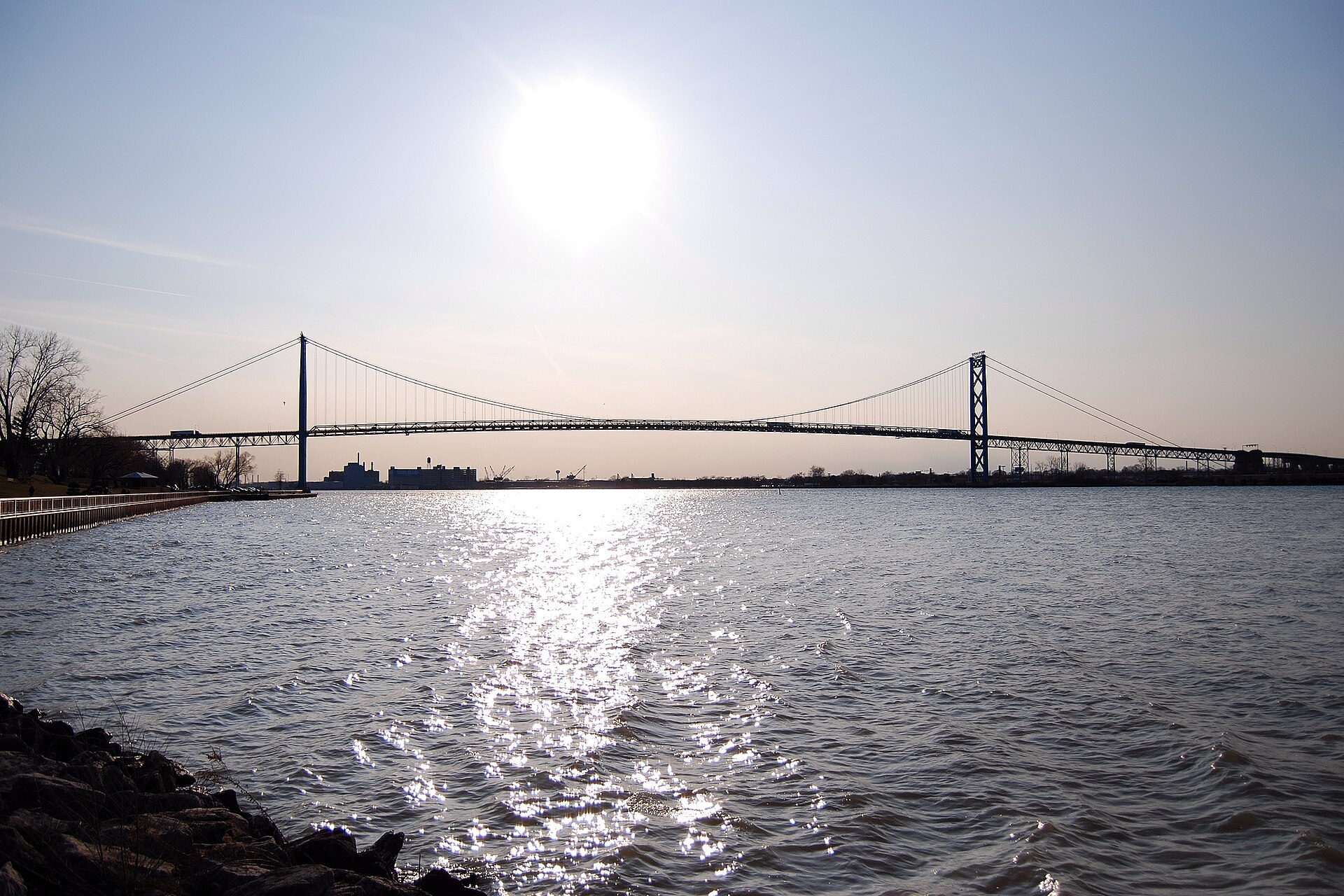
The CUSMA review is a check-up the Canada-U.S.-Mexico trade agreement requires every six years, and at the first one, on July 1, 2026, the United States declined to renew the pact. That did not end CUSMA: it stays fully in force until July 1, 2036, with a joint review every year until then, unless all three countries agree to extend it. Any country can also withdraw on six months’ notice, which would end the pact for that country only.
Key facts
- CUSMA took effect July 1, 2020. Under Article 34.7, it ends 16 years later, on July 1, 2036, unless all three countries confirm in writing that they want to extend it.
- At the July 1, 2026 joint review, the U.S. “did not agree to renew the USMCA in its current form.” Canada and Mexico backed an extension.
- Because one country did not confirm, the three countries must now hold a joint review every year. They can still agree a new 16-year term at any time.
- Any country can leave on six months’ written notice under Article 34.6. No notice of withdrawal has been reported.
- Separately, U.S. Section 338 duties and bans on some Canadian goods, including alcohol, whey and large motorcycles, remain in place and are being challenged in a U.S. trade court.
What is the CUSMA review?
The deal that replaced NAFTA (USMCA in the U.S., T-MEC in Mexico) does not run forever. Chapter 34 of the agreement sets a 16-year term and requires the three countries to meet as the Free Trade Commission on the sixth anniversary. Each country then tells the others in writing, through its head of government, whether it wants to extend the agreement. If all three say yes, the term is automatically extended for another 16 years and the next review falls six years later. Global Affairs Canada stresses on its joint review page that the review “is not an expiry date.”
What happened at the July 1 review?
The three countries met virtually. U.S. Trade Representative Jamieson Greer said afterwards that “the United States did not agree to renew the USMCA in its current form. As a result, the USMCA is not renewed,” and that the agreement “remains in force pending resolution of these issues or until the Agreement’s termination,” according to the USTR statement. Minister Dominic LeBlanc said he “reaffirmed Canada’s unwavering support for the CUSMA and its renewal,” and noted that the agreement “remains fully in force until 2036 and can be renewed at any time for another 16-year period,” in a Global Affairs Canada statement. Mexico and Canada both confirmed their support for an extension, the law firm White & Case reported.
What does “not renewed” actually mean?
In practice, it moves CUSMA from a six-year review cycle to a one-year cycle. Under Article 34.7.4, if any country does not confirm, the commission must meet for a joint review every year for the rest of the term. At any of those meetings, or at any other time, the three leaders can confirm in writing and restart the 16-year clock.
Nothing changes automatically: duty-free treatment, rules of origin and dispute settlement still apply. The countries have not announced a date or format for the annual reviews, and the agreement does not set one, the U.S. Congressional Research Service noted in a Sept. 29 update. It also noted that Greer told the Senate Finance Committee on July 22 that U.S. officials may have “options for … interim arrangements” by the end of 2026.
Where do Canada-U.S. talks stand now?
Washington and Ottawa came close to a deal in August, but Prime Minister Mark Carney pulled out on Aug. 21, less than 30 minutes before a tariff deadline, The Globe and Mail reported. The terms under discussion included lower U.S. tariffs on Canadian autos, steel and aluminum, in exchange for Canadian moves on U.S. alcohol, government procurement, retaliatory tariffs and dairy licensing.
On Nov. 1, Carney said he had a “good conversation” with President Donald Trump and that “our teams will now be working in the coming weeks to deliver that outcome,” CBC News reported. A senior source told CBC it is unclear what form the talks will take, and autos remain a key sticking point.
How do the Section 338 bans fit in?
They are a separate fight under U.S. law. Trump first used Section 338 of the Tariff Act of 1930 against Canada on July 20, citing what Washington calls Canadian discrimination against U.S. alcohol, dairy and autos. Duties of 50 per cent took effect Aug. 22. Three proclamations signed Sept. 8 then barred certain Canadian alcohol (Proclamation 11061), whey and some other products, including molasses and non-alcoholic beer (11062) and motorcycles over 800 cc (11063) from Sept. 29. Global Trade Alert counts 68 banned tariff entries worth up to US$0.97 billion, about 0.25 per cent of Canada’s exports to the U.S., and estimates the three 50 per cent lists covered about US$20.3 billion of 2025 U.S. imports from Canada as of Sept. 15. Serious Pick covered the bans when they took effect and explained how they differ from Section 232 tariffs.
Since then, a proclamation signed Oct. 23 (Proclamation 11076) changed the motor-vehicle list, the largest of the three 50 per cent lists, from Oct. 30, replacing 22 tariff lines with 100, including soaps, paint products and certain air conditioners. It did not change the ban lists. On Oct. 20, U.S. food importer Gellert Global Group, represented by the Liberty Justice Center, sued in the U.S. Court of International Trade, arguing that Section 338 was not lawfully used. Gellert has asked the court to block collection of the duties and order refunds with interest; supporting amicus briefs are due Nov. 13, according to Davis Wright Tremaine. Ottawa says its counter-tariffs on U.S. light vehicles and provincial and territorial restrictions on U.S. alcohol were responses to U.S. tariffs imposed in 2025, and that its administration of CUSMA dairy quotas complies with the agreement. It answered the Section 338 duties on Sept. 8 with its own counter-tariffs of 15, 25 or 50 per cent, the Trade Commissioner Service says.
Section 338 measures do not depend on CUSMA’s review, and CUSMA status gives no exemption from them. A broader Canada-U.S. deal could address them, but the review itself does not.
Could a country simply withdraw?
Yes. Article 34.6 lets any country withdraw by giving the others written notice. The withdrawal takes effect six months later, and the agreement stays in force for the remaining countries. If the U.S. left, CUSMA would continue between Canada and Mexico. The CRS notes that withdrawal is a separate process from the review. As of Nov. 3, no country had given notice.
What tariffs would apply if CUSMA ended?
If CUSMA ended between Canada and the U.S., whether through withdrawal or expiry in 2036, trade would generally fall back on World Trade Organization most-favoured-nation (MFN) rates (unless the suspended 1989 free trade agreement were revived; see below), the standard tariffs each country charges WTO members without a trade deal. On paper those rates are low. The U.S. simple average MFN tariff was 3.3 per cent in 2025, and Canada’s was 3.7 per cent, according to the WTO tariff profiles. Weighted by what Canada actually sold the U.S. in 2024, the U.S. MFN average was 1.4 per cent on non-farm goods and 4.4 per cent on farm goods.
Averages hide the spikes. The U.S. MFN rate is 2.5 per cent on most passenger cars but 25 per cent on light trucks of five tonnes or less, according to the U.S. Harmonized Tariff Schedule. Canada charges 6.1 per cent on most cars from countries without a trade deal, according to the Canadian customs tariff. Canada’s average MFN tariff on dairy is 214.1 per cent, the WTO says.
Today’s extra duties would also bite harder. Under current U.S. rules, the 10 per cent Section 301 tariff on Canada does not apply to goods entered duty-free under CUSMA, according to U.S. Customs and Border Protection. Some Section 232 relief for autos and parts is also tied to CUSMA rules, the Trade Commissioner Service says. Without CUSMA, those exemptions would no longer apply unless Washington rewrote them, though tariff rules can change at any time. Canadian steel already pays Section 232 duties regardless of CUSMA; Stelco has cited those trade pressures in announcing Hamilton layoffs.
One wildcard remains: the 1989 Canada-U.S. Free Trade Agreement was suspended, not terminated, and “remains suspended until such time as the suspension of CUSFTA is terminated,” Global Affairs Canada says. Whether it could be revived as a fallback has never been tested.
Bottom line
The review has not failed in the sense of ending the deal. CUSMA is in force, its tariff preferences still apply, and the agreement runs to July 1, 2036, with yearly reviews. The real risks are a withdrawal notice, which would start a six-month countdown, or tariffs imposed outside the agreement, such as Section 338. Watch for the first annual review date, any written confirmations of extension, and whether the work promised after the Nov. 1 call produces a deal.
Sources
- Global Affairs Canada — CUSMA Chapter 34 (Final Provisions) text · legal text
- Office of the U.S. Trade Representative — Greer statement on USMCA joint review (July 1, 2026) · government
- Global Affairs Canada — Statement by Minister LeBlanc after trilateral CUSMA joint review (July 1, 2026) · government
- Global Affairs Canada — CUSMA joint review · government
- Global Affairs Canada — CUSMA Canadian Statement on Implementation · government
- Congressional Research Service — USMCA Joint Review: Process and Role of Congress (R48787) · research
- White & Case — USMCA 2026 Joint Review: United States declines to extend · law firm
- The Globe and Mail — What was on the table in August · news
- CBC News — Carney, Trump conversation · news
- Federal Register — Proclamation 11061 (alcohol ban) · government
- Federal Register — Proclamation 11062 (dairy ban) · government
- Federal Register — Proclamation 11063 (motorcycle ban) · government
- Federal Register — Proclamation 11076 (Oct. 23 scope change) · government
- Global Trade Alert — Canada Section 338 September package · research
- Trade Commissioner Service — Answers to common questions on U.S. tariffs · government
- Liberty Justice Center — Gellert Global Group Corp. v. Trump · legal filing
- Davis Wright Tremaine — Administration Amends Canadian Section 338 List Again, Requests Comments on ITC Role · law firm
- U.S. Court of International Trade — Scheduling order, Gellert Global Group Corp. v. Trump, No. 26-04636 (Oct. 28, 2026), PDF via Davis Wright Tremaine · court document
- U.S. Customs and Border Protection — CSMS #69326983 (Section 301 duties on Canada) · government
- WTO — World Tariff Profiles: United States · official data
- WTO — World Tariff Profiles: Canada · official data
- U.S. International Trade Commission — Harmonized Tariff Schedule, heading 8703 (passenger cars) · government
- U.S. International Trade Commission — Harmonized Tariff Schedule, heading 8704 (trucks) · government
- Canada Border Services Agency — Customs Tariff 2026, Chapter 87 · government
Newsletter
News. Context. What matters.
One essential briefing, written for people who would rather understand the story than scroll it.
Unsubscribe anytime. We don’t sell addresses.
Recommended
Explainers
Section 338 bans vs Section 232 tariffs: what’s the difference for Canada?
Washington’s Section 232 tariffs hit steel, aluminum, autos and lumber from every country. A rarely used 1930 law now targets Canada alone, taxing about US$20 billion of goods and banning some outright.
Explainers
What do the US-China tariff cuts mean for Canadian exporters?
Washington and Beijing have listed US$30 billion of goods each for lower tariffs, putting US canola, pork, seafood, lumber and coal in line for a Chinese edge over Canadian rivals.