Canada
Trump just carved Canadian goods out of his 50% tariff wall — but swapped in canoes, coffins and shampoos
The president signed an order Friday removing 50% duties on plywood, paper products, packing materials and seaweed from Canada — while adding carpets, cocoa powder and ice cream sticks to the tariff list. Reuters reports the move is aimed at helping a Republican senator in a tight Maine race.
Published: October 23, 2026 · Updated: October 23, 2026 · 2 min read
What Trump signed
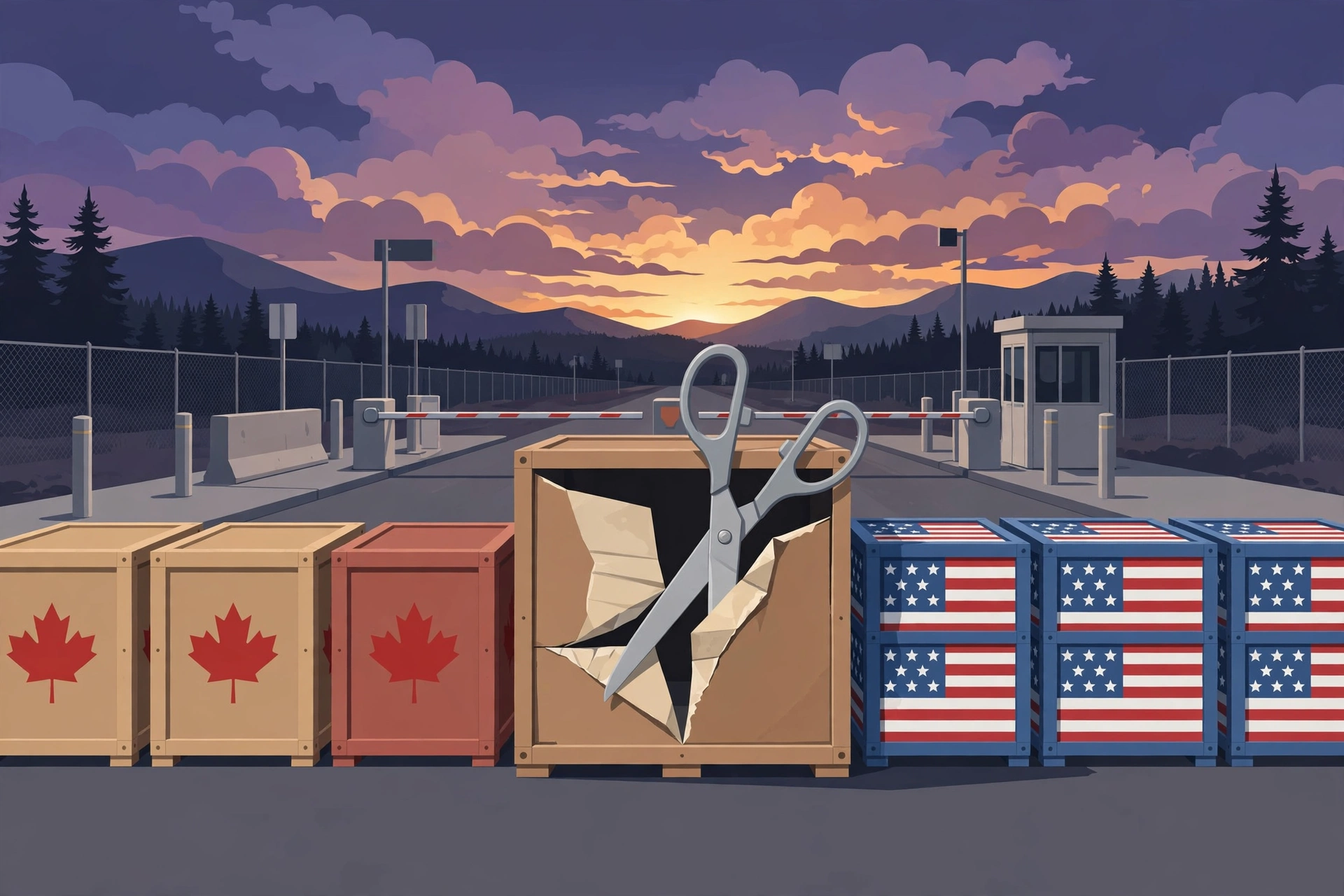
President Donald Trump signed an order on Friday removing 50 per cent tariffs on some Canadian agricultural and forestry products, Reuters reported. The order exempts plywood sheets, some paper products, certain machinery and refrigeration equipment, and packing crates and boxes, as well as fresh and dried seaweed, the White House said. The changes take effect on October 30 — four days before the November 3 U.S. midterm elections. But it was not all relief: Trump added a number of Canadian products to the 50 per cent tariff list to offset the exemptions, including carpets, paints, waste, shampoos, cocoa powder, wooden coffins, ice cream sticks, air-conditioning machines, chest freezers, archery equipment and canoes.
Why Maine
The White House framed the exemptions as helping an embattled Republican ally. Senator Susan Collins of Maine — locked in a tight reelection battle, Reuters reports — had urged the administration to address tariffs on products affecting Maine companies and farmers in a state that borders Canada. Collins said the relief would aid Maine's blueberry, potato, apple and seaweed producers. "These producers are a vital part of our state's economy and support our rural and coastal communities," Collins said. "Many of our farmers and growers rely on specialized equipment, packaging materials and other products from Canada that are either unavailable from American suppliers or cannot be replaced without incurring significant expense." Democrat Troy Jackson is challenging Collins in a race polls indicate is very close, and the two sparred over tariffs at an October 6 debate, Reuters reported.
The Canadian angle
For Canadian producers, the exemptions are real but narrow — paper, plywood and packaging cross the border constantly, and Maine's economy is deeply intertwined with New Brunswick's. The additions sting: Canadian-made carpets, paints and freezers now face the 50 per cent rate. And the bigger picture hasn't moved. The White House factsheet describes the changes as modifications to Proclamation 11048 — "Imposing Additional Duties To Offset Canadian Discrimination Against the Commerce of the United States With Respect to Motor Vehicles" — meaning the tariff architecture around Canada's auto sector stands untouched. With the U.S.–Canada trade talks broken down and Washington accusing Ottawa of election interference this week, Ottawa gets modest relief for some exporters and a new tariff list for others. A broader deal remains, in Reuters' words, close — but not closed.
What matters
What happened
Trump signed an order Friday removing 50% tariffs on select Canadian agricultural and forestry goods (plywood, paper, machinery, refrigeration equipment, packing materials, seaweed), effective Oct. 30 — while adding carpets, paints, shampoos, cocoa powder, coffins and others to the 50% list.
Why it matters
It's tariff relief and tariff escalation in one order — modest help for Canadian exporters, new pain for others, all timed four days before the U.S. midterms.
What we know
The exemptions target products crucial to Maine, where Senator Susan Collins is fighting a close reelection race; she publicly lobbied the White House for them.
What we don’t
How Canadian exporters of the newly tariffed goods respond, and whether this is the start of broader relief or a one-off election-season maneuver.
What’s next
Watch whether the exemptions calm Maine's cross-border economy — and whether Washington's "trade deal close" framing turns into an actual agreement after November 3.
Sources
- Reuters (David Shepardson), "Trump ends tariffs on some Canadian products, as Senator Collins faces close race" (Oct. 23, 2026) · other
- Reuters via SRN News, "Trump ends tariffs on some Canadian products, as Senator Collins faces close race" (Oct. 23, 2026) · other
- RealAgriculture, "Trump set to remove tariffs on some Canadian goods in attempt to prop up Republican candidate" (Oct. 23, 2026) · other
- · other
tariffsmidtermsTrump tariffsCanada US tradeSusan Collinsplywoodpaper productsMaine
Newsletter
News. Context. What matters.
One essential briefing, written for people who would rather understand the story than scroll it.
Unsubscribe anytime. We don’t sell addresses.
Recommended

Canada
Ottawa tables bill to let Canadians request assisted dying in advance — and drops the mental-illness expansion
Bill C-41 would let adults diagnosed with an incurable illness that will take away their decision-making capacity consent to medical assistance in dying in advance, while the government says it will not proceed with eligibility based solely on mental illness.
Canada
Trump says a Canada tariff deal is coming 'pretty soon' — but offers no terms
At a Michigan border rally Sunday, the U.S. president predicted the trade dispute would be settled soon while repeating his claim Canada has been "ripping off" the U.S. — and Ottawa did not immediately respond.
Canada
B.C. Conservatives win majority government — and David Eby is stepping down as NDP leader
CTV News declared a Conservative majority Saturday night as interim leader Lorne Doerkson's party surged to a commanding lead, ending nine years of NDP government and giving B.C. its first Conservative government in nearly a century.