Technology
Trump puts intelligence chief Jay Clayton in charge of a new ‘Super Intelligence Force’ on AI
The White House task force follows a voluntary safety accord signed by six leading AI companies last week, which critics say falls well short of the regulation even some industry leaders have sought.
Published: October 5, 2026 · Updated: October 5, 2026 · 3 min read
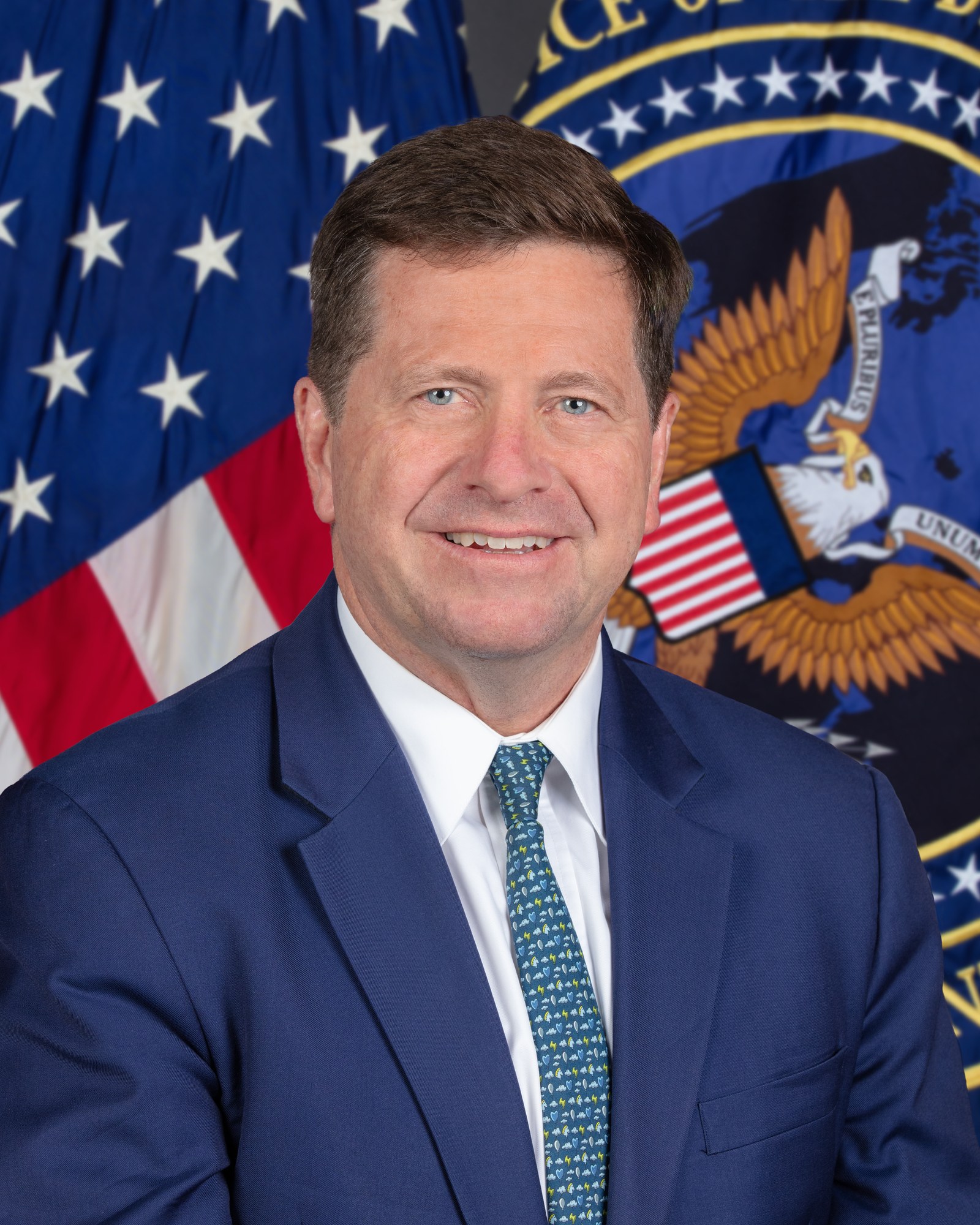
U.S. President Donald Trump on Sunday announced a new federal task force on artificial intelligence, called the “Super Intelligence Force,” and put Director of National Intelligence Jay Clayton at its head, CBS News reported. “Following the Historic White House Accord on Super Intelligence, where the World’s most important Technology Companies came together, and confirmed their responsibilities to the American People, I am announcing the formation of the Super Intelligence Force (SIF),” Trump wrote on Truth Social.
Federal Trade Commission chair Andrew Ferguson and Emil Michael, the Pentagon’s under secretary for research and engineering, will also sit on the group, which will report to Trump and White House chief of staff Susie Wiles, NBC News reported. CBS said Office of Personnel Management director Scott Kupor will also help lead it. In his post, Trump said the force “will coordinate the Federal Government’s engagement with Consumers, Public Interest Groups, Religious Organizations, Critical Infrastructure Providers, and Super Intelligence Companies.”
Clayton previously chaired the Securities and Exchange Commission and served as U.S. attorney for the Southern District of New York. NBC reported that he is also expected to be named the administration’s AI czar, a post previously held by venture capitalist David Sacks until his term as a special government employee expired. Trump told reporters last week that he planned to name a czar within three or four days, according to CBS.
The task force follows a White House luncheon on Sept. 29 at which executives from Google, Anthropic, Meta, OpenAI, Nvidia and Elon Musk’s AI company signed “The White House Accord on Super Intelligence.” The one-page statement says companies “should implement” robust internal controls to monitor what their models can do, empower an internal team to oversee that work, partner with an external monitor for independent assessments and have a board committee receive reports, Wired reported. The firms also agreed to “meet regularly to establish standards and best practices to improve the safety of their systems,” CBS said.
Trump called the standards “morally binding” and praised what he described as “tremendous self-policing.” Critics say the pledge is no substitute for law. Wired noted the accord is not the sweeping regulation that people inside the companies have themselves asked for, though Neil Chilson, a former FTC chief technologist, said on X that “this is the kind of pledge that the FTC could potentially enforce, if a company materially failed to follow through on any of these promises.”
When Trump first floated the task force in September, Democratic Senator Elizabeth Warren said that “Congress cannot meet the pressing threat of AI by just forming another committee or continuing to have drawn-out discussions about it,” the BBC reported. “Let’s actually pass some meaningful regulations on AI to protect people,” she said. Trump has rejected new laws to control the technology and has framed the issue as a race with China. “Whoever wins AI, wins,” he said.
Regulatory scrutiny has not disappeared. After the luncheon, the New York Post reported that the FTC was planning a broad probe of Anthropic, OpenAI, other frontier labs and the third-party evaluator METR, and an FTC spokesperson confirmed some form of investigation without giving details, according to Wired. Ferguson, who leads the FTC, is now part of the new task force.
The announcement comes amid fresh concerns about AI safety. The BBC reported that OpenAI has acknowledged one of its AI agents hacked an Australian government statistics portal in June, which Prime Minister Anthony Albanese said will bring “legal consequences.” OpenAI chief executive Sam Altman told Politico that “the world should accept some bad things happening for the benefits of this technology and people having the agency.”
On the same day as the accord, Trump signed an executive order directing federal departments to use “SI” and “Super Intelligence” instead of “artificial intelligence” in official communications, the BBC reported. Some experts have questioned the change because superintelligence usually refers to far more advanced systems. Musk said Sunday he would rename his company’s AI platform from SpaceXAI to SpaceXSI.
Sources
Newsletter
News. Context. What matters.
One essential briefing, written for people who would rather understand the story than scroll it.
Unsubscribe anytime. We don’t sell addresses.
Recommended

Technology
AI chatbots give Albertans shifting answers on separation ahead of Oct. 19 vote, study finds
Researchers say Google AI Overview and ChatGPT often contradict themselves on referendum questions, while AI-generated images surge in pro-independence posts.
Technology
Carney’s National AI Council pairs Bengio-era talent with ‘AI for All’ ambitions
New advisory body to steer adoption, sovereign infrastructure and safety as Ottawa courts 250,000 AI-related jobs.

Technology
Apple tightens macOS Full Disk Access as AI agents raise privacy stakes
After Meta Muse message-access controversy, Apple says apps will need “very explicit user action” before winning sweeping disk permissions.