Technology
Google’s Project Suncatcher puts four Trillium TPUs into orbit to test AI compute in space
A Planet-built prototype on SpaceX’s Transporter-18 is running short Gemini bursts in orbit, the first flight test of Google’s moonshot to host machine-learning accelerators beyond Earth.
Published: October 5, 2026 · 3 min read
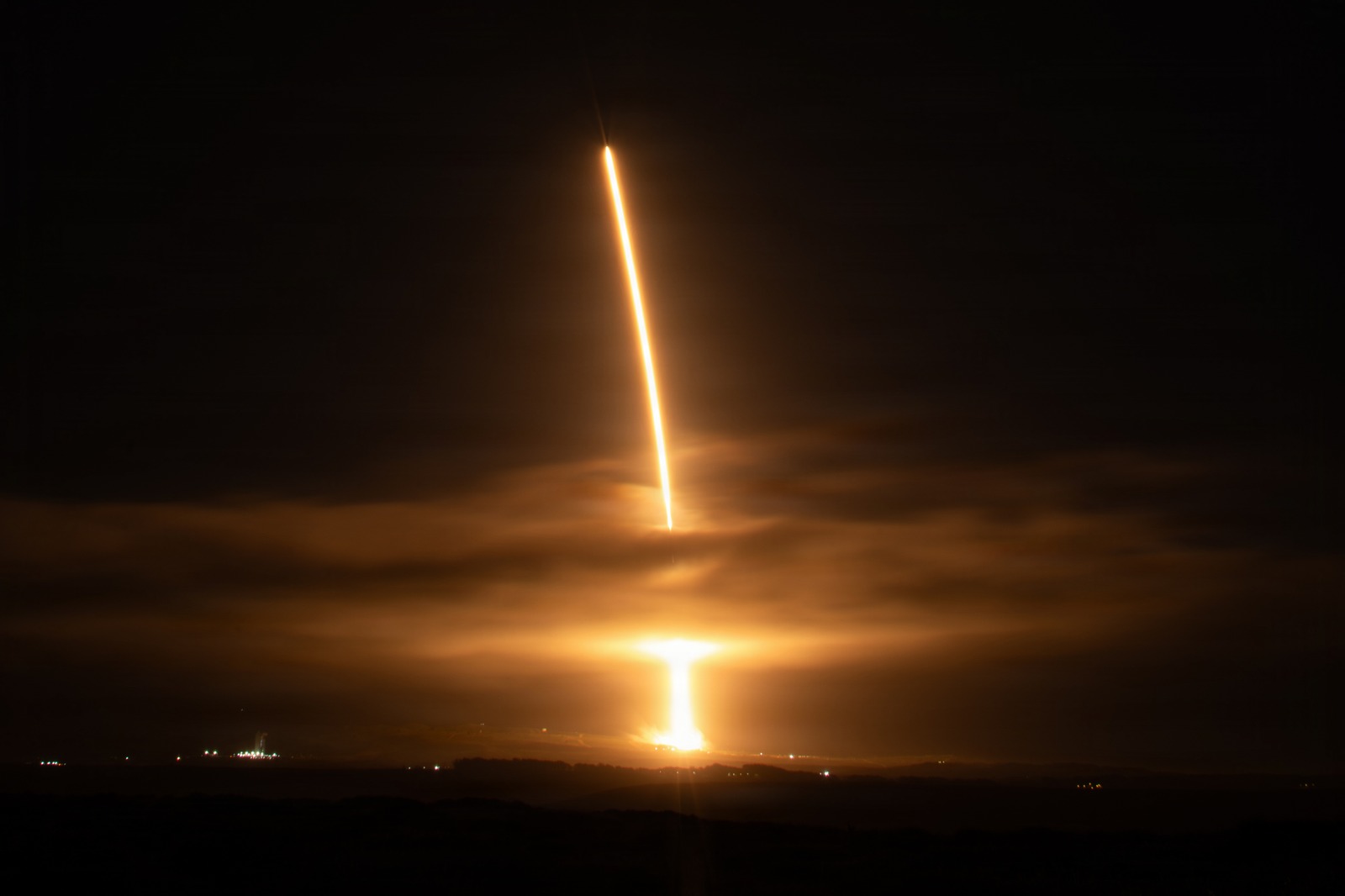
Google has confirmed contact with a prototype satellite carrying four of its Tensor Processing Units, marking the first time the company’s AI accelerators have operated in space. The Project Suncatcher craft, built with Earth-imaging partner Planet, launched Oct. 1 aboard SpaceX’s Transporter-18 rideshare and “is operating as expected,” senior director of Paradigms of Intelligence Travis Beals wrote on Google’s The Keyword blog.
The refrigerator-sized satellite, also listed on SpaceX’s deployment schedule as Project Suncatcher M1, hosts four Trillium-generation TPUs — the same processor family used for Google Cloud AI workloads — offering roughly the compute of a standard Cloud TPU v6e-4 slice, GCN reported. Solar panels are rated around one kilowatt. The chips run Gemini models in short bursts of about 15 minutes before thermal limits force a cooldown, a direct consequence of cooling with heat pipes and radiators rather than airflow in vacuum.
Beals framed the flight as the opening move in a long-term research moonshot exploring whether space could one day host scalable machine-learning infrastructure. Over the coming weeks the team will gather in-orbit data on how the TPUs handle the physical stress of launch and the radiation and thermal extremes of low Earth orbit. Google said a peer-reviewed paper detailing the research behind the mission is now available in the journal Joule.
Extensive ground work preceded liftoff. Google ran Trillium TPUs through a proton beam at the University of California, Davis’s Crocker Nuclear Laboratory and reported the chips withstood a radiation dose greater than a shielded five-year mission would deliver, according to GCN and Google’s earlier research blog. High-bandwidth memory was the most sensitive subsystem but only showed irregularities after about 2 krad(Si), nearly three times the expected shielded five-year dose of 750 rad(Si). Vibration testing shook the satellite on all three axes to mimic Falcon 9 frequencies. SpaceX deployed the payload about 61 minutes after liftoff from Vandenberg Space Force Base among roughly 130 rideshare satellites.
The research vision sketched in Google’s November 2025 preprint reaches far beyond a single prototype. Designers describe dawn-dusk sun-synchronous orbits where solar panels can be up to eight times more productive than on the ground and generate power nearly continuously, clusters of about 81 satellites flying within a one-kilometre radius, and free-space optical links targeting tens of terabits per second between craft only hundreds of metres apart. A bench-scale demonstrator already achieved 800 gigabits per second each way — 1.6 terabits per second total — with a single transceiver pair, the research post said.
Economics are part of the moonshot case. Google’s analysis of historical and projected launch pricing suggested costs could fall below US$200 per kilogram by the mid-2030s, potentially putting the launch-plus-operate cost of a space-based data centre in the same ballpark as reported energy costs for an equivalent terrestrial facility on a per-kilowatt-year basis. That is a modelling claim, not a commercial schedule: the company has not announced a customer service or said when the program would leave the research phase.
Next on the roadmap is a learning mission with Planet, slated for early 2027, to fly two TPU-equipped satellites and validate high-bandwidth laser links for distributed machine-learning tasks. The current prototype is designed to operate for about a year and to deorbit within roughly six years. Google is clear-eyed that proving accelerators and cooling in orbit clears only an early hurdle; ground communications, on-orbit reliability and true cost competition with terrestrial data centres remain much larger tests before orbital AI compute becomes more than a research curiosity.
Sources: Google The Keyword; GCN; Google Research Blog.
Sources
- Google The Keyword · other
- GCN · other
- Google Research Blog · other
Newsletter
News. Context. What matters.
One essential briefing, written for people who would rather understand the story than scroll it.
Unsubscribe anytime. We don’t sell addresses.
Recommended
Technology
Trump puts intelligence chief Jay Clayton in charge of a new ‘Super Intelligence Force’ on AI
The White House task force follows a voluntary safety accord signed by six leading AI companies last week, which critics say falls well short of the regulation even some industry leaders have sought.
Technology
AI chatbots give Albertans shifting answers on separation ahead of Oct. 19 vote, study finds
Researchers say Google AI Overview and ChatGPT often contradict themselves on referendum questions, while AI-generated images surge in pro-independence posts.
Technology
Carney’s National AI Council pairs Bengio-era talent with ‘AI for All’ ambitions
New advisory body to steer adoption, sovereign infrastructure and safety as Ottawa courts 250,000 AI-related jobs.