Politics
Carney pledges ‘co-operative federalism’ with the PQ, but Alto rail shapes up as the first test
A day after the Parti Québécois won a minority, the prime minister said he spoke with premier-designate Paul St-Pierre Plamondon about tariffs and infrastructure, while his ministers defended projects the PQ has vowed to oppose.
Published: October 6, 2026 · Updated: October 6, 2026 · 3 min read
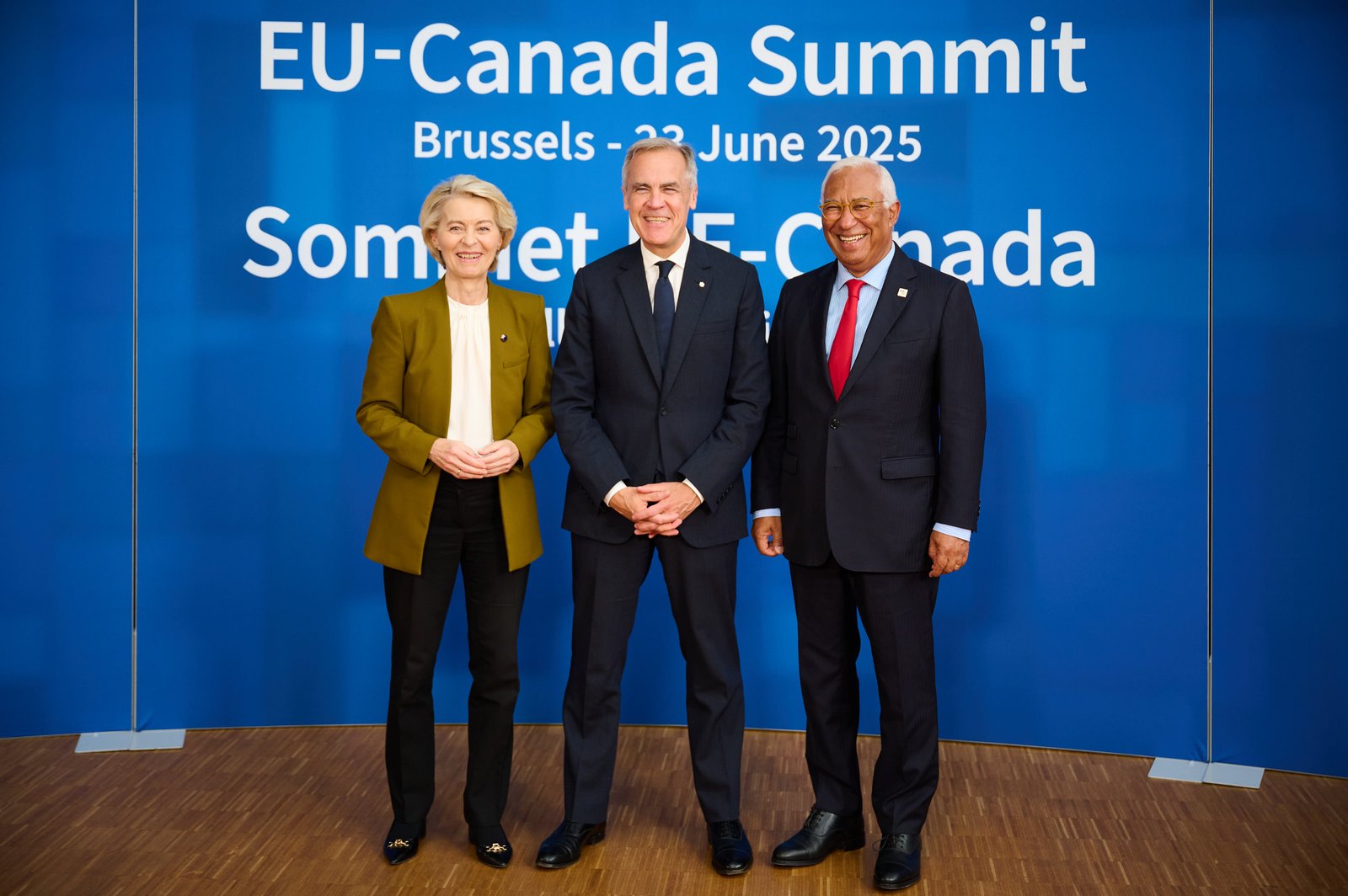
Prime Minister Mark Carney said Tuesday he has spoken with Quebec premier-designate Paul St-Pierre Plamondon and will deal with the incoming Parti Québécois government through what he calls co-operative federalism, a day after the sovereigntist party won a minority in Monday’s provincial election. Speaking to reporters on his way into a cabinet meeting on Parliament Hill, Carney said the two discussed infrastructure funding and support for Quebec workers hurt by U.S. tariffs, The Canadian Press reported. According to The Associated Press, the call took place Tuesday morning and Carney used it to congratulate the PQ leader.
Carney cast the moment as one for action rather than waiting. “This is a crucial time for our country, it’s a crucial time for Quebec,” he said. “This is not a time to wait for something a few years down the road.” He pointed to affordable housing, major projects such as the Churchill Falls energy development, infrastructure needs in Quebec and help for tariff-hit workers. In a social media statement on election night, quoted by The Canadian Press in a report carried by Canada’s National Observer, Carney wrote that “building a stronger Québec is core to our mission of building a stronger Canada.”
The referendum question hung over the day. St-Pierre Plamondon has promised a vote on sovereignty during his mandate, but not before U.S. President Donald Trump leaves office. Asked whether that worried him, Carney replied that he, too, was pursuing sovereignty, but for the whole country. “It’s sovereignty, but it’s Canada’s sovereignty. It’s Canada’s independence,” he said, according to the National Post. Joël Lightbound, Carney’s Quebec lieutenant, said Monday’s vote “was an election, not a referendum,” and said Ottawa would keep arguing that Quebec is stronger inside Canada, AP reported.
The clearest early test is the Alto high-speed rail line between Toronto and Quebec City, a Carney government priority that St-Pierre Plamondon has vowed to pull Quebec out of. When he first made that pledge in June, calling the project a “fiasco” the province cannot afford, Transport Minister Steven MacKinnon said “there is no Alto project without Quebec,” the Toronto Star reported at the time. The National Post noted that the Parliamentary Budget Officer estimated last week the line could cost taxpayers more than $110 billion.
Industry Minister Mélanie Joly said Tuesday she remains convinced that both Alto and Churchill Falls will go ahead because they are in Quebecers’ interest. She described Churchill Falls as a $70-billion investment and the largest clean-energy investment in North American history, and said the rail line would connect Montreal, Trois-Rivières and Quebec City, CP reported. Heritage Minister Marc Miller declined to speculate on the projects’ future but said Ottawa has “a job federally to continue to convince Quebecers, Ontarians, and the rest of the country” of Alto’s importance. MacKinnon declined to comment on what the result means for the project, the Post reported.
The arithmetic in Quebec City will shape what comes next. The PQ won 59 of the National Assembly’s 127 seats, five short of a majority, on about 28 per cent of the popular vote, while the Coalition Avenir Québec was shut out entirely after eight years in power. The Liberals elected 40 members, the Conservatives 19 and Québec solidaire nine, according to the CP tally. In his victory speech, St-Pierre Plamondon said Carney would find in him “a partner in dialogue and collaboration” every time the prime minister defends Quebec’s interests. Conservative Leader Pierre Poilievre congratulated both St-Pierre Plamondon and Quebec Conservative Leader Éric Duhaime on social media.
The result lands less than two weeks before Albertans vote on Oct. 19 on whether to hold a referendum on separation, and as Ottawa contends with Trump’s tariffs. According to AP, Daniel Béland, a political scientist at McGill University, said support for Quebec independence sits at about 30 per cent, low by historical standards, and that Monday’s vote was driven more by a desire to oust the CAQ than by a rise in sovereignist sentiment.
Sources: The Canadian Press via Winnipeg Free Press; The Associated Press via WRAL; National Post; The Canadian Press via Canada’s National Observer; Toronto Star (June 2026).
Sources
Newsletter
News. Context. What matters.
One essential briefing, written for people who would rather understand the story than scroll it.
Unsubscribe anytime. We don’t sell addresses.
Recommended

Politics
PQ wins Quebec with a minority as the CAQ is wiped out and Fréchette loses her seat
Paul St-Pierre Plamondon’s Parti Québécois took 59 of 127 seats on 28 per cent of the vote, leaving any independence referendum dependent on support from other parties in the National Assembly.
Politics
Alberta separatists’ U.S. outreach sparks call for new rules two weeks before referendum
A Globe and Mail investigation into State Department pitches and Michigan Republican voter software has Calgary MP Corey Hogan asking whether Canada needs a law covering freelance diplomacy.
Politics
Quebecers vote as final projections put the PQ on the edge of a majority and the CAQ near wipeout
Polls are open until 8 p.m. ET after more than a quarter of electors voted early, with the Parti Québécois favoured to win and its sovereignty referendum pledge hanging over the result.