Money
Oil just settled at its highest since May — as a report says the U.S. and Israel have drawn up post-midterm strike plans for Iran
Brent closed at $113.17 on Thursday, up 4%, after The New York Times reported the two militaries have specific plans for a short, intense campaign against Iran after November 3. The S&P 500 had its worst day since July.
Published: October 23, 2026 · Updated: October 23, 2026 · 2 min read
The market day
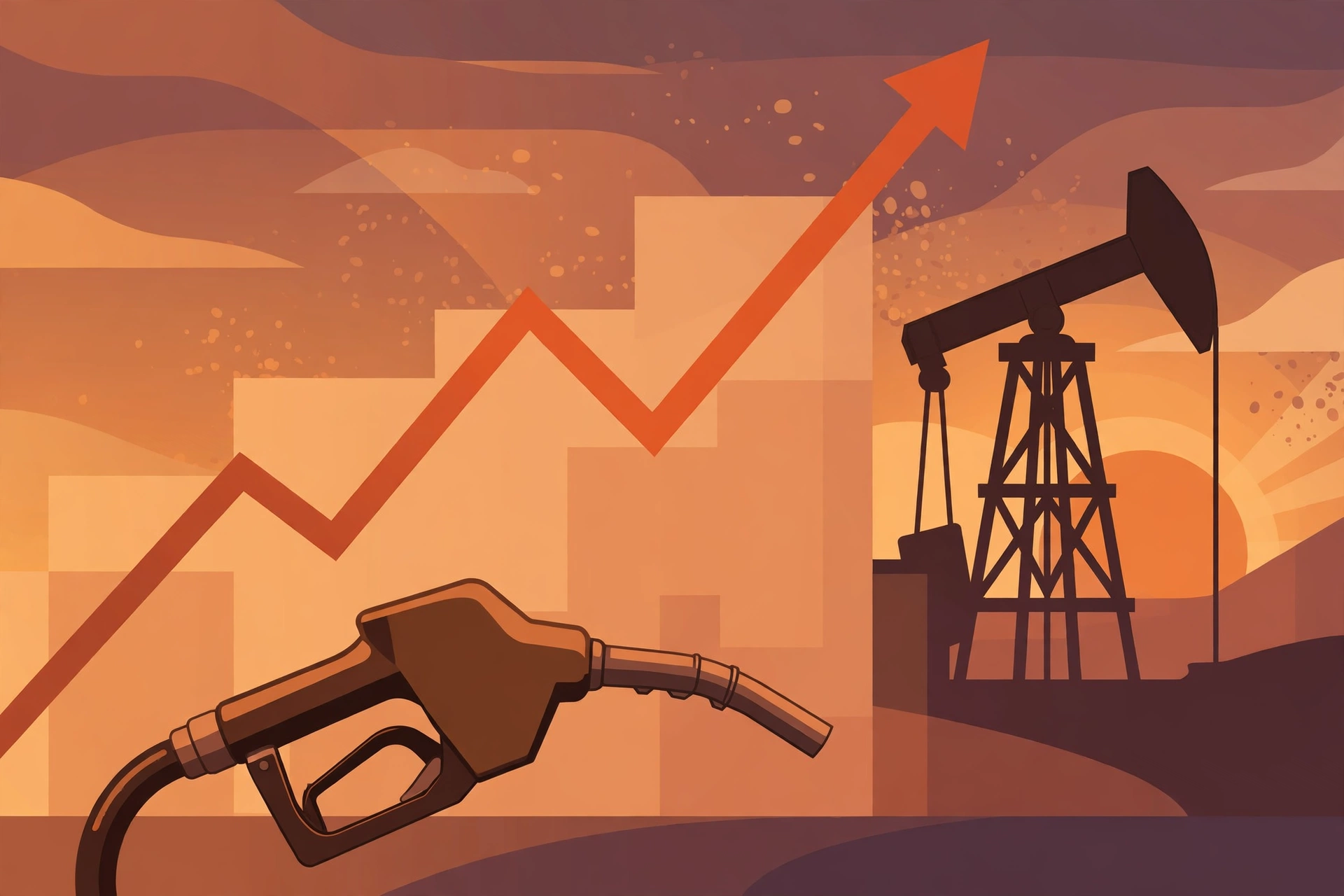
Wall Street had its roughest session in months on Thursday. The S&P 500 fell 1.2 per cent — its worst day since July — to close at 7,663.43, while the Nasdaq Composite tumbled 2.6 per cent, according to MarketWatch and The Guardian. Meta Platforms fell 7 per cent after earnings, chip-equipment maker Lam Research dropped 11.8 per cent after warning of supply-chain constraints into 2027, Nvidia slid 4.4 per cent and CoreWeave fell 10.1 per cent. Markets in Asia and Europe declined too: South Korea's Kospi lost 3.5 per cent, Hong Kong's Hang Seng 3 per cent and Japan's Nikkei 2.7 per cent. Oil moved the other way. Brent crude rose 4 per cent to settle at $113.17 a barrel — its highest settlement since May 4, according to MarketWatch — though still 4.4 per cent below the year's closing high of $118.35. Prices sat below $97 at the start of October.
The report behind the move
The New York Times reported Wednesday that the U.S. and Israeli militaries have drawn up specific plans for renewed strikes on Iran after the American midterm elections, citing U.S. officials and others briefed on the discussions, TBS News reported. The plans call for a short, intensive operation — some planners believe three days of strikes — against Iran's nuclear facilities, energy infrastructure and missile-and-drone stockpiles. The two militaries have stepped up exercises, including flights over Iraq to rehearse strike maneuvers, and Defense Secretary Pete Hegseth met Israeli Prime Minister Benjamin Netanyahu in Israel this week. Some officials said refineries would be spared so as not to push gasoline prices higher; Iran has threatened its own retaliation, including strikes on data centers and undersea internet cables. Nothing has been approved, and Trump has repeatedly vetoed a return to major combat this year. A White House official told the Times the administration does not comment on military plans "that may or may not exist." Trump told reporters Wednesday: "Most people seem to think it's after the election, we're gonna see what happens."
The Canadian angle
For Canadians, the number that matters is at the pump. Every dollar on crude lands in gasoline prices, and Brent's $16 climb this month is more inflation pressure ahead of the Bank of Canada's October 28 rate decision — six days away. For Alberta's producers, prices above $110 are a windfall; for everyone else, it's pain at the pump. Traders have fully priced in a 25-basis-point Federal Reserve rate increase in December, according to Yahoo Finance, as higher energy costs feed rate-hike expectations on both sides of the border.
What matters
What happened
Brent settled at $113.17 on Thursday — up 4 per cent, its highest since May 4 — as traders weighed a New York Times report of U.S./Israel plans for post-midterm strikes on Iran.
Why it matters
Energy is the through-line of this fall's inflation story — every dollar on crude shows up in Canadian gas prices and complicates the October 28 Bank of Canada call.
What we know
The strike plans are plans, not orders. Trump has vetoed similar operations this year and promised no strike before November 3 — markets are pricing the risk, not the event.
What we don’t
Whether Trump authorizes anything at all — and what Iran's retaliation looks like if he does.
What’s next
Watch Israel's October 27 election, the November 3 U.S. midterms, and whether Tehran escalates its threats beyond rhetoric.
Sources
- The Brief · other
- TBS News · other
- Yahoo Finance via NewsBeep · other
Bank of Canadaoil pricesBrent crudeIranmidtermsNasdaqIsraelstock marketgasoline
Newsletter
News. Context. What matters.
One essential briefing, written for people who would rather understand the story than scroll it.
Unsubscribe anytime. We don’t sell addresses.
Recommended
Money
The Bank of Canada decides in four hours. The market says hike — the economy says wait.
At 9:45 a.m. ET the Bank sets its policy rate and publishes new forecasts. Markets lean heavily toward a hike to 2.50%, but the case for holding at 2.25% is real — and a surprise either way moves mortgages, the loonie and December bets.

Money
Amex posted a record quarter — then announced it's cutting 3,500 jobs to get ready for AI
American Express reported record third-quarter revenue of $20.1 billion and raised its profit outlook, then told analysts it will cut about 5 per cent of its workforce in a $336-million restructuring its CFO says is meant "to prepare for AI."
Money
The Bank of Canada is now expected to hike rates on Oct. 28 — and hike again by spring
A Reuters poll of 34 economists finds 56% now expect a quarter-point hike to 2.50% next Wednesday, with another rise by end-March, after September's 3.1% inflation reading and sharply rising expectations.