Money
Diesel just hit $2.64 a litre. Your grocery bill hasn't felt it yet.
The record fuel price isn't about your car — it's about everything your car carries. Why diesel broke, and what winter brings.
Published: October 14, 2026 · Updated: October 14, 2026 · 4 min read
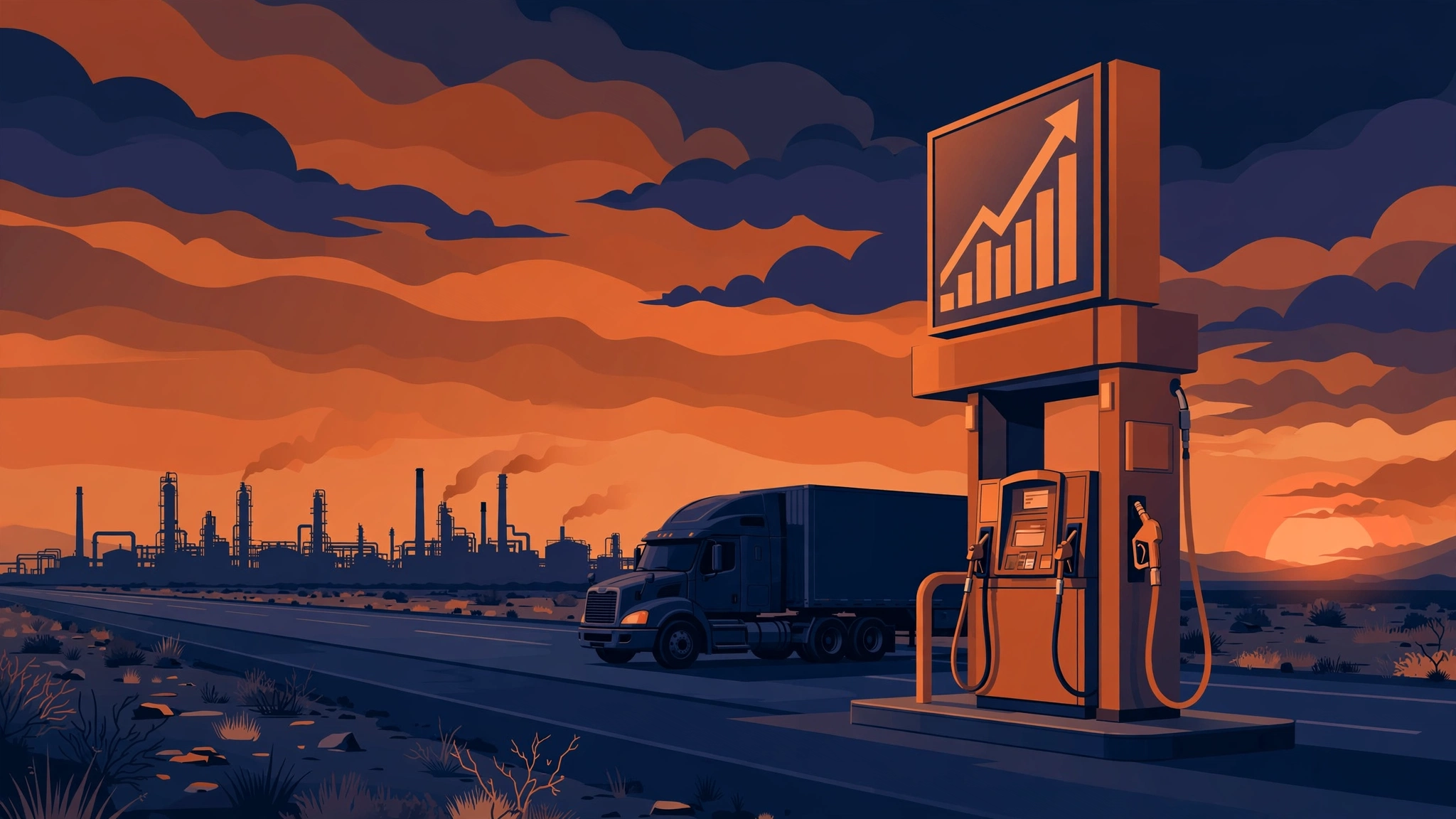
Diesel just did something it's never done. For the week ended Sept. 29, the national average retail price hit $2.64 a litre, according to Natural Resources Canada — an all-time record, 59 per cent higher than before the Iran war and 15 per cent above the previous record set in November 2022. A single-day reading on Sept. 17 touched $2.751. And here's the thing most people miss: only 2.7 per cent of Canadian light-duty vehicles run on diesel. This was never about your car.

Diesel is the economy's fuel. Trucks move 77.7 per cent of domestic freight by volume; the industry is worth $67 billion and employs more than half a million Canadians. Fuel is about 15 per cent of a for-hire carrier's operating costs — the industry's biggest expense after wages. A Montreal–Toronto round trip that cost about $850 in fuel on Jan. 1 now costs about $1,400, up 65 per cent. Railway fuel surcharges for October are up 73 per cent since early August. When diesel moves, everything that moves with it gets more expensive.
So why did it break? Start with crude: Brent went from under $60 in January to $118 in March and sits around $106 today — up roughly 74 per cent this year. But crude is only half the story. The real story is refining. The Federal Reserve Bank of Dallas reports that 6 to 8 million barrels a day of global refining capacity — up to one in ten refineries on the planet — has been knocked offline since late spring. The "crack spread," the refiner's margin for turning crude into diesel, has topped $100 a barrel, roughly triple a year ago. That's why diesel is outrunning crude: we're not short of oil, we're short of refineries.
Five forces collided. Ukrainian drones hammered Russian refineries — at least 22 strikes in August alone, the most in any month of the war, knocking about 17 per cent of Russia's refining capacity offline, according to the IEA and Reuters. The Hormuz tanker attacks choked Gulf diesel exports to a fraction of pre-war levels — about a third of global diesel exports are curtailed. Fall refinery maintenance season arrived right on top of harvest, the most fuel-intensive weeks of the farming year. And U.S. refineries are running at 96–98 per cent with no spare capacity to give. Trump's deal to import Russian diesel helps at the margin — the pledged volumes cover less than ten days of U.S. demand, analysts note — but it can't replace a tenth of the world's refining.
What does it mean for you? Three bills. First, groceries: freight surcharges show up in food prices within 30 to 60 days, analyst Dan McTeague estimates — and August's cool 2.8 per cent food inflation reading predates September's diesel spike. The head of the Canada Truck Operators Association puts it bluntly: "End of the day, companies have to pass that cost to the consumers. You're going to see that impact coming on the grocery prices." Second, the farm: a single combine burns about 70 litres an hour; over a 30-day harvest that's 16,800 litres — costing roughly $15,000 more per machine than at $1.10 diesel, per the Grain Growers of Canada. Third, heat: about 39 per cent of Nova Scotia households and 56 per cent in P.E.I. heat with oil. A typical Nova Scotia home burns 2,800 litres a year. Heating-oil costs there are up 47 per cent year over year.
And winter is coming — literally the worst season for this. Diesel and heating-oil demand climbs in winter; U.S. distillate inventories are expected to fall below 100 million barrels for the first time in more than 20 years and stay below the five-year average through most of 2027. The IEA says there are "few available options to prevent a further tightening of supplies and higher prices in the coming months." Ottawa's fuel excise tax suspension — extended through Jan. 31 — saves 4 cents a litre on diesel. Against a $1-a-litre year-over-year increase, that's a bandage on a fracture.
My take: diesel is the tax nobody voted for and everybody pays. It doesn't show up on your pay stub or your ballot — it shows up in the price of bread, the cost of heating your home, and the freight surcharge buried in everything you buy. The good news is that the fix is visible: de-escalation in the Gulf, an end to the refinery strikes, and crude drifting back toward $85 could pull diesel below $2 again, one analyst told CTV. The bad news is that none of those are in Canada's control — and the Dallas Fed warns fuel prices will stay elevated relative to crude even after Hormuz reopens, because the refineries aren't coming back by Friday. Watch the pump, but watch the grocery receipt more.
What matters
What happened
Diesel hit an all-time record $2.64/L for the week ended Sept. 29 (NRCan) — up 59% since before the Iran war.
Why it matters
Diesel is the economy's fuel — 77.7% of domestic freight moves by truck, and fuel is carriers' biggest cost after wages. Everything you buy carries diesel in its price.
What we know
The spike is driven by refining outages (6–8M b/d offline), Ukrainian strikes on Russian refineries, Hormuz disruptions, and fall maintenance colliding with harvest — not just crude prices. Figures from the IEA, Reuters, the Dallas Fed and NRCan; pre-war price is derived from the reported 59% rise.
What we don’t
Whether Gulf tensions ease; whether refinery capacity comes back online; how far grocers and carriers pass costs through.
What’s next
Freight surcharges hit grocery prices in 30–60 days; winter heating demand rises while inventories sit at 20-year lows; the fuel tax suspension runs through Jan. 31.
Sources
- Canadian Grocer (diesel record) · other
- Money.ca (diesel and grocery costs) · other
- SupplyPro (diesel surge) · other
- TradingNews (Brent and refining) · other
- Morningstar (Brent price) · other
- NewsBee (diesel outlook) · other
InflationGroceriesdieselopinionfuel pricestruckingheating oil
Newsletter
News. Context. What matters.
One essential briefing, written for people who would rather understand the story than scroll it.
Unsubscribe anytime. We don’t sell addresses.
Recommended
Money
The Bank of Canada decides in four hours. The market says hike — the economy says wait.
At 9:45 a.m. ET the Bank sets its policy rate and publishes new forecasts. Markets lean heavily toward a hike to 2.50%, but the case for holding at 2.25% is real — and a surprise either way moves mortgages, the loonie and December bets.

Money
Amex posted a record quarter — then announced it's cutting 3,500 jobs to get ready for AI
American Express reported record third-quarter revenue of $20.1 billion and raised its profit outlook, then told analysts it will cut about 5 per cent of its workforce in a $336-million restructuring its CFO says is meant "to prepare for AI."
Money
The Bank of Canada is now expected to hike rates on Oct. 28 — and hike again by spring
A Reuters poll of 34 economists finds 56% now expect a quarter-point hike to 2.50% next Wednesday, with another rise by end-March, after September's 3.1% inflation reading and sharply rising expectations.