Money
Your $100 grocery cart now costs $130. Here's the receipt.
A family of four will spend $17,572 on food this year — $5,392 more than in 2019. What happened, who's profiting, and what comes next.
Published: October 13, 2026 · Updated: October 13, 2026 · 2 min read
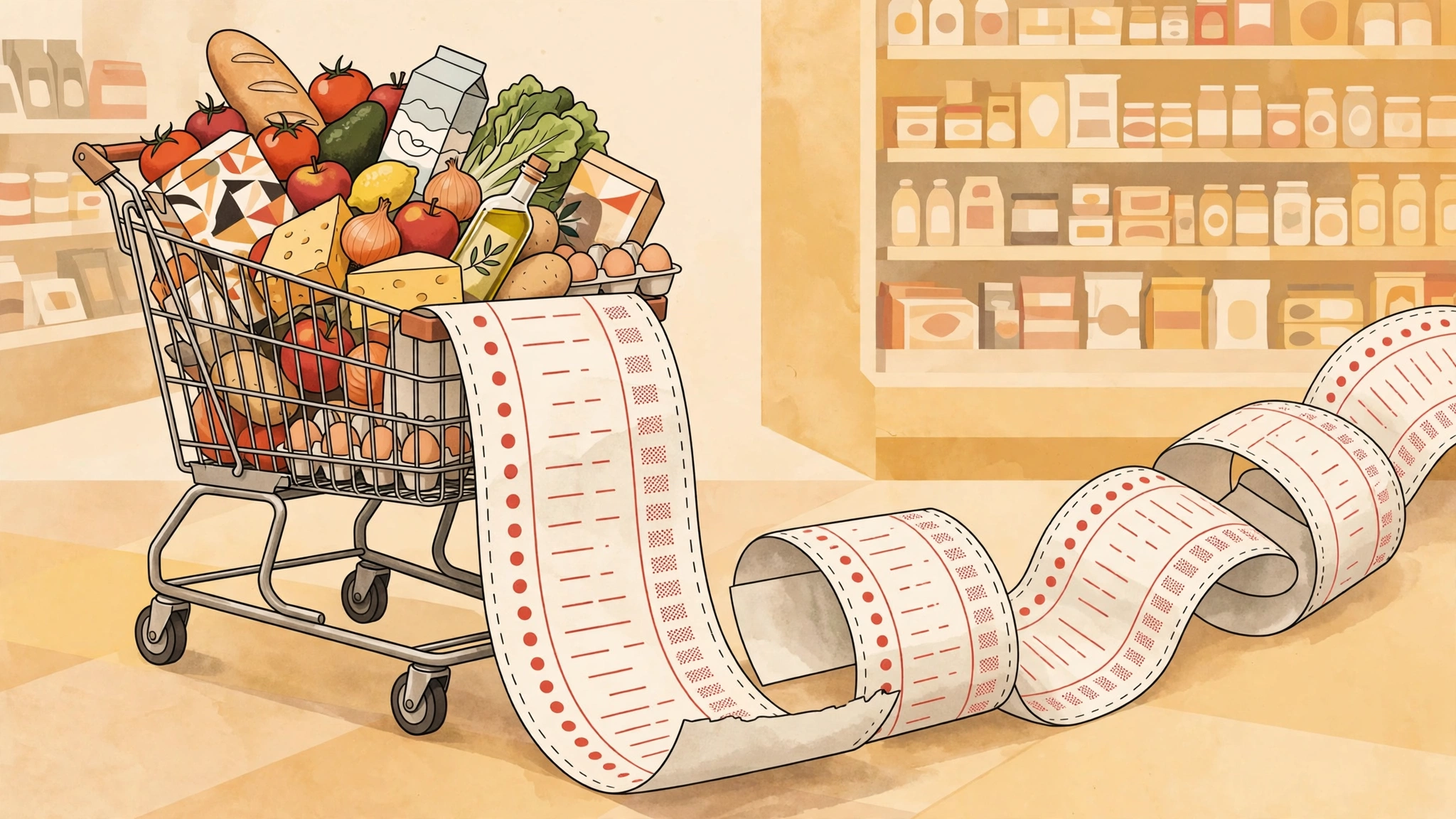
Take a $100 grocery cart from 2019. Ring it through today and it costs about $130. That's not a feeling — it's TD Economics' estimate of how far food bought from stores has risen since before the pandemic. And the family-level math is worse: Canada's Food Price Report puts the average family of four's 2026 food bill at $17,571.79, up from $12,180 in 2019 — a 44.3 per cent increase, or $5,392 a year.

The damage is uneven. Meat is the worst of it — up 40 per cent or more since December 2019, according to RBC Economics — and ground beef, the traditional budget protein, now costs more than chicken breast. Statistics Canada's August data shows the monthly pace cooling: food from stores rose 2.8 per cent year over year, below the 3.0 per cent headline rate for the first time since July 2024. Eggs even fell 1.9 per cent. But cooling inflation from a 30-per-cent-higher price level is cold comfort — the level never comes back down.
So where did the money go? Start with the supply chain: Prairie drought shrank the cattle herd, avian flu hit poultry, and U.S. tariffs — including 50 per cent on coffee giant Brazil — rippled through imports. Then look at the grocers' own books. Loblaw reported a 31.3 per cent retail gross margin for fiscal 2025 on $63.9 billion in retail revenue, with net earnings of $2.667 billion. Metro reported a 19.9 per cent gross margin. Those are company-reported figures — and Loblaw's blends food with Shoppers Drug Mart pharmacy and general merchandise, so it isn't a pure food margin. But they explain why the "we're barely scraping by" defense never quite landed with shoppers.
And the policy response? The Grocery Code of Conduct took full effect on January 1, 2026, with Loblaw, Walmart Canada, Costco, Metro and Sobeys' parent Empire all signed on. Here's what it doesn't do: regulate prices. It governs retailer-supplier conduct — fees, penalties, contract changes. It was never designed as an affordability measure, whatever the press releases implied.
What comes next isn't comforting either. The Food Price Report forecasts overall food inflation of 4 to 6 per cent for 2026, with meat up 5 to 7 per cent. RBC expects grocery prices to keep rising faster than overall inflation in the near term. The structural drivers — climate volatility, tariffs, consolidation — aren't going away.
My take: stop watching the inflation rate and watch the price level. A 2.8 per cent food print sounds like relief until you remember it's 2.8 per cent on top of 30. The $130 cart is permanent. The policy question was never "how do we get food inflation to 2 per cent" — it's "what do we do for the family paying $5,392 more a year for the same food." Nobody in Ottawa has answered that one yet.
Sources
- Canada's Food Price Report 2026 (via Canadian Grocer) · other
- The Weather Network (family of four $17,572) · other
- Retail Insider (RBC grocery analysis) · other
- MarketMinute (TD Economics grocery prices) · other
- Money.ca (grocery prices) · other
- Consolidated Credit Canada (Grocery Code of Conduct) · other
InflationGroceriesopinionfood pricesLoblawcost of living
Newsletter
News. Context. What matters.
One essential briefing, written for people who would rather understand the story than scroll it.
Unsubscribe anytime. We don’t sell addresses.
Recommended
Money
The Bank of Canada decides in four hours. The market says hike — the economy says wait.
At 9:45 a.m. ET the Bank sets its policy rate and publishes new forecasts. Markets lean heavily toward a hike to 2.50%, but the case for holding at 2.25% is real — and a surprise either way moves mortgages, the loonie and December bets.

Money
Amex posted a record quarter — then announced it's cutting 3,500 jobs to get ready for AI
American Express reported record third-quarter revenue of $20.1 billion and raised its profit outlook, then told analysts it will cut about 5 per cent of its workforce in a $336-million restructuring its CFO says is meant "to prepare for AI."
Money
The Bank of Canada is now expected to hike rates on Oct. 28 — and hike again by spring
A Reuters poll of 34 economists finds 56% now expect a quarter-point hike to 2.50% next Wednesday, with another rise by end-March, after September's 3.1% inflation reading and sharply rising expectations.