Money
Hold, hike or higher-for-longer? What to really expect from Bank of Canada interest rates on Oct. 28
Inflation is hot, jobs are cold, and Bay Street's economists are split. But the rate decision that matters for your wallet already happened — in the bond market.
Published: October 13, 2026 · Updated: October 13, 2026 · 4 min read
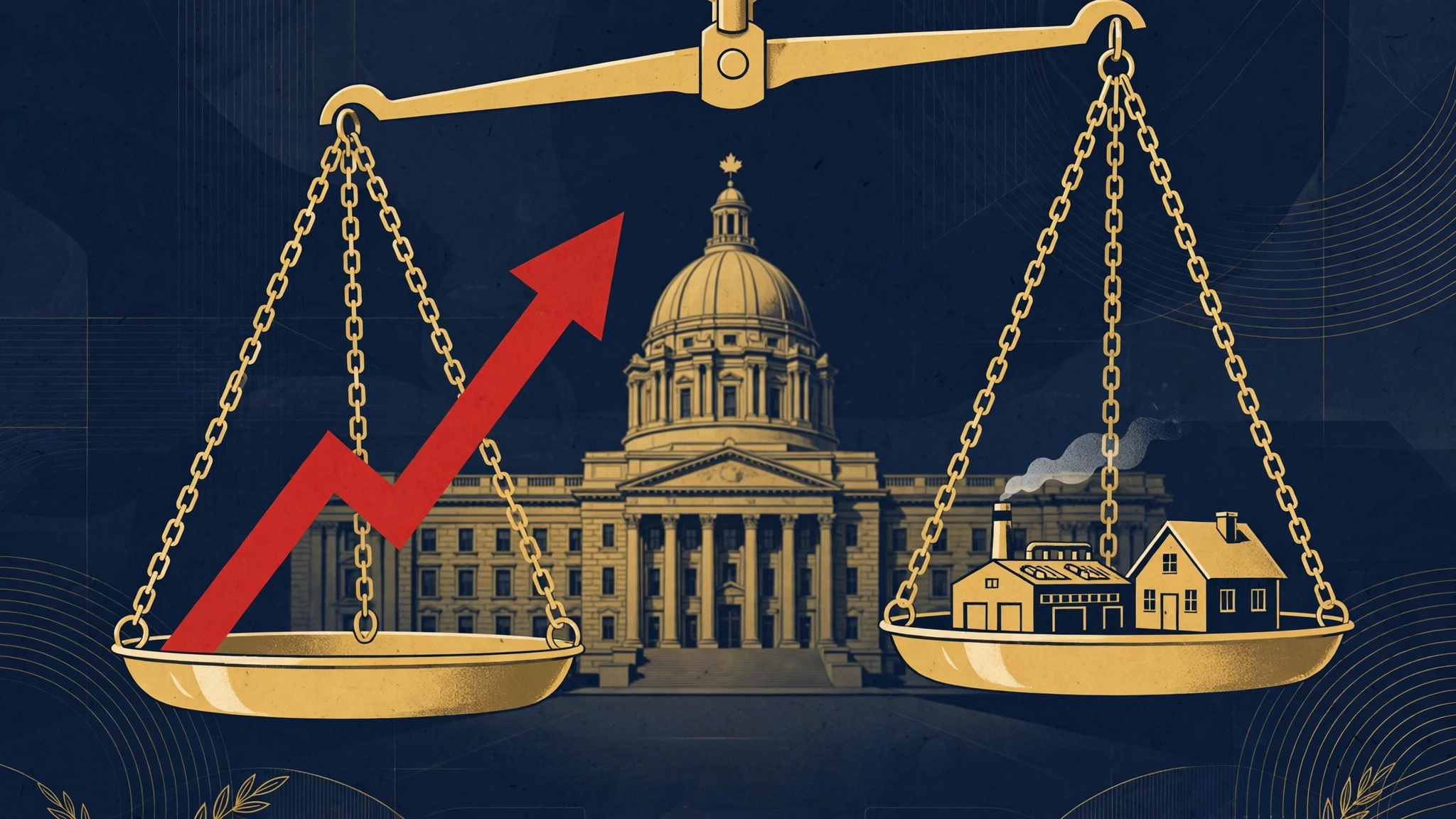
On Wednesday, Oct. 28, Tiff Macklem will walk into a press conference carrying the most difficult decision of his governorship. Inflation is running at 3 per cent — the top of the Bank of Canada's target band. The economy just shed 68,300 jobs in a single month, according to Statistics Canada. Bay Street's economists are openly split. And whatever he decides, the most important rate move of the autumn has already happened without him.
Start with the facts, because the noise around this decision is extraordinary. The policy rate has sat at 2.25 per cent since last October — seven straight holds. At its September meeting, the Bank dropped the reassuring line that the rate "remains appropriate" and warned that upside risks to inflation have increased. Governor Macklem, in a Halifax speech last month, said the Bank doesn't want to be "too slow" — because if it is, it will eventually "have to raise rates very quickly." That is not the language of a central banker at peace.
The hawks have real ammunition. Headline inflation has sat at or above 3 per cent in three of the last four months. Strip out gasoline and underlying pressure is building, not easing — 2.4 per cent, up from 2.2 per cent in July, Statistics Canada reported. Gasoline itself is up 22.8 per cent on the year, and Brent crude is hovering near $105 a barrel, well above the oil-price path the Bank assumed when it forecast inflation drifting back to 2 per cent. Scotiabank — the only Big Six bank firmly calling for an October hike — has been warning about this since last November. UBS and Manulife have joined the hawkish camp in recent weeks. And the loonie, at an 18-month low near 70 cents U.S., is importing inflation with every cross-border purchase.
But the doves have the fresher data. September's jobs report was a shock: 68,300 jobs gone against expectations of a 9,200 gain, the second straight monthly decline, unemployment up to 6.5 per cent, and the participation rate at its lowest in nearly three decades outside the pandemic. Young workers lost 48,000 positions. TD's Andrew Hencic said the report would "pour some more cold water on near-term rate hike expectations." BMO's Doug Porter argues the trade war "really does darken the growth outlook" and that tariffs are what the Bank must focus on "first and foremost." Four of the six big banks — RBC, TD, BMO and CIBC — now expect the Bank to hold through year-end. Markets agree, mostly: the odds of an October hike have collapsed from a coin flip in late September to about one in four.
Here's what the debate misses: for most Canadians, the Bank's decision is already priced in — and not in their favour. While Bay Street argued about October versus December, the bond market moved. The five-year Government of Canada yield has surged from about 2.6 per cent in February to roughly 3.7 per cent. Every Big Six bank has raised fixed mortgage rates — 10 to 50 basis points since early September. The best advertised insured five-year fixed is around 4.3 per cent; bank posted specials sit above 5 per cent. With some 1.15 million mortgages renewing this year and another 940,000 next, according to CMHC figures cited in industry reporting, the tightening is happening with or without Macklem. As National Bank's Matthieu Arseneau put it, rising long-term rates are "already creating an additional headwind for the Canadian economy."
The honest answer is that nobody knows — and the next ten days will decide it. September CPI lands Monday, Oct. 19 at 8:30 a.m., alongside the Bank's own business and consumer surveys. UBS expects 3.3 per cent; anything near that revives the hawks. Oct. 28 brings not just the decision but the quarterly Monetary Policy Report, the debut of the Bank's new "Prima" forecasting model, and a Macklem press conference — plus, in a scheduling quirk, the U.S. Federal Reserve announces its own decision the same afternoon. Dec. 9 is the final call of the year, and markets have a hike there priced at nearly 90 per cent.
So what should Canadians expect? My read of the evidence: a hold on Oct. 28, with December genuinely live. The jobs data bought Macklem time, but it didn't buy him comfort — inflation at the top of the band with energy prices surging is not a backdrop for standing pat indefinitely. The Bank will want to see October's data before moving, and the new forecasting model gives it intellectual cover to wait one more meeting.
But waiting changes nothing for households. Whether the policy rate moves in October, December, or not at all, Canadians renewing mortgages are already paying for a tightening the Bank never voted for. The question isn't just what Macklem does on the 28th. It's whether anyone in Ottawa has a plan for an economy where borrowing costs rise while jobs disappear — because that combination, not the policy rate, is what will define 2027.
What matters
What happened
The Bank of Canada decides Oct. 28 with inflation at 3.0 per cent and 68,300 jobs lost in September; Bay Street's economists are split on the path.
Why it matters
Mortgages, hiring and investment all hinge on the rate path — and bond markets have already tightened financial conditions regardless of the decision.
What we know
Four of the six big banks (RBC, TD, BMO, CIBC) expect a hold through year-end; Scotiabank alone firmly calls an October hike; markets price roughly one-in-four odds for October and nearly 90 per cent for December.
What we don’t
What’s next
September CPI and the Bank's business/consumer surveys land Oct. 19; the decision, new forecasts and Macklem press conference come Oct. 28; the final 2026 decision is Dec. 9.
Interest ratesInflationBank of CanadaTiff Macklemmortgagesopinion
Newsletter
News. Context. What matters.
One essential briefing, written for people who would rather understand the story than scroll it.
Unsubscribe anytime. We don’t sell addresses.
Recommended
Money
The Bank of Canada decides in four hours. The market says hike — the economy says wait.
At 9:45 a.m. ET the Bank sets its policy rate and publishes new forecasts. Markets lean heavily toward a hike to 2.50%, but the case for holding at 2.25% is real — and a surprise either way moves mortgages, the loonie and December bets.

Money
Amex posted a record quarter — then announced it's cutting 3,500 jobs to get ready for AI
American Express reported record third-quarter revenue of $20.1 billion and raised its profit outlook, then told analysts it will cut about 5 per cent of its workforce in a $336-million restructuring its CFO says is meant "to prepare for AI."
Money
The Bank of Canada is now expected to hike rates on Oct. 28 — and hike again by spring
A Reuters poll of 34 economists finds 56% now expect a quarter-point hike to 2.50% next Wednesday, with another rise by end-March, after September's 3.1% inflation reading and sharply rising expectations.