Money
PQ minority puts Quebec’s borrowing costs in focus as bond investors weigh referendum risk
Quebec’s long bonds were already trading at a wider gap to Ontario’s before Monday’s vote, and economists say a real referendum campaign could push that premium sharply higher.
Published: October 6, 2026 · Updated: October 6, 2026 · 4 min read
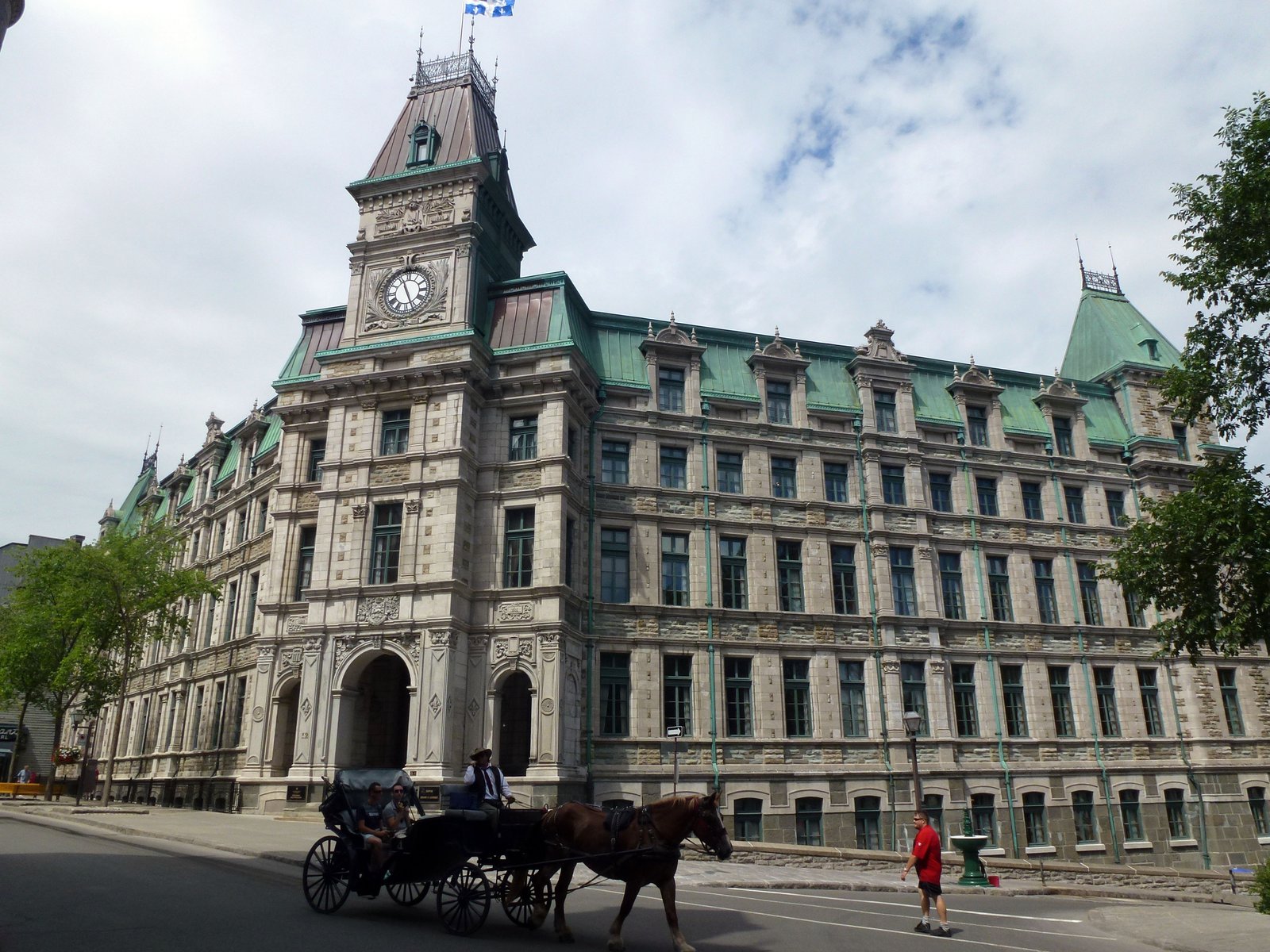
Bond markets get their first chance on Tuesday to react to the Parti Québécois’s minority win in Quebec, and the province’s borrowing costs had already been edging up relative to its neighbours before the vote. A spread index on 30-year Quebec bonds stood more than nine basis points above its Ontario equivalent, up from about seven basis points two weeks earlier, Bloomberg News reported on election night. A basis point is one-hundredth of a percentage point, so the gap is small in absolute terms, but it is closely watched as a gauge of how investors price political risk.
In a note published Monday before the results, Scotiabank’s head of capital markets economics, Derek Holt, wrote that Quebec’s 10-year bond spreads over Government of Canada bonds were the widest of the four major provinces, all of which have seen spreads widen lately. “Clearly spreads would widen and perhaps rather sharply in a true referendum campaign especially if it surprised pollsters by not rejecting separation,” he wrote. Holt also argued that strong majorities of Quebecers oppose both the PQ and separation, and that a more likely outcome than an early referendum is that the PQ will seek further concessions.
National Bank Financial reached a similar conclusion in an Oct. 2 report. Quebec’s 30-year bonds have traded at a higher yield than Ontario’s since early 2024, and that gap opened up over the past year as investors priced in what the bank called notional political risk. Spreads came under more pressure in the run-up to the vote, though the gap with Ontario remained below where it stood in September 2012, when the PQ last won. The bank said a change in government could argue for a more deliberate return to debt markets, noting that Quebec’s 2026-27 funding program was well advanced, with about $7.3 billion of a $23.5-billion long-term borrowing requirement left to raise, while future-year needs remain substantial.
Whether the PQ won a majority or a minority was a key question for investors heading into the vote. PQ Leader Paul St-Pierre Plamondon has promised a referendum during his first term, but not before U.S. President Donald Trump leaves office in 2029, and with a minority he would need support from other parties to call one. Louis Hébert, a management professor at HEC Montréal, told The Canadian Press before the vote that a majority would increase the odds of a referendum and would make “a big difference.” With a minority, he said, “the likelihood of a new election within two years is pretty high, if you look at the past history.” He added that investors outside the province had already factored in the possibility, calling sovereignty risk in Quebec “a known devil.”
The PQ’s fiscal framework promises a return to balance in 2028-29, moving from a $6.5-billion deficit in 2026-27 to a $49-million surplus after payments to the Generations Fund, with $5 billion in contingency reserves to absorb shocks such as the trade conflict with the United States. It relies on cutting $6.6 billion in spending tied to bureaucracy. The party’s costing document also phases the corporate income tax rate down to 9.5 per cent from 11.5 per cent, at a cost of $8.89 billion over five years, offset by an equal reduction in the Economic Development Fund and business subsidies, and funds a $450-million-a-year gas tax refund from the province’s climate fund.
Quebec’s business community has signalled unease but not alarm. “It’s a cloud,” Sébastien Lachaine, Quebec director at lobbying firm Sussex Strategy, told The Canadian Press, warning that referendum uncertainty could dampen investment, discourage immigration and push up government borrowing rates. At a Montreal gathering days before the vote, Groupe Dynamite chief executive Andrew Lutfy called the province “uninvestable,” while Alimentation Couche-Tard co-founder Alain Bouchard said of a possible referendum: “It’ll create uncertainty, whatever... But it’s not my main concern,” Bloomberg reported.
Outgoing finance minister Eric Girard warned last week that an independent Quebec would be poorer and could lose up to $65 billion in economic activity in its first five years, while the PQ’s platform estimates $13 billion to $16 billion in administrative savings from absorbing federal agencies, The Canadian Press reported. History weighs on the debate: about 350 companies left the province between the PQ’s 1976 election and the 1980 referendum, the news agency noted.
The economic backdrop is weak. National Bank estimates Quebec’s growth will slow to 0.5 per cent in 2026, with nearly 70 per cent of the province’s international exports still going to the United States, and notes that S&P downgraded Quebec in April 2025, though all its ratings are currently stable. The bank also flagged rising debt-servicing costs as long-term borrowing rates climb.
This article is general information only and is not investment advice.
Sources: Bloomberg News via ArcaMax; Scotiabank Economics; National Bank Financial; The Canadian Press via Winnipeg Free Press; Parti Québécois; Parti Québécois fiscal framework (PDF).
Sources
- Bloomberg News via ArcaMax · news
- Scotiabank Economics · company
- National Bank Financial · company
- The Canadian Press via Winnipeg Free Press · news
- Parti Québécois · organization
- Parti Québécois fiscal framework (PDF) · organization
Newsletter
News. Context. What matters.
One essential briefing, written for people who would rather understand the story than scroll it.
Unsubscribe anytime. We don’t sell addresses.
Recommended

Money
Grocery benefit lands Monday with 25 per cent boost: who qualifies and how much you could get
The Canada Groceries and Essentials Benefit, the renamed GST/HST credit, pays up to $169.75 for singles and $222.50 for couples this quarter, plus $58.50 per child, to people who filed a 2025 return.
Money
Debt squeeze tightens for Canadians as arrears reach their highest since 2015 and fixed mortgage rates climb
A new MNP survey finds 44 per cent of Canadians are $200 or less from insolvency each month, as Bank of Canada data show missed payments at their highest since 2015 and more forecasters call for an October rate hike.

Money
Diesel nears $2.70 a litre in N.B. as small businesses pass fuel surcharges to customers
Fredericton operators are adding temporary fuel fees or absorbing them as regulated diesel prices sit 62 per cent above last year, and a trucking group warns the cost ends up with consumers.