Money
Diesel nears $2.70 a litre in N.B. as small businesses pass fuel surcharges to customers
Fredericton operators are adding temporary fuel fees or absorbing them as regulated diesel prices sit 62 per cent above last year, and a trucking group warns the cost ends up with consumers.
Published: October 4, 2026 · 3 min read
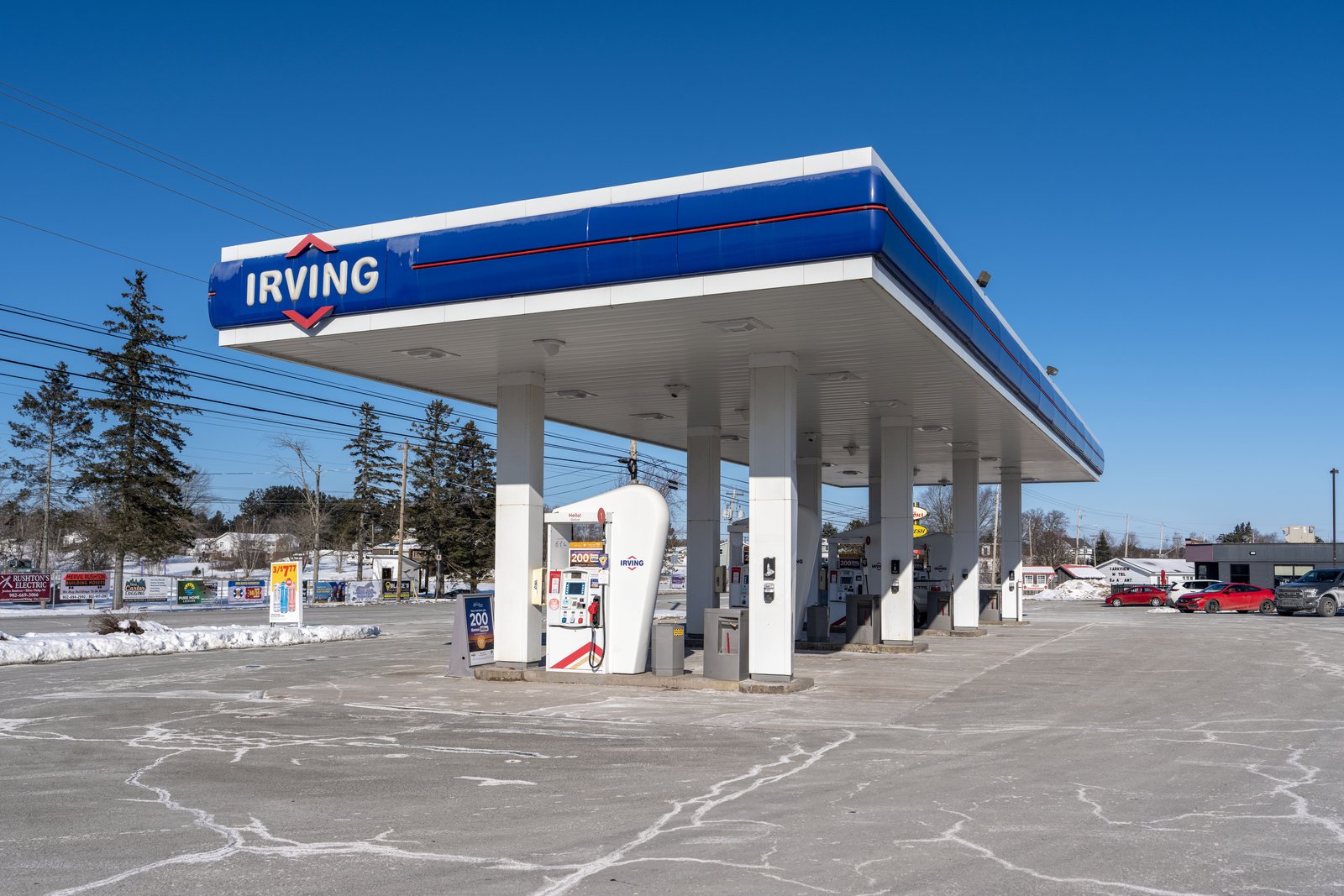
Diesel is now capped at 269.6 cents a litre at self-serve pumps in New Brunswick, and some small businesses say they have no choice but to pass part of that cost on to customers. The province's Energy and Utilities Board lists the maximum price for ultra-low sulphur diesel at 269.6 cents self-serve and 273.1 cents full-serve, under a schedule that took effect at 12:01 a.m. Friday, Oct. 2.
That is a steep climb. Diesel prices in New Brunswick are up 62 per cent from a year ago, according to the board's figures as cited by CBC News in a report published Sunday.
Colin Richard, co-owner of Fredericton Dumpster Rentals, told CBC he decided two weeks ago to add a temporary fuel surcharge to his dumpster rentals, junk removal and demolition work. He said the company spends between $500 and $600 a day fuelling its three vehicles. "You need to be profitable. If you're not, then you're not going to have a business," he said, adding that customers have so far been very understanding.
Not every business can do the same. Stacy Beers, owner of First General, a Fredericton insurance and contracting company, said she cannot add a surcharge because insurance companies set the price of her services. Yet she is paying surcharges passed along by suppliers, including specialty trades such as electricians and plumbers. "We have to somehow absorb this cost," she said.
The causes are global rather than local. CBC has linked the surge to Russia's invasion of Ukraine, recent attacks on Russian oil refineries and the U.S.-Iran war. Patrick De Haan, head of petroleum analysis at GasBuddy, told CBC Manitoba on Oct. 1 that Canada is largely self-sufficient at refining, but buyers in Europe, Turkey, China and India are increasingly turning to the same refineries that supply Canada. In Manitoba, he said, the provincial average for diesel was about $1.45 a litre before the conflicts and had climbed to $2.53, even after a 10-cent drop from the week before.
For households, the effect often shows up away from the pump. Aaron Dolyniuk, executive director of the Manitoba Trucking Association, said most for-hire trucking firms use fuel surcharges that are billed to whoever buys the transportation. "Household goods, consumer goods, food, produce, you name it — at some point or another, it's going to be impacted by fuel costs," he said. Farmers have less room to manoeuvre: Steinbach-area grain and hog farmer Kevin Peters told CBC his operation can burn through about $4,000 worth of fuel a day, and that the extra cost mostly comes out of farm margins.
The board's price schedule also shows how the New Brunswick pump price is built. Of the 269.6-cent self-serve maximum, the benchmark price accounts for 181.57 cents, with a wholesale margin of 22.75 cents, provincial tax of 15.45 cents, HST, a retail margin of 9.92 cents and a delivery charge of up to 4.75 cents making up the rest. The same schedule caps furnace oil at 265.7 cents a litre and regular self-serve gasoline at 195.2 cents, figures worth watching for households that heat with oil as the weather turns colder.
For consumers, the practical takeaway is to read invoices closely. Fuel surcharges are appearing on everything from contracting to delivery and waste removal, and it is reasonable to ask a business whether a surcharge is temporary and how it is calculated. Richard, for his part, said the long-term answer is less reliance on fossil fuels, but added that no electric truck today can travel 400 or 500 kilometres while towing his units.
De Haan offered little hope of quick relief, calling the market "a roller-coaster ride" driven by geopolitical tension, with no clear end in sight.
This article is for general information only and is not investment advice.
Sources
- New Brunswick Energy and Utilities Board · other
- CBC News · other
- CBC News Manitoba · other
Newsletter
News. Context. What matters.
One essential briefing, written for people who would rather understand the story than scroll it.
Unsubscribe anytime. We don’t sell addresses.
Recommended

Money
Open banking may favour Canada’s Big Six as much as fintech challengers
CP roundup: consumer tools unlikely before late 2027; Finance pegs $13.2B in benefits against $458M in costs as screen scraping persists.
Money
Canadian dollar hovers near 70 U.S. cents as Canada–U.S. yield gap hits widest since 2025
The loonie’s fourth weekly decline and a roughly 157-basis-point two-year spread keep pressure on import prices ahead of October’s BoC and Fed decisions.
Money
BoC and OSFI tell banks overnight SLF draws are routine, not a stress signal
Joint statement accompanies Gravelle remarks on upsizing two-week repos as CORRA runs ~5 bps above the 2.25% overnight target.