Money
Debt squeeze tightens for Canadians as arrears reach their highest since 2015 and fixed mortgage rates climb
A new MNP survey finds 44 per cent of Canadians are $200 or less from insolvency each month, as Bank of Canada data show missed payments at their highest since 2015 and more forecasters call for an October rate hike.
Published: October 5, 2026 · Updated: October 5, 2026 · 4 min read
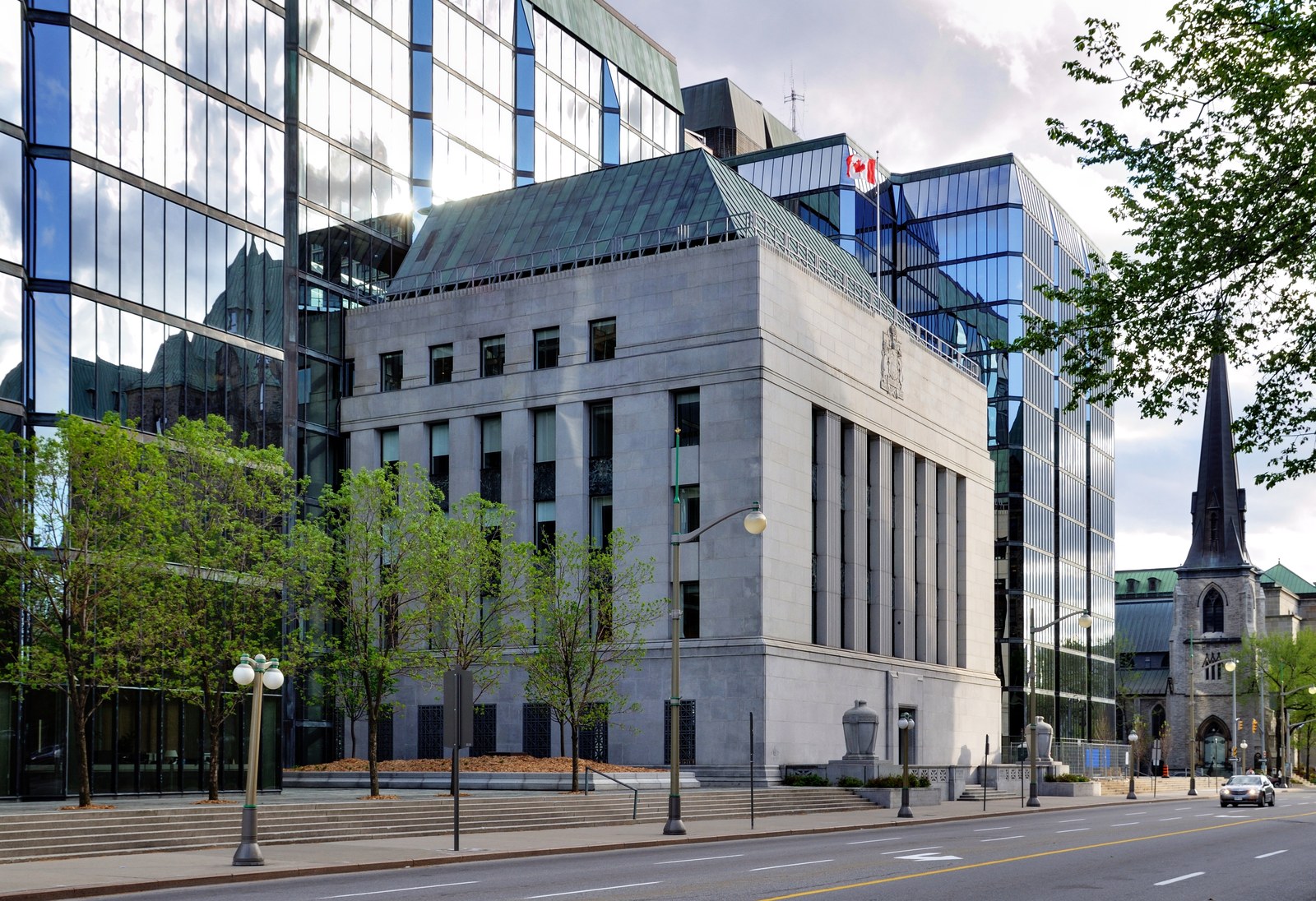
More than four in 10 Canadians say they are $200 or less away from being unable to pay their bills each month, a new survey shows, as fresh central-bank data and rising mortgage rates point to mounting strain on household budgets. The MNP Consumer Debt Index, released Monday by the insolvency firm MNP LTD, rose four points to 95 from the previous quarter, but 44 per cent of respondents still reported being within $200 of insolvency each month, down two points.
The Ipsos survey of 2,001 adults, conducted Sept. 1 to 8, found that 54 per cent do not have enough savings to support themselves or their families for six months after a job loss without borrowing or falling behind. Among working Canadians, 55 per cent said they worry about job mobility and career opportunities, and 42 per cent of all respondents were concerned artificial intelligence could hurt their employment or income. Nearly half, 47 per cent, said they had tried to earn extra money, most often by selling goods online.
Interest rates remain a pressure point. Three in five respondents said they need interest rates to fall, 51 per cent feared financial trouble if rates rise, and 35 per cent said they could not absorb an extra $130 a month in interest. “Lower interest rates would be welcome relief for many households. However, they are not a cure-all for people already struggling with debt,” said Grant Bazian, MNP LTD’s president.
Hard data point the same way. The Bank of Canada’s financial stability indicators, updated Sept. 25, show that 2.23 per cent of indebted households were at least 60 days behind on a payment in at least one credit category in the second quarter, the highest share since 2015, Money.ca reported. That tops a previous peak of 2.18 per cent in mid-2019 and is well above the 1.41 per cent recorded in 2021. Credit card arrears of 90 days or more reached 0.80 per cent of accounts, nearly double the 0.44 per cent of early 2021, while auto loan and instalment loan arrears also hit series highs.
Mortgage arrears remain low at 0.23 per cent, though that rate has nearly doubled since 2023. The central bank notes that because mortgages are typically the last bill people stop paying, missed payments on other debts can be early signs of distress. A Bank of Canada staff paper published in February found that mortgage holders begin using more of their available credit roughly two years before they first miss a mortgage payment. More than one in eight borrowers, 13.16 per cent, are using more than 80 per cent of their credit card limits.
Homeowners renewing now face higher fixed rates, even though the central bank has not moved. CIBC and TD raised select fixed mortgage rates by 20 basis points on Sept. 29, mostly on three- and five-year terms, following similar increases at BMO, National Bank, RBC and Scotiabank, Money.ca reported. Fixed rates track Government of Canada bond yields, and the five-year yield hit a 52-week high of 3.729 per cent on Sept. 28. On a $500,000 mortgage with a 25-year amortization, a move from 4.29 per cent to 4.49 per cent adds about $55 a month, or nearly $3,300 over a five-year term. Canada Mortgage and Housing Corp. projects about 1.15 million mortgages will renew this year.
The Bank of Canada has held its policy rate at 2.25 per cent since October 2025, but more forecasters now expect a hike at its Oct. 28 decision. UBS expects quarter-point increases in October and January, Manulife and Oxford Economics expect moves in October and December, and Scotiabank is also calling for an October hike, the Financial Post reported. Inflation rose to three per cent in August, and UBS expects 3.3 per cent when September data are released Oct. 19. Desjardins still expects a hold for the rest of 2026, according to Money.ca. Governor Tiff Macklem has kept both options open. “We don’t want to raise our policy rate and restrain growth if inflationary pressures are contained,” he said in a Sept. 21 speech. “But nor do we want to be too slow to respond if inflationary pressures are becoming more persistent.” The bank’s 2026 Financial Stability Report says households overall remain in stable financial condition, with the pressure concentrated among some borrowers.
For borrowers, the Financial Consumer Agency of Canada advises shopping for a renewal a few months before a term ends, since federally regulated banks need only send a renewal statement 21 days in advance. Its calculator shows a $1,000 credit card balance paid at the minimum takes 10 years to clear and costs $798.89 in interest, compared with 11 months and $91.62 on a fixed monthly payment. “Debt problems do not always start with a missed payment,” Bazian said.
This article is for general information only and is not investment advice.
Sources: MNP LTD; Bank of Canada; Money.ca (household arrears); Money.ca (mortgage rates); Financial Post.
Sources
- MNP LTD · other
- Bank of Canada · other
- Money.ca (household arrears) · other
- Money.ca (mortgage rates) · other
- Financial Post · other
Newsletter
News. Context. What matters.
One essential briefing, written for people who would rather understand the story than scroll it.
Unsubscribe anytime. We don’t sell addresses.
Recommended

Money
Diesel nears $2.70 a litre in N.B. as small businesses pass fuel surcharges to customers
Fredericton operators are adding temporary fuel fees or absorbing them as regulated diesel prices sit 62 per cent above last year, and a trucking group warns the cost ends up with consumers.

Money
Open banking may favour Canada’s Big Six as much as fintech challengers
CP roundup: consumer tools unlikely before late 2027; Finance pegs $13.2B in benefits against $458M in costs as screen scraping persists.
Money
Canadian dollar hovers near 70 U.S. cents as Canada–U.S. yield gap hits widest since 2025
The loonie’s fourth weekly decline and a roughly 157-basis-point two-year spread keep pressure on import prices ahead of October’s BoC and Fed decisions.