Money
Robert Hall and Michael Woodford win the economics Nobel for models that help central banks manage shocks
The Royal Swedish Academy of Sciences credited the two American economists with building the microeconomic foundations of the New Keynesian models now used by central banks and finance ministries around the world.
Published: October 12, 2026 · Updated: October 12, 2026 · 4 min read
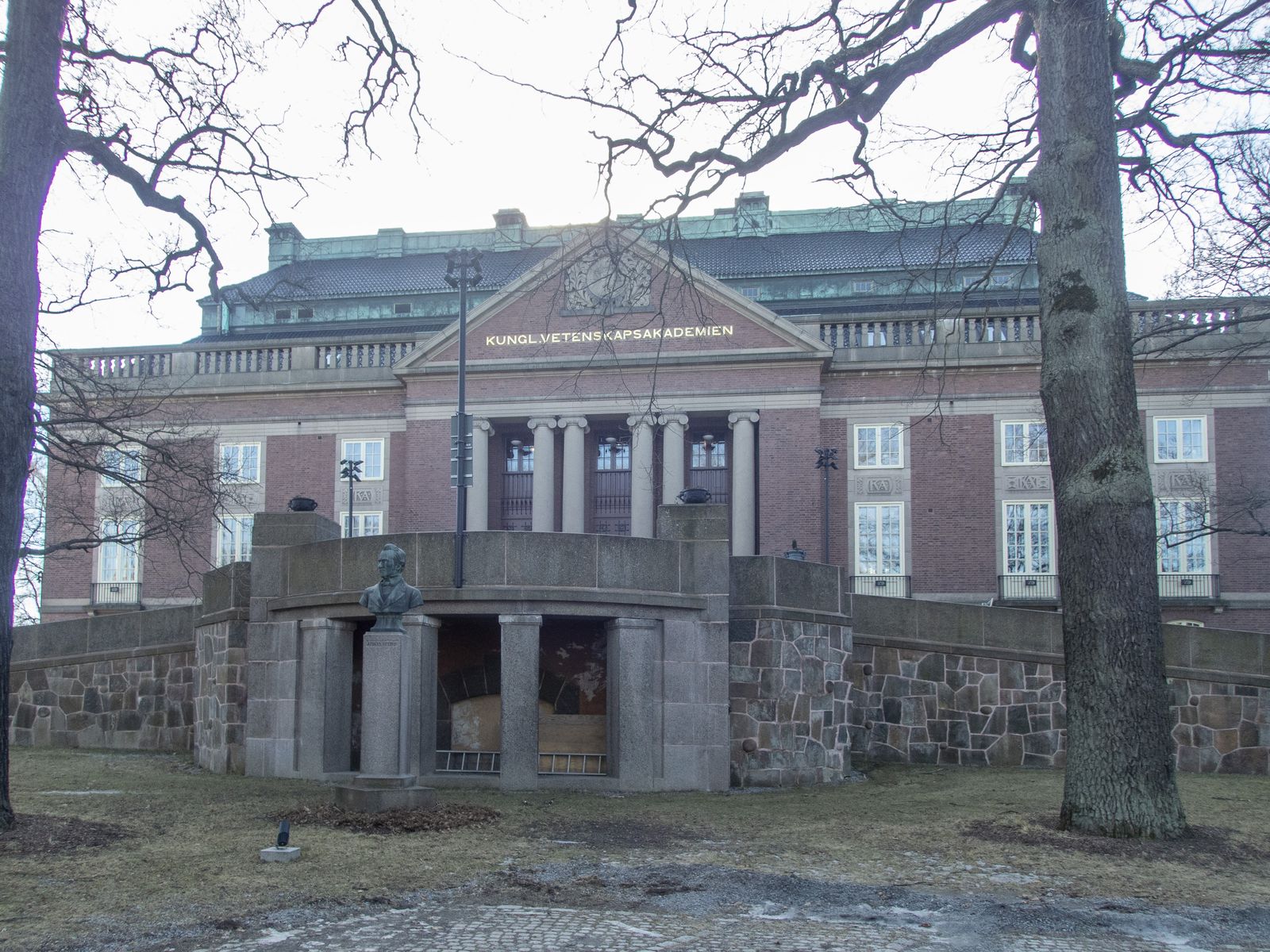
American economists Robert E. Hall of Stanford University and Michael Woodford of Columbia University have won the 2026 Sveriges Riksbank Prize in Economic Sciences in Memory of Alfred Nobel, the Royal Swedish Academy of Sciences announced on Monday. The academy honoured the pair “for microeconomic foundations of macroeconomic stabilisation,” saying their models have significantly improved policymakers’ ability to carry out effective stabilization policy, so that well-timed fiscal and monetary measures can reduce the economy’s peaks and troughs. The prize is worth 12 million Swedish kronor, to be shared equally.
The academy said stabilization policy has been important ever since John Maynard Keynes launched his theories almost a century ago, but that during the oil crises of the 1970s the Keynesian models that guided when and how to act no longer seemed to work. Instead of reducing unemployment, they led to uncontrolled inflation, and the West went through a decade of low growth, high unemployment and high inflation. Hall and Woodford showed how those models could be rebuilt on a microeconomic foundation, an understanding of how the decisions of individual households and businesses add up across the economy, rather than on statistical links between variables such as inflation, production and consumption.
“The laureates’ work has provided us with a stable theoretical foundation for the models that are now used by central banks and governments around the world. With them, we are better equipped to deal with shocks in the economy, such as energy crises or sudden changes in how much households consume,” said John Hassler, chair of the Committee for the Prize in Economic Sciences.
Hall’s key insight concerned household spending. If consumption depends on what households expect to earn in the future, he reasoned, then spending should change only when new information arrives, which means changes in consumption cannot be predicted, according to the academy’s popular science background. “If they are optimistic, they will consume more than if they are pessimistic,” the academy wrote. Hall published the result in 1978, and a 1982 article with Fredric Mishkin using data on individual households found that around 80 per cent made consumption decisions in line with the theory, while the rest lived hand to mouth.
Woodford, in a 2003 book, set out a complete New Keynesian model with three equations that the academy calls the prototype for all the New Keynesian models that have followed. Inspired by the Swedish economist Knut Wicksell’s idea of a natural rate of interest, he showed that central banks can stimulate or suppress economic activity by adjusting interest rates rather than the amount of money in circulation. Because businesses set prices with an eye on future costs and interest rates, expectations matter for inflation, and the academy said that makes credibility and transparency important attributes for a central bank.
The Associated Press, in a report published by PBS News, said Woodford’s research implies that central banks such as the U.S. Federal Reserve should provide “clear and credible communication about how they reason and what they plan to do,” and that central banks have responded to that insight by working harder to explain what they are doing. “This is the Keynesian recipe and it worked well — until it didn’t,” Timo Boppart of the Nobel economics committee said, according to AP. Woodford spoke to the committee by phone from New York and called the award a surprise, AP reported. “The prize is for research that pushes our understanding of macroeconomics from the bottom up, from families and firms making decisions over time, while looking ahead,” Ivan Werning, an economist at the Massachusetts Institute of Technology, said in an email to AP.
The academy says New Keynesian models are now used by central banks and finance ministries around the world. In Canada, then-governor Stephen Poloz described in a 2017 Bank of Canada speech how the bank built ToTEM, its Terms-of-Trade Economic Model, on the dynamic stochastic general equilibrium approach, in which household consumption and business investment decisions are forward-looking. Poloz said the model anticipated how serious the 2014 collapse in oil prices would be, and that confidence in that analysis led the bank to lower its policy rate twice in 2015, long before the negative effects of the shock were widely felt.
Hall, born in 1943 in Palo Alto, Calif., and Woodford, born in 1955 in Chicopee, Mass., both earned their PhDs at the Massachusetts Institute of Technology, according to the academy. AP noted that the economics prize was established by Sweden’s central bank in 1968 as a memorial to Alfred Nobel, and that it is presented with the other Nobel Prizes on Dec. 10, the anniversary of Nobel’s death. It was the last of this year’s Nobel announcements.
This article is general information and is not financial or investment advice.
Sources: Royal Swedish Academy of Sciences press release via NobelPrize.org (Oct. 12, 2026); NobelPrize.org: Popular science background, Prize in Economic Sciences 2026; The Associated Press via PBS News (Oct. 12, 2026); Bank of Canada: Models and the Art and Science of Making Monetary Policy (Jan. 31, 2017).
Sources
Newsletter
News. Context. What matters.
One essential briefing, written for people who would rather understand the story than scroll it.
Unsubscribe anytime. We don’t sell addresses.
Recommended
Money
The Bank of Canada decides in four hours. The market says hike — the economy says wait.
At 9:45 a.m. ET the Bank sets its policy rate and publishes new forecasts. Markets lean heavily toward a hike to 2.50%, but the case for holding at 2.25% is real — and a surprise either way moves mortgages, the loonie and December bets.

Money
Amex posted a record quarter — then announced it's cutting 3,500 jobs to get ready for AI
American Express reported record third-quarter revenue of $20.1 billion and raised its profit outlook, then told analysts it will cut about 5 per cent of its workforce in a $336-million restructuring its CFO says is meant "to prepare for AI."
Money
The Bank of Canada is now expected to hike rates on Oct. 28 — and hike again by spring
A Reuters poll of 34 economists finds 56% now expect a quarter-point hike to 2.50% next Wednesday, with another rise by end-March, after September's 3.1% inflation reading and sharply rising expectations.