Money
IMF flags a disorderly jump in bond yields as a top risk, as Canada’s Big Six already lift fixed mortgage rates
The fund’s October Global Financial Stability Report warns that energy prices and term premiums could push sovereign yields higher; Canada’s five-year bond yield has risen since September and lenders have followed.
Published: October 13, 2026 · Updated: October 13, 2026 · 2 min read
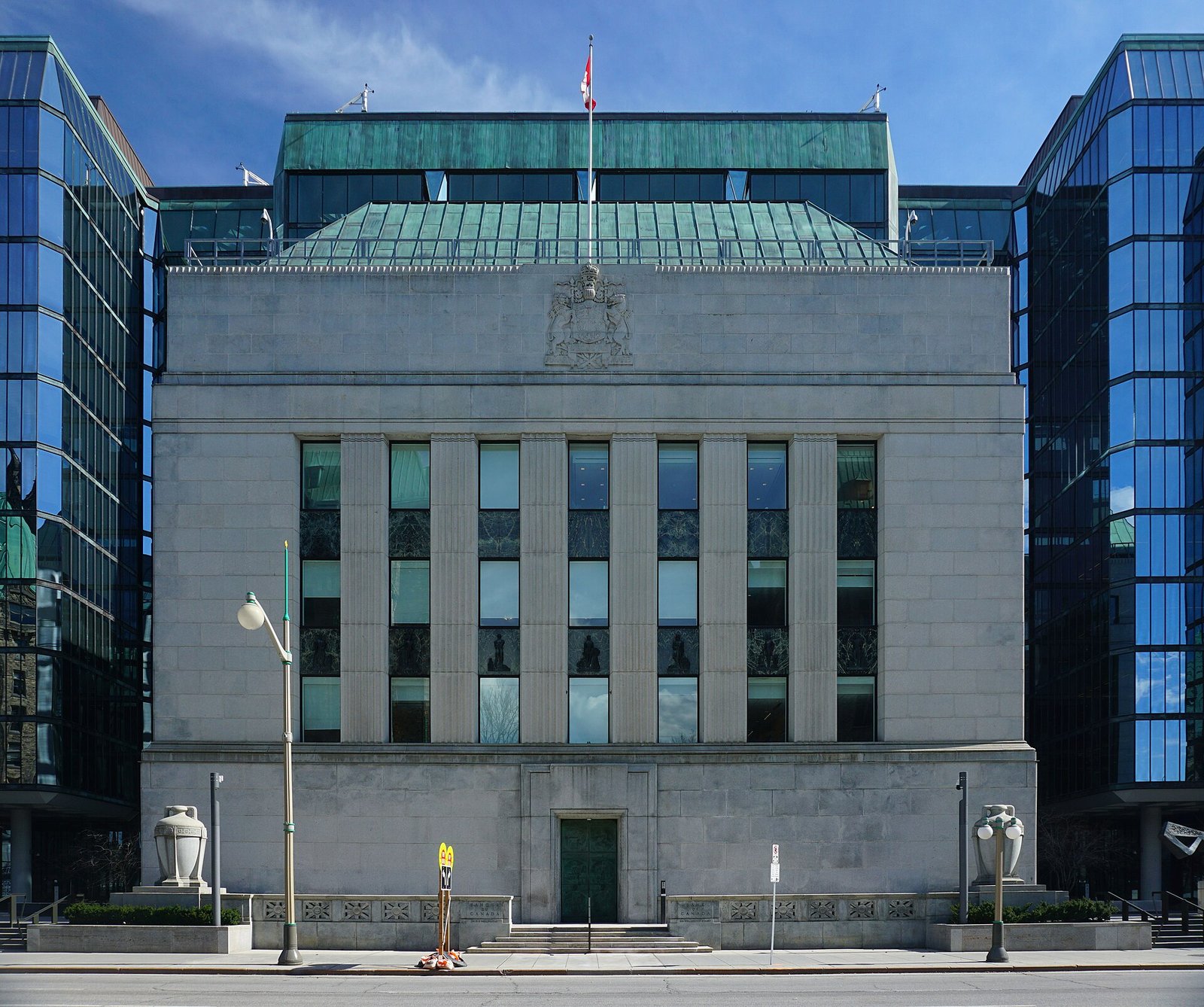
WASHINGTON / TORONTO — A sharper rise in government bond yields ranks among the most plausible near-term threats to global financial stability, the International Monetary Fund said Tuesday in its October Global Financial Stability Report, a warning that lands as Canadian lenders have already been lifting fixed mortgage rates, Global News reported.
Released during the IMF and World Bank annual meetings in Bangkok, the report said sovereign yields have climbed on higher energy prices and rising term premiums — the extra return investors demand for holding longer-dated debt — and that those premiums now sit near historically high levels in advanced economies. “Resurgent inflation or fiscal concerns could trigger a sharp rise in sovereign bond yields and spark broader market turmoil,” the fund wrote, according to Global News. It also listed an AI market correction and major cyberattacks among plausible near-term catalysts.
Athanasios Vamvakidis, a deputy director in the IMF’s Monetary and Capital Markets Department, told reporters markets are worried about how much new government and private debt investors can absorb while central banks shrink their balance sheets, Canadian Mortgage Professional reported.
Canada has already felt the pressure. The five-year Government of Canada bond yield, the main benchmark for five-year fixed mortgages, closed at about 3.60 per cent on Oct. 2, up from 3.35 per cent on Sept. 1, according to Bank of Canada data cited by Canadian Mortgage Professional. Since early September, all of the Big Six banks have raised at least some fixed rates by roughly 10 to 50 basis points across two- to five-year terms; BMO lifted its standard five-year fixed rate to 5.14 per cent on Oct. 7.
Yahoo Finance Canada reported that a half-point increase on a $400,000 mortgage with 22 years left could add about $110 a month, or roughly $6,600 over a five-year term, in a hypothetical example — and reminded borrowers they can shop other lenders at renewal. The Bank of Canada’s overnight rate remains 2.25 per cent, with its next decision due Oct. 28.
The IMF urged authorities to watch household debt-servicing burdens “particularly in jurisdictions where mortgage payments are sensitive to interest rate fluctuations,” and said tools such as loan-to-value or debt-service-to-income limits can curb excessive leverage. RBC economist Claire Fan has said that for most households “it simply doesn’t matter why bond yields are rising. It matters that they are,” Canadian Mortgage Professional reported.
The full report page is posted on the IMF website. Separately, the fund warned that weaker AI investment returns could trigger a market correction with real-economy spillover, and that digital interconnectedness plus frontier AI is expanding cyber risk for financial systems.
This article is general information for Canadian readers and is not investment advice.
Sources: Global News (Oct. 13, 2026); Canadian Mortgage Professional (Oct. 13, 2026); IMF Global Financial Stability Report, October 2026; Yahoo Finance Canada (Oct. 11, 2026).
Sources
- Global News · news
- Canadian Mortgage Professional · news
- IMF Global Financial Stability Report, October 2026 · organization
- Yahoo Finance Canada · news
Newsletter
News. Context. What matters.
One essential briefing, written for people who would rather understand the story than scroll it.
Unsubscribe anytime. We don’t sell addresses.
Recommended

Money
The Bank of Canada decides in four hours. The market says hike — the economy says wait.
At 9:45 a.m. ET the Bank sets its policy rate and publishes new forecasts. Markets lean heavily toward a hike to 2.50%, but the case for holding at 2.25% is real — and a surprise either way moves mortgages, the loonie and December bets.

Money
Amex posted a record quarter — then announced it's cutting 3,500 jobs to get ready for AI
American Express reported record third-quarter revenue of $20.1 billion and raised its profit outlook, then told analysts it will cut about 5 per cent of its workforce in a $336-million restructuring its CFO says is meant "to prepare for AI."
Money
The Bank of Canada is now expected to hike rates on Oct. 28 — and hike again by spring
A Reuters poll of 34 economists finds 56% now expect a quarter-point hike to 2.50% next Wednesday, with another rise by end-March, after September's 3.1% inflation reading and sharply rising expectations.