Money
Brent crude just hit $110. Here's what the Hormuz attacks mean for Canadian gas prices.
Iran's escalating campaign against shipping through the Strait of Hormuz pushed oil to its highest since May on Friday — and that price pressure is heading for your tank and the Bank of Canada's Oct. 28 decision.
Published: October 17, 2026 · Updated: October 17, 2026 · 2 min read
$110 a barrel
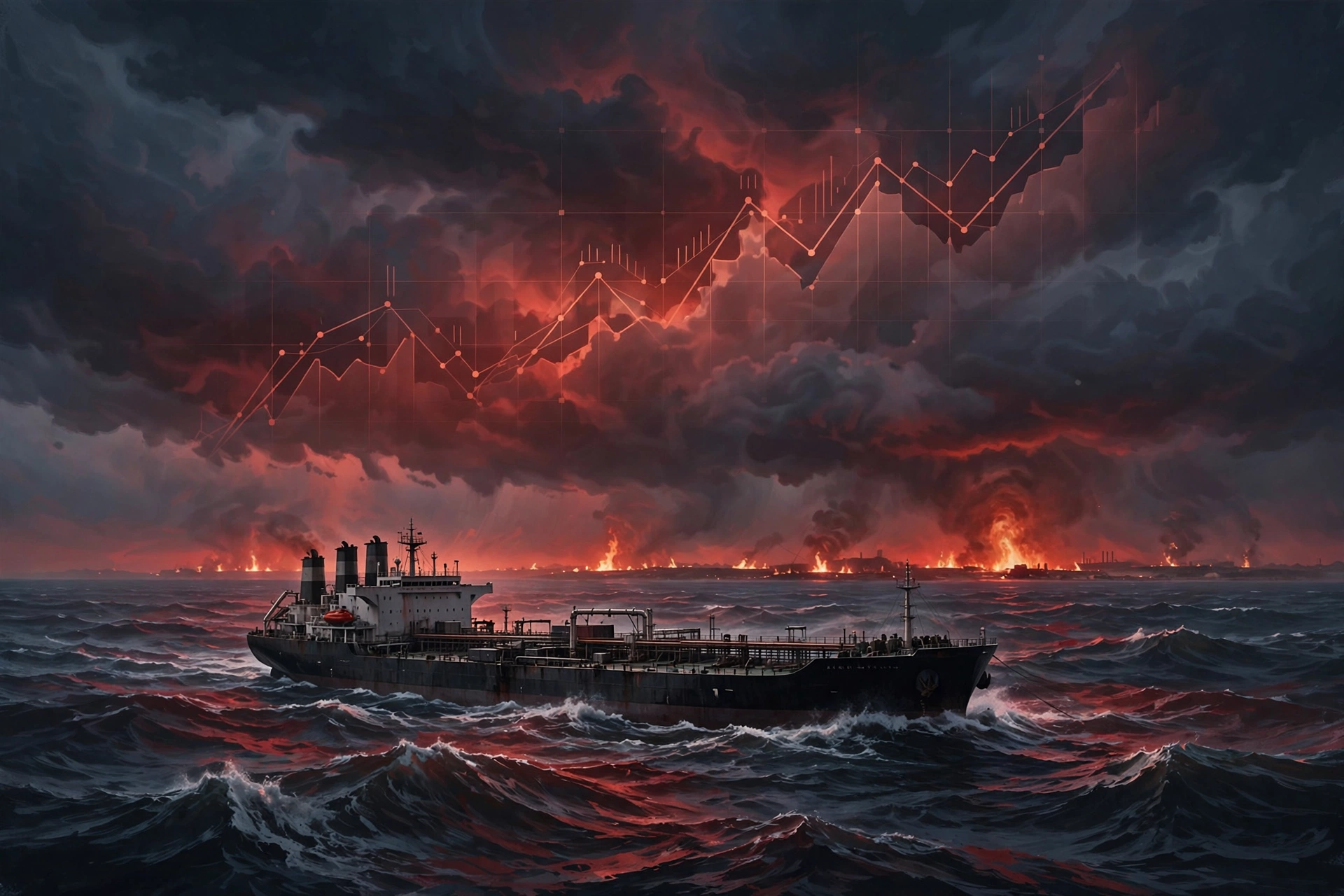
Crude oil prices surged Friday as Iran escalated attacks in the Strait of Hormuz and Ukraine vowed to keep striking Russian refineries. Brent crude futures climbed to a session high of $110 a barrel — the first time since May — before settling at $109.86, up 3.7 percent, according to market data cited by multiple outlets. U.S. West Texas Intermediate rose 3.5 percent to settle at $101.41, with WTI gaining more than 10 percent on the week and Brent nearly 5 percent.
At least nine tankers and cargo ships have come under attack near Hormuz since Sunday, as Iran tries to disrupt exports through the waterway, and the U.S. Central Command said Iran sank the container ship GFS Pride on Wednesday. The crew of the Singapore-registered vessel was safely evacuated, according to Singapore's maritime authority, but the International Maritime Organization reported three seafarers injured and two missing this week.
Crude exports through Hormuz have already pulled back: shipments stood at 9.4 million barrels per day for the week ended Wednesday, about 70 percent of the average before the Iran war, according to data from the energy researcher Kpler cited by 10bmnews.
The region heats up
The pressure was not limited to the strait. Saudi Arabia's military said it intercepted multiple missiles over the Red Sea on Friday, including one believed to be headed for the Yanbu oil export terminal, and confirmed the destruction of three drones over Riyadh and the kingdom's south. Yemen's Iran-backed Houthi militants have launched repeated attacks on Saudi Arabia this week; one struck an administrative building belonging to oil giant Aramco in Dhahran on Tuesday, according to the Saudi energy ministry.
Ukrainian President Volodymyr Zelenskyy also vowed fresh long-range strikes on Russian refineries, undercutting an energy ceasefire effort President Donald Trump had tried to broker — just as Trump waived new U.S. sanctions on Russian oil buyers in a separate Friday-night decision.
The Canadian angle
Canadian drivers have already felt this war at the pump. Statistics Canada's September inflation report showed gasoline prices up 9.1 percent in a single month, and with crude now at its highest since May, pump prices — which typically follow crude with a lag — face fresh upward pressure. U.S. diesel averaged $6.33 a gallon Friday, more than 70 percent above the same period a year earlier, according to market data cited by TokenPost.
That matters for the Bank of Canada's Oct. 28 rate decision, 11 days away. Governor Tiff Macklem said this week the bank has been "looking through" higher energy prices, "but the longer this goes, the harder that gets" — and a hike is firmly back on the table. Meanwhile the broader market wobble deepened: the Nasdaq fell 2.1 percent Friday, its worst week since June, as the AI selloff met the energy shock.
What matters
What happened
What happened: Brent crude touched $110 a barrel Friday, its highest since May, after Iran escalated attacks on shipping near the Strait of Hormuz and Houthi missiles targeted Saudi Arabia.
Why it matters
Why it matters: The attacks threaten a waterway carrying roughly a fifth of the world's seaborne oil, and rising energy costs feed inflation, pump prices, and central-bank decisions.
What we know
What you need to know: At least nine vessels have been attacked since Sunday; shipping through Hormuz is running at about 70 percent of prewar levels; and both Iran and Ukraine are threatening more strikes on energy infrastructure.
What we don’t
What we don't know: How long the Hormuz disruption lasts, whether reserve releases or diplomacy ease the pressure, and how much of the crude rally reaches Canadian pumps.
What’s next
What happens next: Analysts expect oil to stay elevated while shipping risk persists; next week's corporate earnings will show how businesses are absorbing the cost shock; and the Bank of Canada decides on rates Oct. 28.
Sources
- TokenPost — Brent Climbs to $110 as Attacks Threaten Global Oil Flows · other
- 10bmnews — Brent oil touches $110 as Iran escalates Hormuz attacks, Ukraine vows to hit Russian refineries · other
- Vesper News (AI-curated summary of CNBC Top News) — Brent crude hits $110 as Iran escalates Strait of Hormuz attacks · other
InflationBank of Canadaoil pricesBrent crudeIranStrait of Hormuzgasoline prices
Newsletter
News. Context. What matters.
One essential briefing, written for people who would rather understand the story than scroll it.
Unsubscribe anytime. We don’t sell addresses.
Recommended

Money
The Bank of Canada decides in four hours. The market says hike — the economy says wait.
At 9:45 a.m. ET the Bank sets its policy rate and publishes new forecasts. Markets lean heavily toward a hike to 2.50%, but the case for holding at 2.25% is real — and a surprise either way moves mortgages, the loonie and December bets.

Money
Amex posted a record quarter — then announced it's cutting 3,500 jobs to get ready for AI
American Express reported record third-quarter revenue of $20.1 billion and raised its profit outlook, then told analysts it will cut about 5 per cent of its workforce in a $336-million restructuring its CFO says is meant "to prepare for AI."
Money
The Bank of Canada is now expected to hike rates on Oct. 28 — and hike again by spring
A Reuters poll of 34 economists finds 56% now expect a quarter-point hike to 2.50% next Wednesday, with another rise by end-March, after September's 3.1% inflation reading and sharply rising expectations.