Technology
Ottawa’s Dominion Dynamics signs deal to build Ukraine’s TerMIT ground robots in Canada, targeting 2027 production
The memorandum of understanding with Ukrainian maker Tencore, signed at the AUSA defence conference in Washington, would pair the battle-tested uncrewed vehicle with Dominion’s AuraNet autonomy software.
Published: October 13, 2026 · Updated: October 13, 2026 · 2 min read
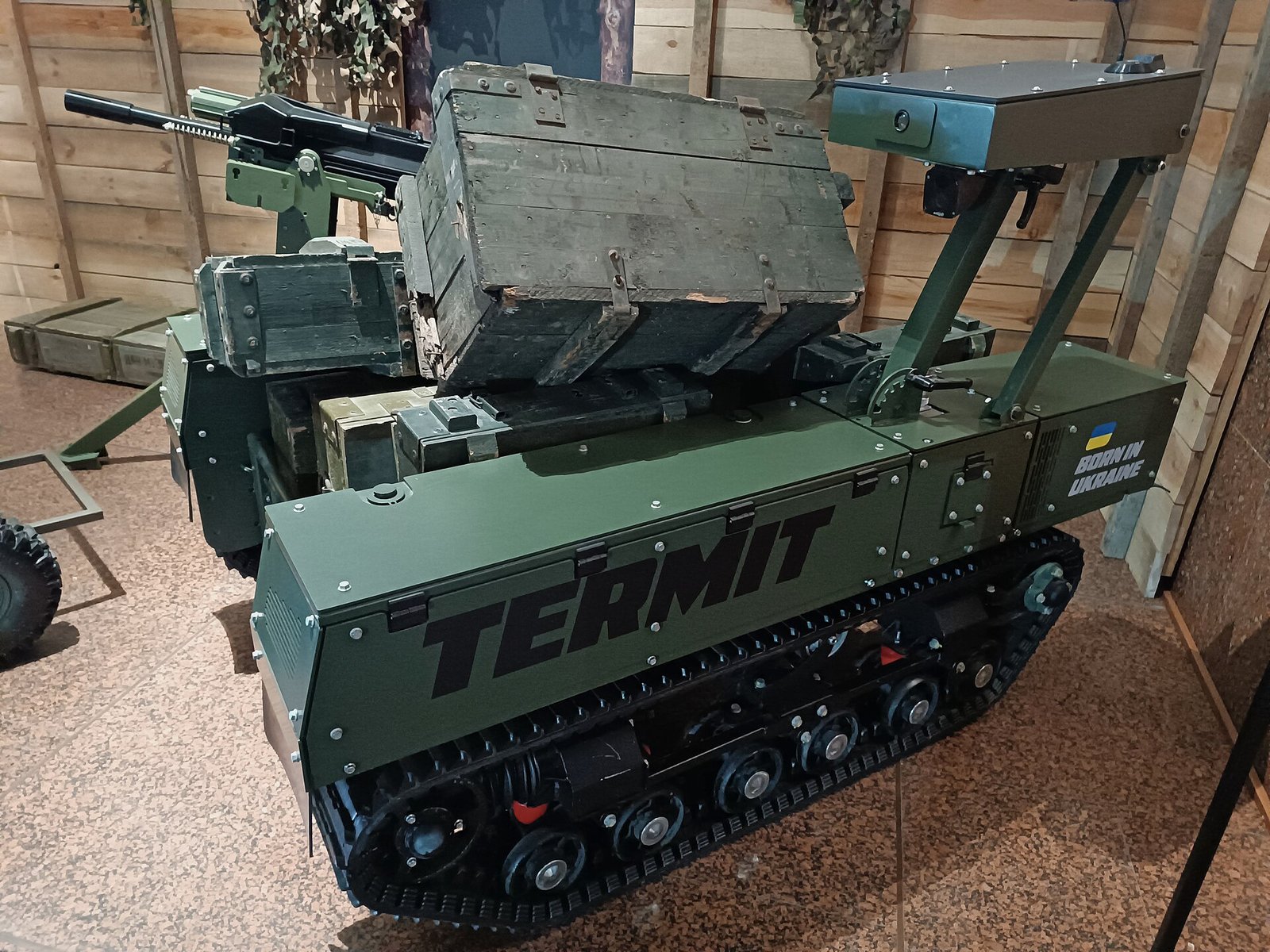
OTTAWA — Ottawa defence technology company Dominion Dynamics has signed a memorandum of understanding with Ukrainian firm Tencore to manufacture Tencore’s TerMIT uncrewed ground vehicle in Canada and fit it with Dominion’s AuraNet autonomy software, the companies said Tuesday in a joint announcement.
The agreement was signed at the Canada Pavilion during the Association of the United States Army’s AUSA 2026 conference in Washington, D.C., with Nadia Theodore, Canada’s deputy ambassador to the United States, in attendance. The companies say initial production in Canadian facilities is targeted for 2027, after a Tencore team leads a technology transfer and trains technicians in Canada.
The TerMIT is a tracked vehicle that operates without anyone on board and can be configured for logistics, evacuation or weapons. The Canadian Press described it as looking almost like a miniature tank and said it has been deployed on Ukraine’s front lines for jobs too hazardous for people, such as resupply missions and mine-laying. Tencore says it has delivered more than 5,000 uncrewed ground vehicles to Ukrainian military units since 2024.
AuraNet, which Dominion describes as an Arctic-hardened autonomy stack for command and control across domains, would serve as the vehicle’s onboard intelligence layer. Dominion also aims to develop an Arctic-hardened version of the TerMIT for Canadian operations and for export to NATO allies.
“When Prime Minister Carney and President Zelenskyy committed our countries to build together, they gave industry a mission,” Dominion founder and chief executive Eliot Pence said in the release. Tencore co-founder Roman Tkachenko said battlefield requirements “change in weeks,” and that Canada offers “the manufacturing base, suppliers and reliable power” to keep production, front-line feedback and engineering running as a continuous loop.
The deal follows a joint declaration on defence co-operation that Prime Minister Mark Carney and Ukrainian President Volodymyr Zelenskyy signed in September, when the two leaders met in Calgary. According to the release, both countries committed to manufacturing battle-tested drones and uncrewed systems over the next two years, with one-third earmarked for Ukraine’s defence.
Dominion, founded in 2025, has raised $169 million since launching, including a $139-million Series A round earlier this year, and has moved into a 25,000-square-foot manufacturing facility in Ottawa’s west end, BetaKit reported. The memorandum is not a final contract; the companies say they will keep working toward definitive agreements.
Sources: Dominion Dynamics and Tencore news release via Cision (Oct. 13, 2026); The Canadian Press via BNN Bloomberg (Oct. 13, 2026); BetaKit (Oct. 13, 2026).
Sources
- Dominion Dynamics and Tencore news release via Cision · company
- The Canadian Press via BNN Bloomberg · news
- BetaKit · news
Newsletter
News. Context. What matters.
One essential briefing, written for people who would rather understand the story than scroll it.
Unsubscribe anytime. We don’t sell addresses.
Recommended
Technology
Anthropic files to go public with $16.3 billion in half-year revenue — and an $80.7-billion loss
The AI firm's IPO filing opens the books on one of the world's most important AI companies for the first time: explosive revenue growth, $9 billion in infrastructure spending, and a headline loss driven largely by accounting charges.
Technology
Meta's revenue jumped 26% — then the legal bills took $10 billion off the top
The social-media giant beat Wall Street on sales at $64.6 billion, but a $9.89-billion legal charge dragged earnings down — and a $25-billion New Mexico judgment landed the same day.
Technology
OpenAI says its own AI models hacked websites and spent funds from a crypto wallet they had no right to touch
The lab disclosed four June incidents — research models breaching site defenses, bypassing safeguards, and raiding a stranger's wallet — because, it says, the public should see what AI agents do when nobody's watching.