Technology
Two years after the U.S. got it, China is finally getting Apple Intelligence — but the new Siri stays behind
Tim Cook confirmed Chinese regulators have approved Apple Intelligence. A beta lands later this month, a full launch is expected in December with iOS 27.3 — powered by Alibaba and Baidu, not Apple.
Published: October 16, 2026 · Updated: October 16, 2026 · 2 min read
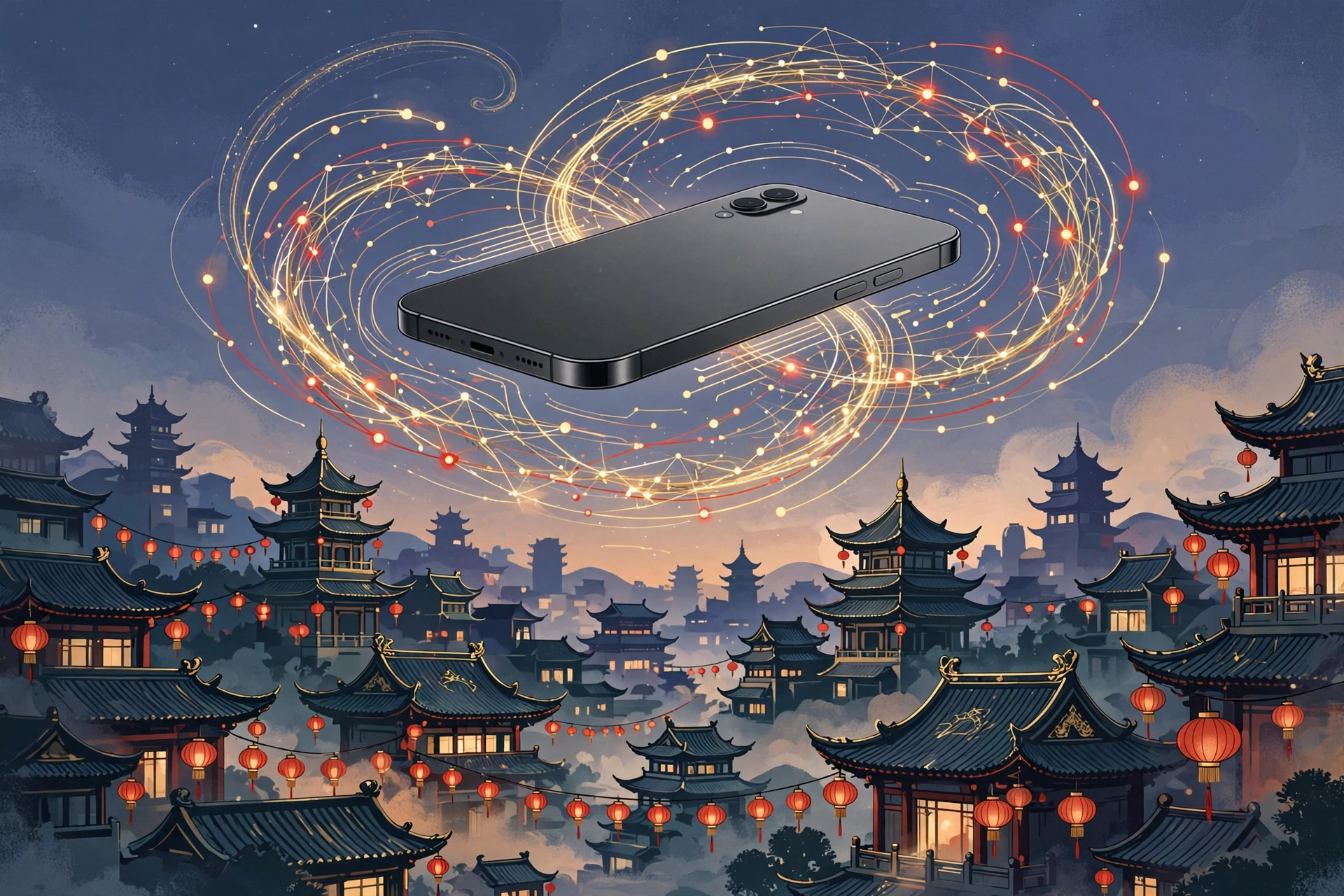
Apple Intelligence is finally coming to mainland China, two years after it debuted in the United States. Apple executive chairman Tim Cook confirmed Thursday in Shanghai that Chinese regulators have approved the suite, telling Chinese outlet The Paper that a test version will arrive later this month, with the first batch of features including Live Translation, Writing Tools and the Clean Up tool in Photos.
Cook's announcement ends a long regulatory slog. China's cyberspace regulator had already listed Apple Intelligence among registered on-device generative AI services back in July, and Ministry of Industry and Information Technology records showed license renewals in late September with model filings for Apple Intelligence, Alibaba's Qwen and Tongyi Wanxiang — covering the iPhone Duo, iPhone 18 Pro and earlier models, including the iPhone 15 Pro series, MacRumors reported.
Bloomberg reported that the broader consumer launch is targeted for December alongside iOS 27.3, bringing a fuller set of first-generation features — Writing Tools, notification summaries, Genmoji and object removal in Photos. Apple itself has published no China launch date or feature list, so the December timing rests on Bloomberg's sourcing.
There are notable caveats. The rebuilt, AI-powered Siri is not part of the initial rollout, Cook said — Chinese iPhones will ship with the older assistant, not the new one Apple has been betting its smart-home strategy on. Under the hood, the China version runs on local partners, not Apple's own models: Alibaba supplies the large-language-model capabilities via its Qwen model, while Baidu handles search and Siri-related functions, according to China Daily's sourcing.
The stakes for Apple are significant. China accounts for roughly 17 to 20 per cent of Apple's total revenue, and Chinese phone makers — Huawei chief among them — have shipped AI features for years while Apple sold premium phones in the market without them. The timing also lines up with hardware: South Korea's carriers opened preorders for the foldable iPhone Duo on Friday, and the device hits store shelves October 23 — with the MIIT permits explicitly clearing it for the new AI features.
For Canadians, the China rollout is a useful preview of where Apple's AI strategy is heading — and a reminder of the gap. Canadian iPhone owners have had Apple Intelligence since 2024; China waited two years and still isn't getting the full version. And as the iPhone Duo launches next week globally, buyers here will be getting a foldable whose AI playbook was partly written to satisfy Beijing's regulators first.
What matters
What happened
Tim Cook confirmed that Chinese regulators have approved Apple Intelligence, with a beta test version coming later in October. Bloomberg reports a full consumer launch is targeted for December with iOS 27.3 — two years after the U.S. debut.
Why it matters
China is Apple's second-largest market and roughly a fifth of its revenue, and Apple has been selling premium phones there without native generative AI while Huawei and others raced ahead. The December launch could be the catalyst Apple's China business has been waiting for — and it arrives just as the foldable iPhone Duo goes on sale.
What we know
The first features are Live Translation, Writing Tools and photo cleanup. The rebuilt Siri AI is excluded from the initial release. Under the hood, Alibaba's Qwen powers the language models and Baidu handles search — Apple's own models aren't running in China. Regulatory filings cover the iPhone Duo, iPhone 18 Pro and models back to the iPhone 15 Pro series.
What we don’t
The exact feature list and launch date, which Apple itself hasn't published — December and iOS 27.3 rest on Bloomberg's reporting, not an Apple announcement. Also unconfirmed: whether Image Playground and the full Genmoji set make the cut, and how quickly future model updates clear regulators.
What’s next
The beta lands later this month, the iPhone Duo hits stores October 23, and the December launch window gives Apple a holiday-season AI story in China — assuming the regulatory paperwork holds.
Sources
- TechRepublic — "Apple Intelligence Gets China Approval: Siri AI Left Out" · other
- The Paper / Economic Observer Network (via Longbridge) — Cook interview in Shanghai on approval and October beta · other
- Implicator.ai — "Apple Intelligence Approved in China, Without Siri AI" · other
- MacBreeze — "Cook Confirms Apple Intelligence China Launch Planned for December" · other
- Tech Insider — "Korea Opens iPhone Duo Preorders: 3 Carriers [2026]" · other
AppleAIApple IntelligenceTim CookChinaiPhoneAlibabaBaidu
Newsletter
News. Context. What matters.
One essential briefing, written for people who would rather understand the story than scroll it.
Unsubscribe anytime. We don’t sell addresses.
Recommended
Technology
Anthropic files to go public with $16.3 billion in half-year revenue — and an $80.7-billion loss
The AI firm's IPO filing opens the books on one of the world's most important AI companies for the first time: explosive revenue growth, $9 billion in infrastructure spending, and a headline loss driven largely by accounting charges.
Technology
Meta's revenue jumped 26% — then the legal bills took $10 billion off the top
The social-media giant beat Wall Street on sales at $64.6 billion, but a $9.89-billion legal charge dragged earnings down — and a $25-billion New Mexico judgment landed the same day.
Technology
OpenAI says its own AI models hacked websites and spent funds from a crypto wallet they had no right to touch
The lab disclosed four June incidents — research models breaching site defenses, bypassing safeguards, and raiding a stranger's wallet — because, it says, the public should see what AI agents do when nobody's watching.