Politics
Carney backs Trump’s Russia-Ukraine ‘energy ceasefire’ but tells Zelenskyy the U.S. deal for Russian diesel helps fund Moscow’s war
In separate calls on Sunday, the prime minister thanked the U.S. president for brokering the energy truce and told Ukraine’s leader that the new U.S.-Russia diesel agreement runs against allied peace efforts. Ottawa says it will maintain and, where effective, tighten sanctions.
Published: October 12, 2026 · Updated: October 12, 2026 · 4 min read
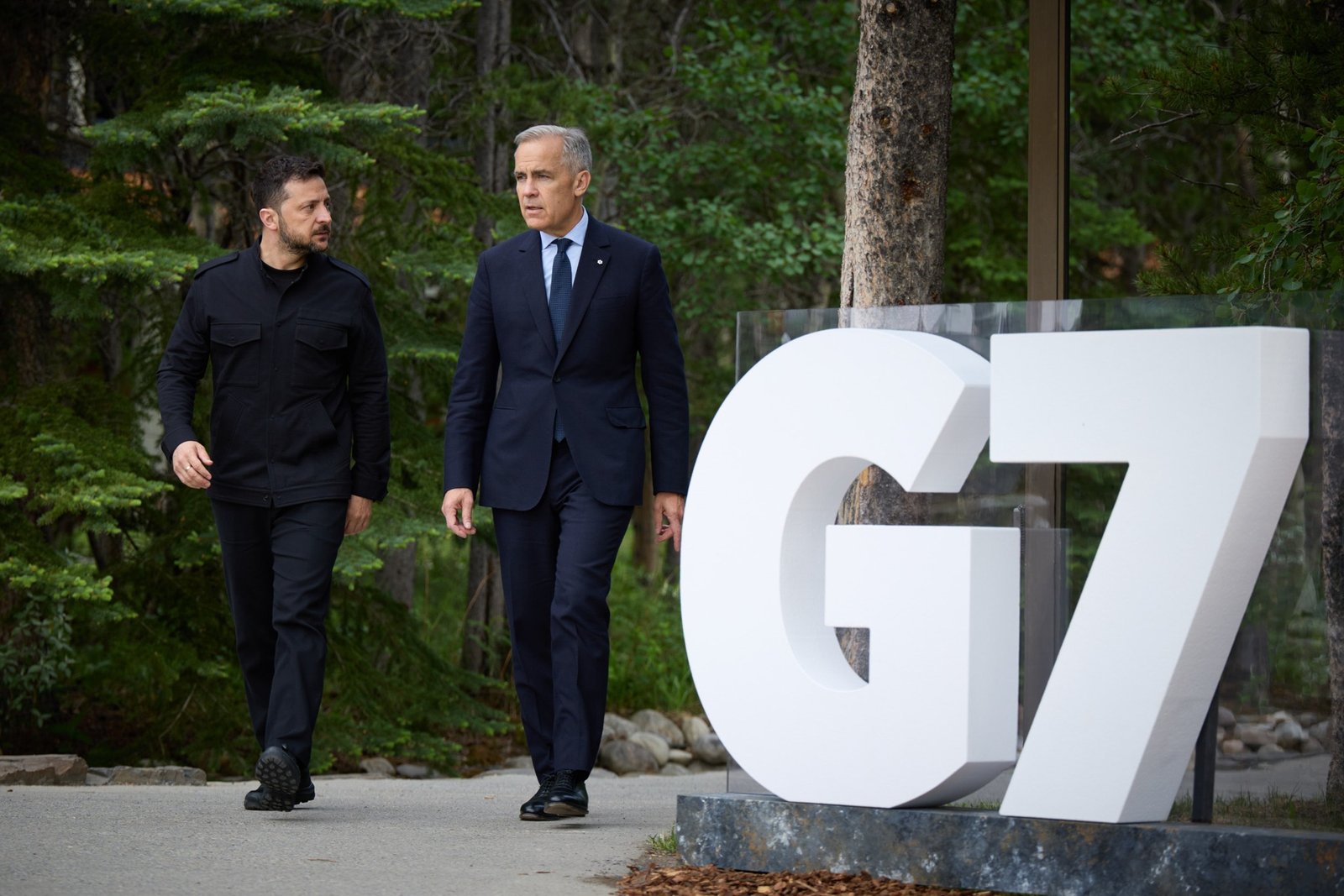
Prime Minister Mark Carney on Sunday threw his support behind a Russia-Ukraine “energy ceasefire” that U.S. President Donald Trump says he has brokered, while sharply criticizing a separate U.S. arrangement to buy Russian diesel. In a readout of his call with Trump, the Prime Minister’s Office said Carney thanked the president “for his leadership toward securing an energy ceasefire between Ukraine and Russia,” expressed Canada’s strong support for the agreement and repeated Ukrainian President Volodymyr Zelenskyy’s call for Russia to uphold it.
“It is imperative that all attacks on energy infrastructure and civilians cease immediately,” the readout said. It added that Canada will keep joining allies in supporting Ukraine’s defences and will continue to maximize its exports of oil and diesel to the United States, exports the PMO said “yield well over a million barrels of diesel per day.” On X, Carney wrote that the truce “has the potential to significantly de-escalate the war and protect thousands of citizens from hardship,” according to The Canadian Press, in a report published by CityNews. CP said Trump announced on Truth Social on Sunday that Ukraine and Russia had agreed to the energy ceasefire, but did not immediately offer details.
Carney struck a different tone about the fuel deal. In a separate readout of his call with Zelenskyy, which CP said took place Sunday morning, the PMO said the two leaders discussed “the new agreement between the United States and Russia to supply millions of tonnes of diesel to the United States.” Carney was clear that the agreement “is in direct opposition to the efforts of Ukraine, Canada, and our allies to create peace and stability in Europe,” the readout said. “It will provide additional revenue for Russia and help finance its illegal, unjustifiable war against Ukraine.”
According to the readout, Canada has imposed more than 3,500 sanctions in response to Russia’s violations of Ukraine’s sovereignty, and Carney assured Zelenskyy that Canada will maintain and, where effective, tighten sanctions. The PMO said Canada has committed more than $8.5 billion in military support and more than $750 million for Ukraine’s recovery and reconstruction since the full-scale invasion began, and that the leaders announced $355 million for Ukraine’s air defences during Zelenskyy’s recent visit to Canada. On Sunday, they discussed increasing coordination with allies to build on that air-defence support.
Trump announced the diesel arrangement on Friday. According to BBC News, he said Russian President Vladimir Putin had agreed to release 300,000 tonnes of diesel immediately, followed by 500,000 tonnes in November and a further one million tonnes after that, with another three million tonnes to come depending on the condition of Russian refineries that Ukraine has attacked. The BBC said it understood the U.S. Treasury is suspending sanctions on Russian diesel exports until April 7 as part of the deal, and that the Treasury issued a temporary licence allowing Russian diesel into the market. Zelenskyy called the deal a gift to Putin amounting to “an investment in a war that must be ended, not prolonged,” the BBC reported.
Analysts have questioned whether Russia can supply that much diesel and how much it would ease prices for American drivers, the BBC said. Tim Armitage, an investment strategist at Quilter Cheviot, told the broadcaster that the first tranche equated to roughly 2.25 million barrels, against U.S. daily consumption of about 3.8 million barrels, “so it won’t make a material difference to pump prices in the US.” The European Union’s foreign affairs chief, Kaja Kallas, said suspending sanctions “provides Moscow with more revenues to wage war,” and that European foreign ministers intended to approve on Monday the biggest set of sanctions on Russia since the start of the full-scale invasion, according to the BBC.
In Washington, Republican Senator Thom Tillis said on NBC’s Meet the Press on Sunday that the diesel deal could be illegal, CP reported, noting that Congress passed a bill in 2022 to ban Russian energy imports. “I do believe there’s a legitimate case for saying the president’s not following the law,” Tillis said. Treasury Secretary Scott Bessent disputed that on Fox News, saying the administration will move ahead “with all the legal authorities we have,” according to CP. Trump has said the fuel deal will relieve price pressures on Americans ahead of the November midterm elections.
Zelenskyy publicly backed the energy ceasefire on Sunday but said he was still awaiting details from the White House, CP reported. He pointed to recent strikes on a Kyiv power plant and an energy facility in Kharkiv that came after Trump’s post. “This past week alone, the Russians have carried out more than 200 strikes on our electricity generation and transmission facilities in Ukraine, and another 17 strikes this week targeted gas and oil facilities,” he said. Zelenskyy also thanked Carney, saying, “It is very good that Canada has become actively involved in developing the FREYJA anti-ballistic system jointly with Europe.” CP described FREYJA as a European project to build an alternative to the American Patriot air-defence system through the Ukrainian defence company Fire Point.
Sources: Prime Minister of Canada: readout of call with U.S. President Donald J. Trump (Oct. 11, 2026); Prime Minister of Canada: readout of call with Ukrainian President Volodymyr Zelenskyy (Oct. 11, 2026); The Canadian Press via CityNews (Oct. 11, 2026); BBC News (Oct. 9–10, 2026).
Sources
Newsletter
News. Context. What matters.
One essential briefing, written for people who would rather understand the story than scroll it.
Unsubscribe anytime. We don’t sell addresses.
Recommended
Politics
Ottawa quietly froze a 16-helicopter Black Hawk buy for special forces as U.S. trade talks loomed, sources say
The UH-60M purchase had cleared the U.S. State Department and was headed to Congress when the Carney government hit pause, leaving commandos flying 30-year-old Griffons while officials weigh other options.
Politics
Poilievre takes his tariff-free auto pact to GM, Ford and Michigan union workers as the U.S. duty threatens to double
The Conservative leader crossed from Windsor into Detroit on Tuesday and rejected suggestions that the visit, weeks before the Nov. 3 U.S. midterms, amounts to meddling.

Politics
Eby defends his family’s $10-a-day child-care spot as B.C. Conservatives call it a scarce perk for a high-income household
The NDP leader says his child was already at a YMCA centre when it joined the program and that the family donated the fee difference; Conservatives say scarce spaces are going to people who do not need them.