Politics
Canada pulls its sponsorship of a Vilnius disinformation conference with panels casting the U.S. as a threat, as U.S. officials say Washington lobbied allies
Global Affairs Canada cites “changes to the framing” of several panels at #Disinfo2026. A researcher says the descriptions did not change, and U.S. officials told Reuters the State Department pressed Ottawa and Lithuania to distance themselves.
Published: October 8, 2026 · Updated: October 8, 2026 · 4 min read
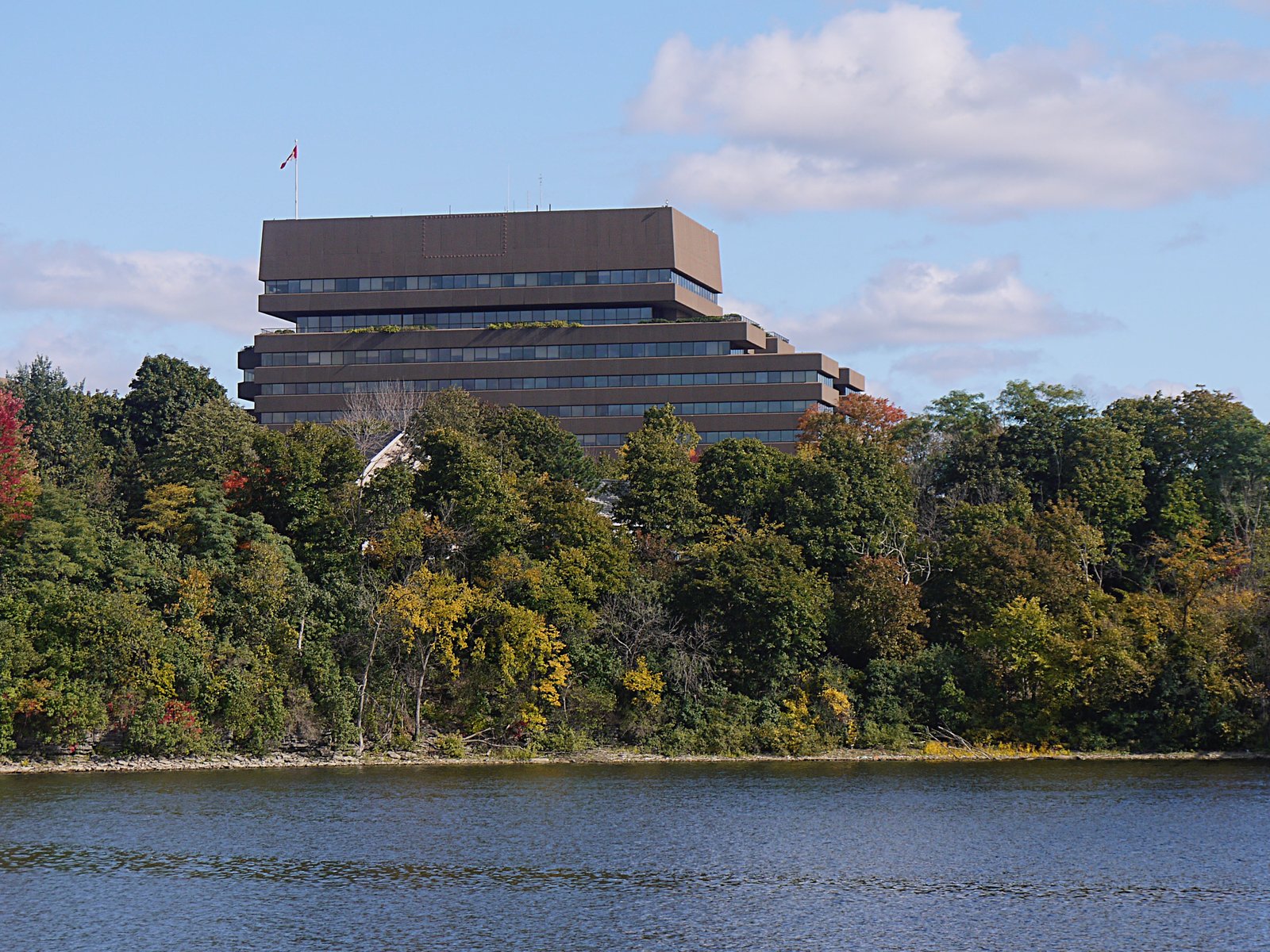
Canada has withdrawn its sponsorship of #Disinfo2026, an anti-disinformation conference in Vilnius, Lithuania, that includes panels discussing the U.S. government as a foreign interference risk, CBC News reported on Wednesday. Samantha Lafleur, a spokesperson for Global Affairs Canada, said the government took issue with the framing of some panels at the event, which is organized by EU DisinfoLab, a non-profit based in Brussels. Canadian officials will still take part in the conference but will not chair any discussions, Lafleur told The Globe and Mail.
“Following changes to the framing of several panel discussions, GAC decided to revise its participation in those sessions at the EU DisinfoLab 2026 conference,” Lafleur said in a statement. CBC said the department did not deny that it had concerns with describing the U.S. as a foreign interference threat, and Lafleur did not respond to questions about which changes it took issue with or whether the U.S. raised concerns. “We respect the right of the organizers to frame discussions as they see fit and recognize the independence of civil society actors and speakers at the conference,” she told the Globe. She said Canada “remains firmly committed to addressing the challenge of disinformation and misinformation.”
Later Wednesday, Reuters reported that the U.S. State Department had lobbied Canada and European allies to withdraw support for the conference because it included a panel examining Washington’s role as an alleged information threat to Europe, according to three U.S. officials familiar with the matter and correspondence reviewed by the news agency. State Department officials spent several days prodding their counterparts in Lithuania, Canada and France about the Oct. 7-8 conference, and American diplomats persuaded the Canadian and Lithuanian foreign ministries, which had been listed as the conference’s main supporters, to distance themselves, the officials said. Two U.S. officials said the U.S. ambassador to Lithuania, Kara McDonald, was involved in the outreach to Vilnius. Reuters said the State Department’s role was first reported by the Guardian.
The panel in question was titled “USA as a FIMI threat: acknowledge, adapt, push back,” using the industry acronym for foreign information manipulation and interference. Its description, public since at least Sept. 9 according to Reuters, said it would cover “one of the most uncomfortable questions in the counter-disinformation field today: how did the United States become a FIMI threat for Europe?” The session followed a scheduled address by an International Criminal Court judge sanctioned by the United States. The EU DisinfoLab conference page says the conference opened on Oct. 7 with an interview with Judge Kimberly Prost, who was placed on the U.S. sanctions list after she and fellow ICC judges authorized an investigation into alleged war crimes committed by the U.S. military in Afghanistan. The Globe identified Prost as a Canadian jurist.
A Global Affairs official also pulled out of chairing a session on disinformation in the Arctic scheduled for Thursday, CBC reported. According to the Globe, Saliou Babou, the director of a Global Affairs unit set up years ago to counter foreign state-sponsored disinformation, had been slated to chair it. The program frames that session as a discussion of “growing evidence that the United States has, in specific Arctic contexts, operated as a FIMI actor.” Ben Shultz, a lead researcher at the American Sunlight Project and a presenter on that panel, disputed Ottawa’s statement that panel subjects had been reframed, telling the Globe the descriptions were unchanged from a June 2026 version. CBC said that, according to the Internet Archive’s Wayback Machine, the description of Wednesday’s panel on the U.S. as a foreign interference threat appears to have been unchanged since Sept. 9.
“Thankfully every speaker has still shown up, which is awesome, and I think a testament to the resolve of the research community. But it’s definitely put a bit of a damper on the atmosphere,” Shultz told CBC, calling the withdrawal of three governments a “shock” and questioning whether they were pressured. According to photos shared with CBC News, the names of Canada, Lithuania’s Foreign Ministry and the European External Action Service, the EU’s diplomatic service, were covered up on signs around the conference as it got under way.
Lithuania’s Ministry of Foreign Affairs said it had cancelled its participation “as several parts of the conference programme differ from the official position of the Government.” The EEAS said it asked for its logo to be removed “in view of the content of the programme,” and told Tech Policy Press the organizers had framed some discussions in ways that “do not align with the official positions held by the EU,” though its representatives remained on the program presenting research. France, now the only remaining government sponsor, reaffirmed its support. “France is one of the countries most heavily targeted by foreign information manipulation campaigns and remains firmly committed to countering any actions that undermine its fundamental interests,” a spokesperson for the French foreign ministry told Tech Policy Press.
The State Department told Reuters that while it was “unable to comment on the details of diplomatic conversations, it should not be a surprise that countries would disaffiliate from this conference” after learning that the U.S. had been labelled a disinformation threat. “The organizers appear to put the United States in the same bucket as foreign adversaries,” the department said in a statement to the Globe. “This false equivalence is antithetical to the goals these individuals claim to promote and obscures the scale and nature of adversarial interference.” CBC noted that Ottawa’s move comes the same week the Globe reported that some people campaigning for Alberta independence had met on both sides of the border with U.S. entities, and as Canada remains in an often bitter trade dispute with U.S. President Donald Trump’s administration.
Sources: CBC News (Oct. 7, 2026); The Globe and Mail (Oct. 7, 2026); Reuters via Central Oregon Daily (Oct. 7, 2026); Tech Policy Press (Oct. 7, 2026); EU DisinfoLab: #Disinfo2026 conference page.
Sources
- CBC News · news
- The Globe and Mail · news
- Reuters via Central Oregon Daily · news
- Tech Policy Press · news
- EU DisinfoLab: #Disinfo2026 conference page · organization
Newsletter
News. Context. What matters.
One essential briefing, written for people who would rather understand the story than scroll it.
Unsubscribe anytime. We don’t sell addresses.
Recommended
Politics
Ottawa will indefinitely exclude mental illness as a sole condition for MAID and open the door to advance requests, Fraser says
Legislation promised for this fall would cancel the expansion of medical assistance in dying set for March 2027, as a parliamentary committee recommended in June. The justice minister made the announcement hours before MPs were set to vote on a Conservative bill the government opposes.

Politics
Meeting NATO’s five per cent pledge would push Canada’s core defence spending to $163.6 billion a year by 2035, budget officer says
A new Parliamentary Budget Officer primer says the extra military spending would add $63.7 billion to the 2035-36 deficit, and warns that the timing of the ramp-up, Ottawa’s procurement record and industrial capacity are the big unknowns.
Politics
Thousands of Alberta mail-in referendum ballots at risk over ID and declaration errors as deadline nears
Elections Alberta says more than 3,000 voters must resend a declaration form or ID copy by email or have their special ballots rejected. Completed packages must arrive by 5 p.m. on Oct. 16, three days before the vote.