Money
Foreign investors just dumped a record C$17.5B of Canadian government debt
Non-resident investors sold a net C$17.3 billion in Canadian securities in August, Statistics Canada reported Friday — the first monthly sell-down of the year, led by an unprecedented exit from federal debt.
Published: October 16, 2026 · Updated: October 16, 2026 · 1 min read
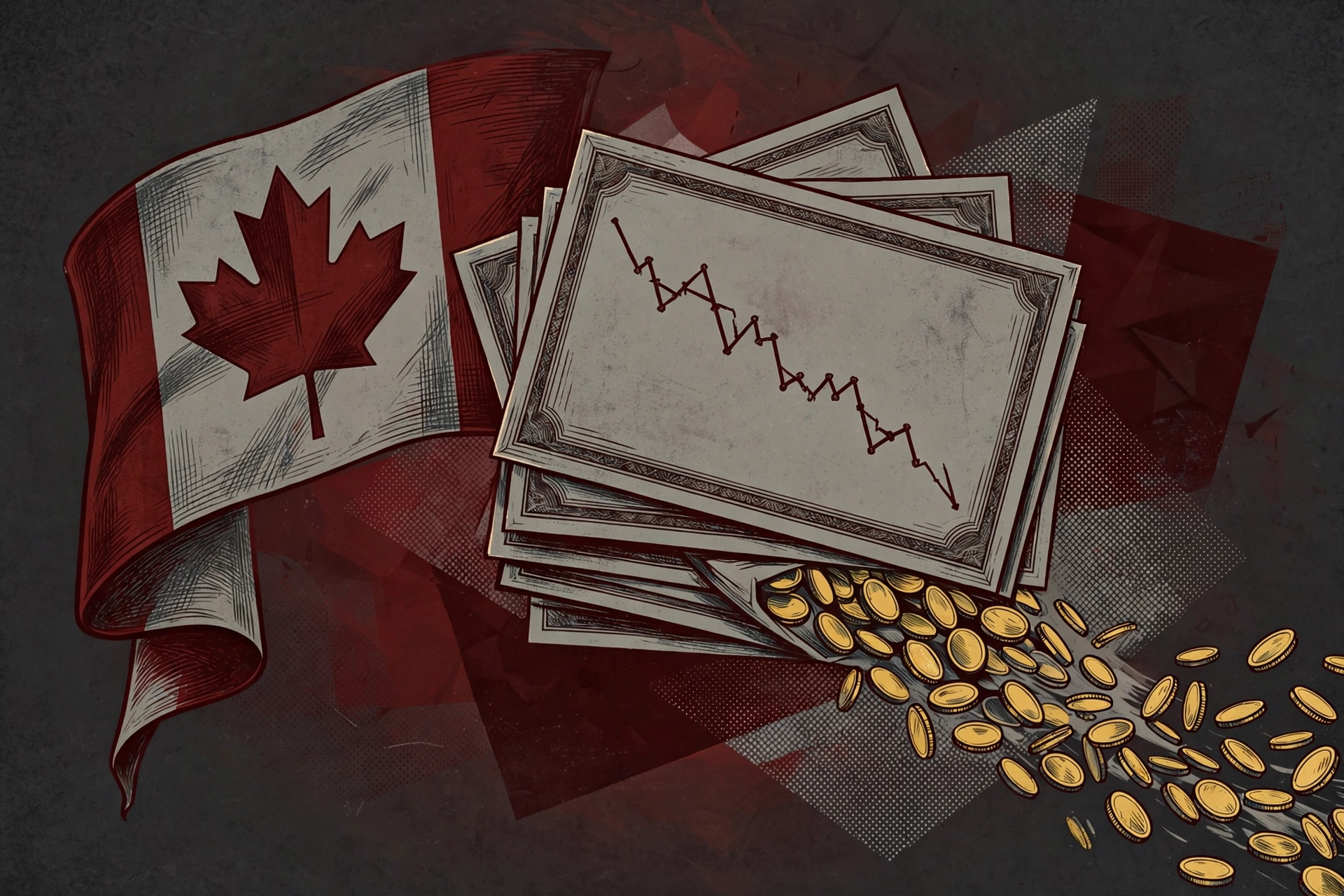
Foreign investors pulled a record sum out of Canadian government debt in August. Non-resident investors reduced their holdings of federal government debt securities by C$17.5 billion — the largest such divestment on record, according to Statistics Canada data released Friday and reported by Dow Jones — including C$11.2 billion in bonds and C$6.3 billion in money-market paper. The selling came after roughly C$99.4 billion of foreign buying of federal debt from January through July.
The overall picture: foreigners sold a net C$17.31 billion in Canadian securities during the month, the first monthly net divestment of 2026. The outflow was partly offset by purchases of Canadian corporate bonds, up C$7.6 billion, and provincial government bonds, up C$1.6 billion. Foreign investors also sold C$9.9 billion of Canadian equities, cutting exposure across industries except banking.
The money flowed both ways. Canadian investors bought C$23.9 billion of foreign securities in August, led by U.S. shares — picking up roughly C$28.9 billion after selling C$31 billion in July. Over the first eight months of 2026, Canadians have bought C$76 billion of U.S. shares, the highest on record for the period.
Net international transactions generated a C$41.21 billion outflow from the Canadian economy in August, after an inflow of about C$123.8 billion from January to July. And the longer view is still striking: foreign investment in Canadian securities totalled C$161.6 billion in the first eight months of 2026, versus C$27.1 billion over the same stretch of 2025.
What it means for Canada
The August sell-down is the first crack in a year of record foreign demand for Canadian assets — demand that has helped fund federal borrowing. Whether it is a one-month rotation or the start of a turn matters for Ottawa's borrowing costs and for the loonie, which has been under pressure around 70.6 cents U.S. With energy-price pressures already complicating the Bank of Canada's Oct. 28 rate decision — money markets are pricing a possible December hike — foreign appetite for Canadian debt is one to watch into year-end.
Sources
- Dow Jones (Robb M. Stewart), via Morningstar · other
- Trading Economics · other
- · other
Statistics CanadaBank of Canadalooniemarketsforeign investmentfederal debtbonds
Newsletter
News. Context. What matters.
One essential briefing, written for people who would rather understand the story than scroll it.
Unsubscribe anytime. We don’t sell addresses.
Recommended

Money
OPEC+ agrees to hold December oil output steady — leaving the war, not quotas, to set the price
Seven core producers agreed in principle at a Sunday online meeting to leave December targets unchanged, Reuters reported, pausing output policy until 2027 quota talks — with Brent's December contract closing Friday at $117.64.
Money
The Fed held rates — hours after the Bank of Canada hiked. Here's what the split means for Canadians.
The U.S. Federal Reserve kept its benchmark rate at 3.75% to 4% on Wednesday in a 10–2 vote, pausing after September's hike even as inflation stays elevated. For Canadians, the divergence with Ottawa's morning hike is the story: no relief for borrowers from south of the border, and a firmer case for the loonie.
Money
Bank of Canada hikes for the first time since 2023 — and warns more could follow.
At 9:45 a.m. ET on Wednesday the Bank raised its policy rate to 2.50%, its first increase since July 2023, saying high energy prices risk spreading into broader inflation. It also signalled caution: further hikes are possible, but decisions will come one meeting at a time.