World
EU leaders rallied around Zelensky in Brussels — one day after Trump called him harder to deal with than Putin
The Friday summit put Europe's backing for Ukraine on display as the U.S. president's feud with Kyiv deepened over refinery strikes and a controversial Russian diesel deal. Zelensky told leaders he was "only standing up for Ukraine's interests."
Published: October 16, 2026 · Updated: October 16, 2026 · 2 min read
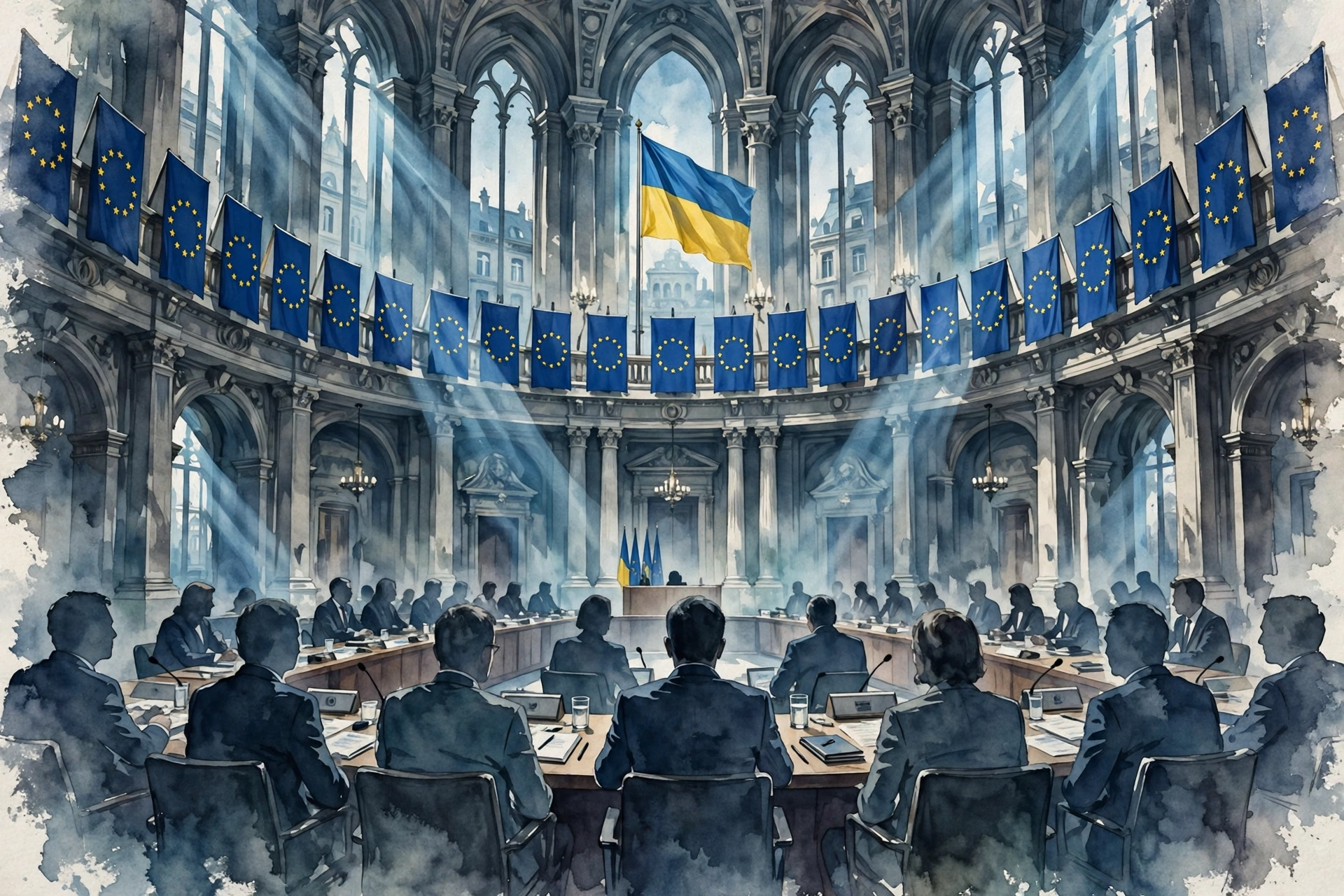
European Union leaders closed ranks around Volodymyr Zelensky at a summit in Brussels on Friday, greeting the Ukrainian president with handshakes and hugs one day after U.S. President Donald Trump called Ukraine's renewed strikes on Russian oil refineries a "disgrace" and said the Ukrainian leader was "more difficult to deal with" than Vladimir Putin.
Zelensky told the summit he was "only standing up for Ukraine's interests," and pushed back on Washington directly. "If I don't stand up to this… who else will?" he said, praising Europe's "real leaders," according to summit coverage.
The split between Washington and Kyiv has sharpened this week around two developments: Trump's rebuke of Ukraine's refinery-strike campaign, and a U.S. deal to import Russian diesel that has angered Ukraine and European allies. Zelensky rejected the arrangement, warning a gas agreement could come next, and said the diesel deal would send money straight to Moscow to fund the war, per reporting from the summit.
European Commission President Ursula von der Leyen told reporters the EU had backed Trump's energy ceasefire "but we've seen that Russia did not respect it, not a single minute," and said sanctions on Russia "have to increase." European Council President António Costa said "this is no time to withdraw support" for Ukraine and "no time to relieve Russian sanctions," as the U.S. has done with the diesel deal.
The summit's agenda centred on financing Ukraine through another winter — the fifth since Russia's full-scale invasion began in February 2022. Estonian Prime Minister Kristen Michal told Reuters the EU would probably have to provide a new loan to Ukraine to help cover its budget gap for next year, saying, "Last winter was already hell, this one will be once again like hell."
On the ground, the urgency was visible Friday. Russian drone strikes on Kharkiv killed three people, and strikes elsewhere left hundreds of thousands of people without power, according to summit coverage.
Zelensky had paused attacks on Russian refineries for three days at Trump's request as part of an energy-ceasefire pitch, but said Thursday the strikes would resume because Moscow never honoured the deal — a ceasefire Trump announced unilaterally last weekend. Trump, facing U.S. midterm elections in November, has blamed Ukrainian strikes for pushing up energy prices. In his Thursday Newsmax interview, he also said, "I'm not a big fan of Zelensky. They've destroyed that country."
For Canada, the Brussels show of unity matters on two fronts. Ottawa has been one of Kyiv's most committed backers since 2022, and as Washington wavers, the pressure on Canada and Europe to carry more of the financial and military load will only grow. The energy side hits closer to home too: Ukraine's refinery strikes and the U.S.-Russia diesel deal both feed the same global fuel prices Canadians pay at the pump — prices already running hot this fall.
What matters
What happened
At a Friday EU summit in Brussels, European leaders publicly rallied around Volodymyr Zelensky a day after Donald Trump called Ukraine's refinery strikes a "disgrace" and said Zelensky was harder to deal with than Vladimir Putin.
Why it matters
The summit crystallized a real split: Europe is doubling down on backing Ukraine — including a likely new loan and a winter support package — while the U.S. cuts a diesel deal with Russia and pressures Kyiv to stop hitting Russian refineries. How the West divides the burden of supporting Ukraine is being renegotiated in real time.
What we know
Zelensky rejected the U.S.-Russia diesel arrangement and said a gas deal could follow; von der Leyen said Russia never honoured Trump's energy ceasefire "for a single minute"; and the EU is preparing to fund Ukraine through its fifth wartime winter, with Estonia's prime minister flagging a probable new loan.
What we don’t
Whether the diesel deal with Moscow expands to other energy products; how far U.S. intelligence-sharing and weapons support for Ukraine recede; and whether Europe's loan and winter package materialize at the scale Zelensky asked for.
What’s next
EU leaders continue working the winter package — energy, air defence and funding. Attention now turns to whether Trump's midterm-driven fuel-price push produces more Russia deals, and whether Kyiv's refinery campaign expands despite Washington's objections.
Sources
- BBC News (via World Right Now) — "Zelensky says Ukraine has right to defend itself after Trump calls latest strikes a 'disgrace'" · other
- The Gulf Gazette — "Zelensky rallies EU support as Trump says Ukraine leader 'more difficult to deal with than Putin'" · other
- TOB News — "EUROPE SUMMIT: Zelensky rallies EU support" · other
- Pagegoo — "Zelensky turns to Europe for backing as ties with Trump deteriorate" · other
UkraineRussiaDonald TrumpVolodymyr ZelenskyEU summitEuropean Union
Newsletter
News. Context. What matters.
One essential briefing, written for people who would rather understand the story than scroll it.
Unsubscribe anytime. We don’t sell addresses.
Recommended
World
Syria seals its only crossing with Jordan after airstrikes kill seven, Damascus says
Syria closed the Nassib crossing on Tuesday after Jordanian strikes on southern Syria — strikes Amman says were coordinated with Damascus, a claim Syria flatly denies.
World
Serbia's students just ended 14 years of Vučić's rule — at the ballot box
The student-led Student List won a projected parliamentary majority on Sunday, and Aleksandar Vučić conceded defeat, turning nearly two years of anti-corruption protests into a transfer of power.
World
Tehran talks held as regional powers push to avert a new Iran war — but no deal announced
Saudi, Pakistani and Turkish officials met Iran's security chief in Tehran on Monday, a day after Trump ruled out a Sunday strike; oil eased, but no breakthrough was announced and Houthi fire continued.