World
Deadly drone strikes on merchant ships just pushed NATO to beef up its Black Sea patrols
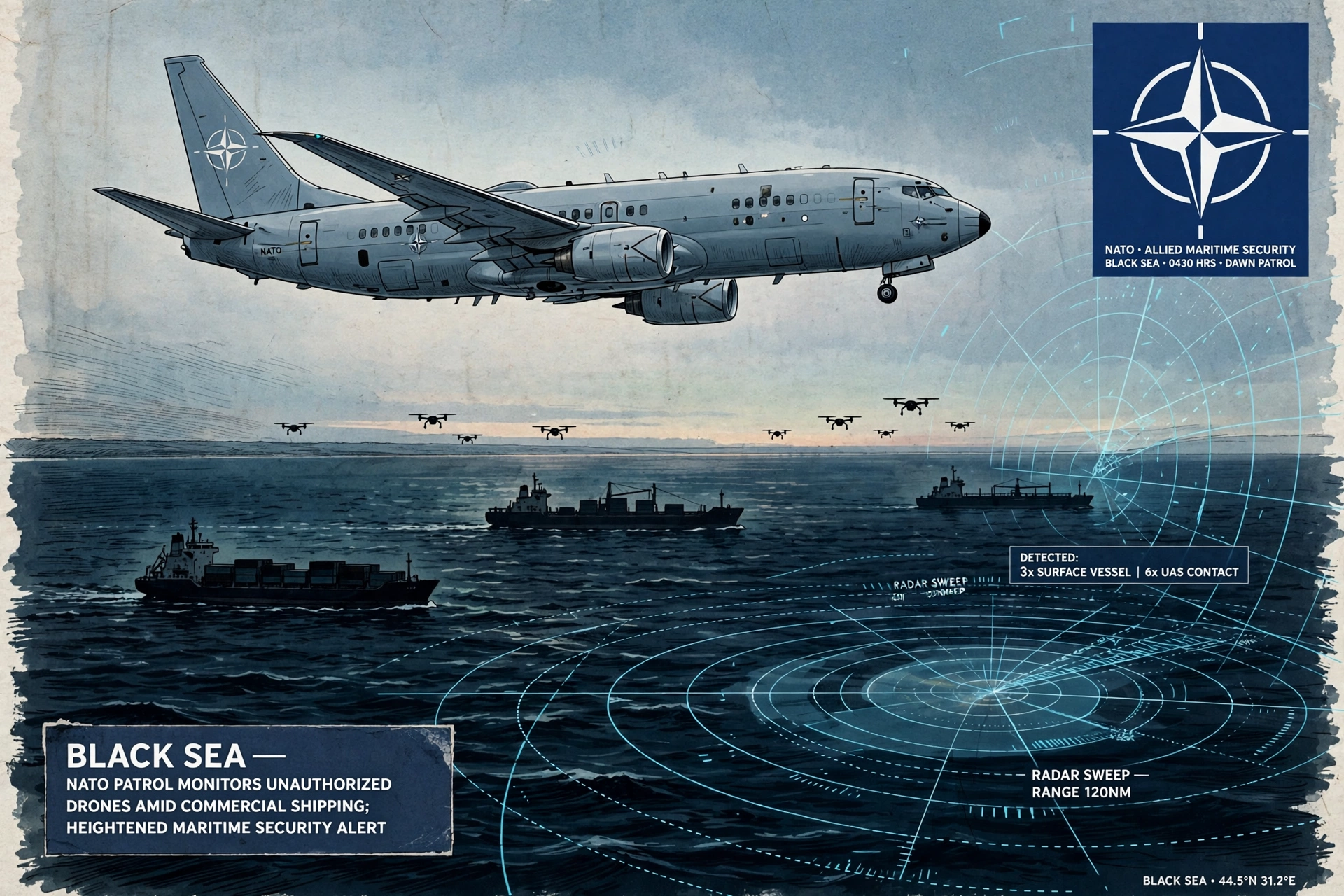
After at least nine commercial vessels were struck near Romania and Bulgaria this month — with more than 20 sailors dead or missing — the alliance is sending more patrol aircraft, drones and radar.
Published: October 22, 2026 · Updated: October 22, 2026 · 1 min read
The attacks
At least nine commercial vessels have been hit by drone strikes off the coasts of Romania and Bulgaria over the past month, according to Reuters reporting. On October 13, drones struck two vessels off Bulgaria's coast: the Malta-flagged, Ukrainian-owned Chelsea 3, hit by three drones near the town of Byala (all 15 crew were rescued, and investigators are examining recovered drone debris to establish the weapon used), and the Guinea-Bissau-flagged HS Dignity, which sank near Krapets with 11 crew missing. Two days later, two chemical tankers caught fire near Romania's coast — including the Comoros-flagged Yara J, struck inside Romanian territorial waters near the Sulina Canal, where the crew put the blaze out without outside help. Seven sailors were reported missing from the San Marino-flagged Wine Trader. Across the incidents, at least 23 sailors have been reported dead or missing.
The NATO response
After the alliance's North Atlantic Council met at its Brussels headquarters on Tuesday, NATO announced it would send additional maritime patrol aircraft, radar systems, drones, intelligence personnel and forensic explosives-analysis teams to the Black Sea, Reuters reported. A U.S. Navy P-8A Poseidon has already begun reconnaissance flights over the Black Sea from Bulgaria, Bulgarian Prime Minister Rumen Radev confirmed. Romanian President Nicușor Dan welcomed the additional support on Wednesday and said Romanian F-16s had shot down two suspected Russian drones over the country's territorial waters near Sulina on October 17. NATO has not formally attributed the attacks to any country; military analysts have said Russia is almost certainly responsible, but Moscow has not acknowledged any role.
The Canadian angle
The Danube and Black Sea routes carry Ukrainian grain to world markets — and attacks on them push war-risk insurance costs higher, with the bill eventually landing in food prices, including on Canadian shelves. Canada is a NATO member with skin in the alliance's eastern-flank posture, and Ottawa has a direct stake in whether shipping lanes near allied territory stay open.
What matters
What happened
NATO will send more patrol aircraft, drones, radars and intelligence teams to the Black Sea after deadly drone strikes on merchant shipping off Romania and Bulgaria.
Why it matters
At least nine vessels have been hit in a month and more than 20 sailors are dead or missing — the shipping war is reaching NATO's own doorstep.
What we know
NATO has not blamed anyone publicly; the emphasis is on surveillance and forensics, not escorting ships or firing back.
What we don’t
Who is ordering the strikes, and whether NATO would act on the forensic findings if they point at Moscow.
What’s next
Watch the forensic analysis of recovered drone debris — attribution hinges on it — and whether insurers price more Black Sea routes out of the market.
Sources
- Reuters via 96.3 Jack FM, "NATO to send planes and drones to Black Sea after attacks on shipping" (Oct. 20, 2026) · other
- Splash247, "NATO boosts Black Sea surveillance amid attacks on shipping" (Oct. 21, 2026) · other
- SAFETY4SEA, "NATO to boost Black Sea surveillance following deadly attacks" (Oct. 21, 2026) · other
- Bosphorus News, "NATO Expands Black Sea Surveillance After Ship Attacks" (Oct. 21, 2026) · other
ShippingUkraineRussiaNATOBlack Sea
Newsletter
News. Context. What matters.
One essential briefing, written for people who would rather understand the story than scroll it.
Unsubscribe anytime. We don’t sell addresses.
Recommended
World
Syria seals its only crossing with Jordan after airstrikes kill seven, Damascus says
Syria closed the Nassib crossing on Tuesday after Jordanian strikes on southern Syria — strikes Amman says were coordinated with Damascus, a claim Syria flatly denies.
World
Serbia's students just ended 14 years of Vučić's rule — at the ballot box
The student-led Student List won a projected parliamentary majority on Sunday, and Aleksandar Vučić conceded defeat, turning nearly two years of anti-corruption protests into a transfer of power.
World
Tehran talks held as regional powers push to avert a new Iran war — but no deal announced
Saudi, Pakistani and Turkish officials met Iran's security chief in Tehran on Monday, a day after Trump ruled out a Sunday strike; oil eased, but no breakthrough was announced and Houthi fire continued.