Opinions
Alberta to Ottawa: we're not leaving — but we're not staying like this either
The referendum buried separation 75–25. Then Alberta said yes to almost everything else on the ballot — and the two questions it rejected tell you exactly where the line is. Every capital in the country should be reading the fine print.
Published: October 22, 2026 · Updated: October 22, 2026 · 5 min read
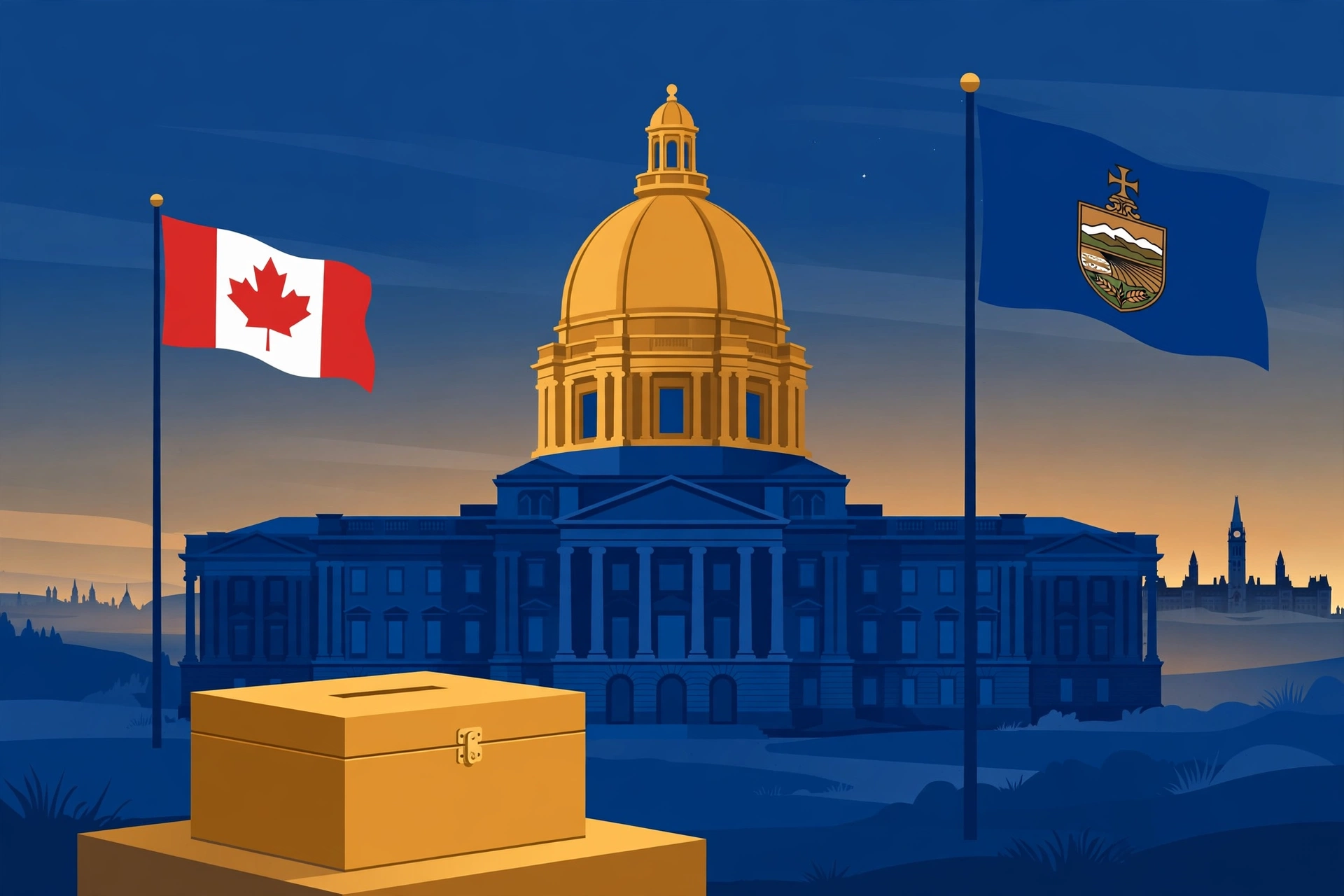
Start with the number that ends an argument. On Monday, 75.3 per cent of Alberta voters — 1,501,138 of them, on a turnout that shattered provincial records — chose to remain in Canada. Just 24.7 per cent voted even to begin the legal process toward separation. The referendum was non-binding, and every figure here is unofficial until Elections Alberta certifies the results on Oct. 29. Politically, none of that matters. A three-to-one verdict on record turnout is as final as a vote gets, and Premier Danielle Smith said the quiet part herself: no second referendum, “not as long as I’m premier.”
But if Ottawa reads Monday night as a simple win — crisis over, back to regular programming — it will be misreading the ballot. Because Alberta didn’t just answer the separation question. It answered nine others, and the pattern in those answers is the most detailed set of instructions any province has ever handed the federal government.
The mandate Ottawa shouldn't skip
Smith asked voters to back nine autonomy questions alongside the big one, urging a yes on all of them. She got seven.
The immigration and citizenship block swept. All five questions passed, and the strongest result of the night — 62.1 per cent — was for greater provincial control over immigration. That wasn’t a referendum-night surprise: polling firm Pollara had the immigration-control items at 58 to 65 per cent support before the vote was even called. Albertans also voted, 52.6 per cent, to work with willing provinces to abolish the unelected Senate.
This is not a protest vote. It is a negotiating list, itemized and ranked, delivered by roughly two million voters. Smith now carries it to Ottawa with something premiers rarely have: receipts.
Yes to the symbol, no to the machinery
Here is the part that complicates everyone’s script — including Smith’s.
The most assertive item on the ballot passed. Question 9, asking whether Alberta’s laws should take priority over conflicting federal laws, got a yes, narrowly, at 50.8 per cent. But the two questions that would have built the actual machinery of confrontation both failed. Question 6 — letting the province select its own King’s Bench and Appeal Court judges — lost 50.2 to 49.8, flipping to No in late counting in the tightest margin of the night. Question 8 — opting out of federal programs in areas like health and education, with full funding — failed 51.5 per cent.
Read together, Alberta endorsed the principle of provincial power and declined the two levers that would rewire the federation day to day. Yes to the flag; no to the fistfight. That distinction is not a contradiction — it is the most honest expression of where the province actually is: angry at Ottawa, attached to Canada, and unwilling to pay real-world costs for symbolic wins.
It also quietly changes the politics for Prime Minister Mark Carney. The most explosive items weren’t killed by a federal veto. They died at Alberta’s own ballot box. Ottawa can now negotiate the popular parts of the mandate — above all immigration control — without ever being cast as the government that crushed Alberta’s democratic verdict. Alberta voters did that work for him.
Smith's real fight is inside her own party
The referendum was supposed to settle the separatist question. Inside the United Conservative Party, it may have only relocated it.
Pollster Abacus Data found, on the eve of the vote, that 52 per cent of UCP supporters voted in favour of starting the separation process — and that 77 per cent of all pro-process voters were UCP supporters. The movement lost the province decisively, but it is concentrated inside the premier’s own tent. Jeffrey Rath, co-founder of the Alberta Prosperity Project, told Global News this week he will push for a special general meeting to remove Smith, calling her an “avowed federalist” and claiming — his figure, unverified — “hundreds of thousands” of members and volunteers behind the effort.
Smith’s defence is the Q1–9 mandate itself. She can tell her party: I didn’t surrender, I got seven of nine, and I am taking them to Ottawa. But that shield only holds if she brings something home. Which makes the next UCP annual general meeting, next month in Calgary, a waypoint worth watching — and makes Ottawa, oddly, a stakeholder in Danielle Smith’s political survival.
Carney's clock
Carney’s Tuesday-night line was gracious: he was “thrilled that Albertans have chosen unity,” and “now is the time to work together.” The question is whether “work together” comes with deliverables.
Because the Angus Reid Institute’s numbers describe the cost of doing nothing. Sixty-two per cent of Albertans agree the separatist movement will never end. Among those who voted yes on Monday, 64 per cent would support or consider an independence party in the 2027 provincial election. A movement that loses 75–25 and still has a two-thirds openness to a separatist party among its voters is not a movement that has been defeated. It is a movement waiting for a grievance — and every year Ottawa pockets the unity verdict without answering the itemized mandate underneath it, the grievance writes itself.
The immigration file is the obvious place to start: it was the strongest mandate on the ballot, it polled near two-thirds before the campaign, and it is the one file where every province — not just Alberta — has labour-market skin in the game.
Why the rest of Canada should care
Two reasons, and neither is about Alberta.
First, the template travels. A premier can now put separation on the ballot on terms designed to lose it, bank a three-to-one unity verdict, and attach a multi-question autonomy mandate that no federal government can easily wave away. Every premier with a grievance against Ottawa — and there is never a shortage — has now seen the playbook run at record turnout. Watch Saskatchewan. Watch Quebec, which has never needed Alberta’s permission to think about sovereignty but pays close attention to what works.
Second, Question 9 is a sleeper. A province voted — narrowly, non-binding, but voted — to put its own laws above federal law when the two conflict. That sentence now exists in Canadian politics with two million ballots behind the referendum that produced it. Other governments will quote it. Courts and constitutional lawyers will argue about it. It will not stay in Alberta.
The bottom line
Alberta did not vote to leave. It did not vote to settle, either. It voted to renegotiate — loudly, specifically, and in writing. Separation is buried for a generation; the argument that produced it is now the federal government’s homework, with the questions numbered and the answers marked.
Ottawa’s move.
What matters
What happened
Alberta voted 75.3 per cent to remain in Canada in a non-binding referendum, and said yes to seven of nine provincial-autonomy questions.
Why it matters
Separation is dead as a ballot question, but the vote hands Alberta an itemized negotiating mandate — and every other province a reusable playbook.
What we know
The two failed questions — provincial selection of judges and opting out of federal programs — mark the limit of voters' appetite: autonomy yes, constitutional confrontation no.
What we don’t
Whether Ottawa will deal on immigration control, and whether Danielle Smith can hold off her own party's separatist wing at next month's UCP AGM.
What’s next
Smith takes the mandate to Ottawa; separatist organizers push a special UCP meeting; Elections Alberta certifies the official results on Oct. 29.
Sources
- Elections Alberta — unofficial referendum results (certification Oct. 29) · other
- Poliwave — live results tracker, full-ridings read · other
- Global News — Jeffrey Rath interview, Oct. 20 · other
- Abacus Data — eve-of-vote polling · other
- Angus Reid Institute — post-vote polling · other
- Pollara — pre-vote polling on the autonomy questions · other
OttawaMark CarneyDanielle SmithAlbertareferendumUCPseparatism
Newsletter
News. Context. What matters.
One essential briefing, written for people who would rather understand the story than scroll it.
Unsubscribe anytime. We don’t sell addresses.
Recommended
Opinions
Mark Zuckerberg's Class C trick is pure genius. That's the problem.
He needed billions in cash for a tax bill, hundreds of billions for AI, and a guarantee he'd never lose control of Meta. He solved all three by inventing a share that can be sold but never voted — and the only person who could have stopped the deal was him.
Opinions
Tax-saving accounts for employed Canadians: what the 2026 rules allow
If you draw a paycheque, most of your tax is withheld before you ever see it. That makes it easy to forget that the federal system gives employees several legal ways to shelter savings or reduce taxable income.
Opinions
Alberta's referendum is a family argument, and Washington shouldn't get a seat at the table
Alberta's grievances are real, but foreign governments and political operatives have no business funding, coordinating or campaigning in its vote.