Money
Canada’s average asking rent slips to $2,034 as annual declines stretch to two full years, Rentals.ca and Urbanation say
September’s asking rent was down 4.2 per cent from a year earlier and 9.2 per cent below the May 2024 peak. Condo rents fell hardest, while Urbanation says Toronto and Vancouver are showing signs of stabilizing.
Published: October 8, 2026 · Updated: October 8, 2026 · 3 min read
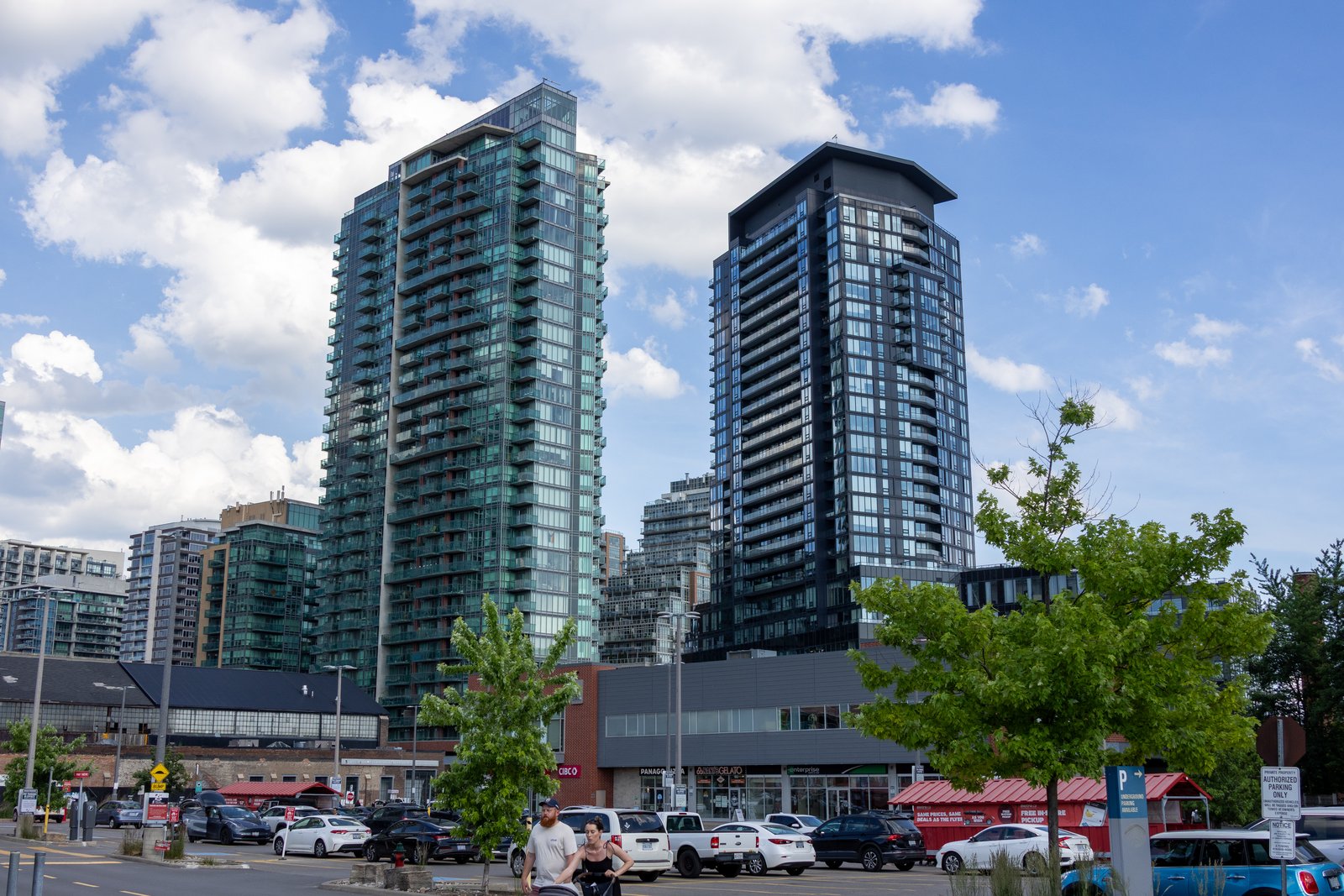
The average asking rent for all residential properties in Canada was $2,034 in September, down 4.2 per cent from a year earlier, according to the latest National Rent Report from Rentals.ca and Urbanation, released Wednesday. It was the 24th consecutive month of annual rent decreases, marking two full years of annual declines. The figures are based on asking rents in listings for single-detached and semi-detached homes, townhouses, condominium apartments, rental apartments and basement apartments; outlier listings and single-room rentals are excluded.
On a monthly basis, rents edged down from $2,035 in August, the second straight monthly decrease after four straight monthly increases from April to July, in line with the typical seasonal slowdown heading into the fall, the report said. Over the past two years, asking rents have fallen 7.3 per cent to their lowest September level since 2022, and they are now 9.2 per cent below the peak of $2,202 reached in May 2024.
“Two straight years of falling rents is the longest downturn the Canadian rental market has seen in recent history. Our research shows supply has been the main driver of this correction, and in key markets like Toronto and Vancouver, new supply is moving past its peak,” Urbanation president Shaun Hildebrand said. “Rents in both cities have trended higher over the past six months, and annual declines have narrowed significantly as renters come off the sidelines. Where Toronto and Vancouver go, the rest of the country follows.”
Purpose-built rentals remained the most resilient segment, with asking rents down 2.7 per cent year over year to $2,036, while three-bedroom purpose-built units slipped just 1.4 per cent to $2,715. Condo rents posted the steepest annual decline among property types, down 7.8 per cent to $2,052, led by a 9.6 per cent drop in studio condo rents. Houses, townhomes and other secondary-market units fell 7.4 per cent to $2,016.
For apartments and condos, annual declines were led by Ontario (3.7 per cent), Manitoba (3.4 per cent) and Alberta (3.4 per cent), followed by British Columbia (2.3 per cent) and Quebec (1.3 per cent). Nova Scotia (up 1.2 per cent) and Saskatchewan (up 0.4 per cent) were the only provinces with annual increases in that segment. British Columbia, at $2,373, reclaimed the title of most expensive province for apartment and condo rents from Nova Scotia ($2,321), which had held it from May to August. Across all property types, CBC News reported, rents were down 4.8 per cent year over year in Ontario, 2.9 per cent in B.C., 2.6 per cent in Alberta and 1.7 per cent in Quebec, while Nova Scotia and Saskatchewan each rose 1.4 per cent.
Among the six largest markets, rents rose month over month in Vancouver (up 1.4 per cent to $2,741), Montreal (up 0.2 per cent to $1,959) and Edmonton (up 0.2 per cent to $1,522). Toronto fell for a second straight month (down 0.6 per cent to $2,554), and Ottawa ($2,164) and Calgary ($1,823) also dipped. Year over year, Montreal had the smallest decline at 1.1 per cent, followed by Ottawa, Vancouver and Toronto, while Calgary (3.9 per cent) and Edmonton (3.2 per cent) posted the largest. Vancouver has now logged 34 straight months of annual declines and Toronto 32, with asking rents in both cities at their lowest September level since 2021.
The report pointed to several factors supporting an “upcoming return to positive rent growth” in Toronto and Vancouver: construction inventory has peaked, data revisions show modest population increases, and both cities are relatively less exposed to tariffs in their labour markets, the Globe and Mail reported. “In the near term, more affordable rents and move-in incentives are releasing pent-up demand from delayed household formation, as higher rents in previous years led to prospective renters living with parents or roommates for longer,” the report said. It also cited Statistics Canada figures showing average weekly earnings have risen 19.4 per cent over the past five years, signalling a general improvement in rental affordability.
Outside the six largest cities, North Vancouver ($2,983) remained the country’s most expensive rental market, followed by Richmond, Burnaby, North York and Coquitlam. The most affordable markets were concentrated in Alberta, led by Fort McMurray ($1,258), Medicine Hat ($1,339) and Lloydminster ($1,379). Barrie posted the largest annual increase, 17.4 per cent, which the report linked mostly to a single large new-build project leasing up higher-priced units, while Côte Saint-Luc (down 13.6 per cent), Longueuil, Scarborough, Kingston and Oakville saw the steepest declines.
This article is general information and is not investment advice.
Sources: Rentals.ca and Urbanation: National Rent Report news release (Oct. 7, 2026); CBC News (Oct. 7, 2026); The Globe and Mail / The Canadian Press (Oct. 7, 2026).
Sources
- Rentals.ca and Urbanation · company
- CBC News · news
- The Globe and Mail / The Canadian Press · news
Newsletter
News. Context. What matters.
One essential briefing, written for people who would rather understand the story than scroll it.
Unsubscribe anytime. We don’t sell addresses.
Recommended

Money
BMO and Scotiabank lift fixed mortgage rates as bond yields climb, adding to renewal pressure on pandemic-era borrowers
BMO’s standard five-year fixed rate rose to 5.14 per cent on Wednesday, days after RBC’s increases. All of the Big Six banks have now raised some fixed rates since early September, and the C.D. Howe Institute says 2020-21 borrowers are renewing in a vastly different environment.
Money
Housing Tradeoffs That Actually Move the Needle (Canada, October 2026)
Re/Max finds two in three Canadians would compromise to afford a home while affordability relief fades. Here is a SeriousPick matrix for which tradeoffs are strategy — and which are self-sabotage.
Money
How People Actually Earn Money With AI in 2026 (Without Becoming a Guru)
Nearly half of AI users say they have earned money with AI. Most “AI income” content is a funnel. Here are paths that survive SeriousPick skepticism.