Canada
Workers rallied at MPs' offices in 21 communities to defend the right to strike
During constituency week, union members took their fight against Bill C-39 to the doorsteps of Mark Carney and cabinet ministers — warning the bill will make labour disputes harder, not easier, to resolve.
Published: October 17, 2026 · Updated: October 17, 2026 · 2 min read
The National Day of Action
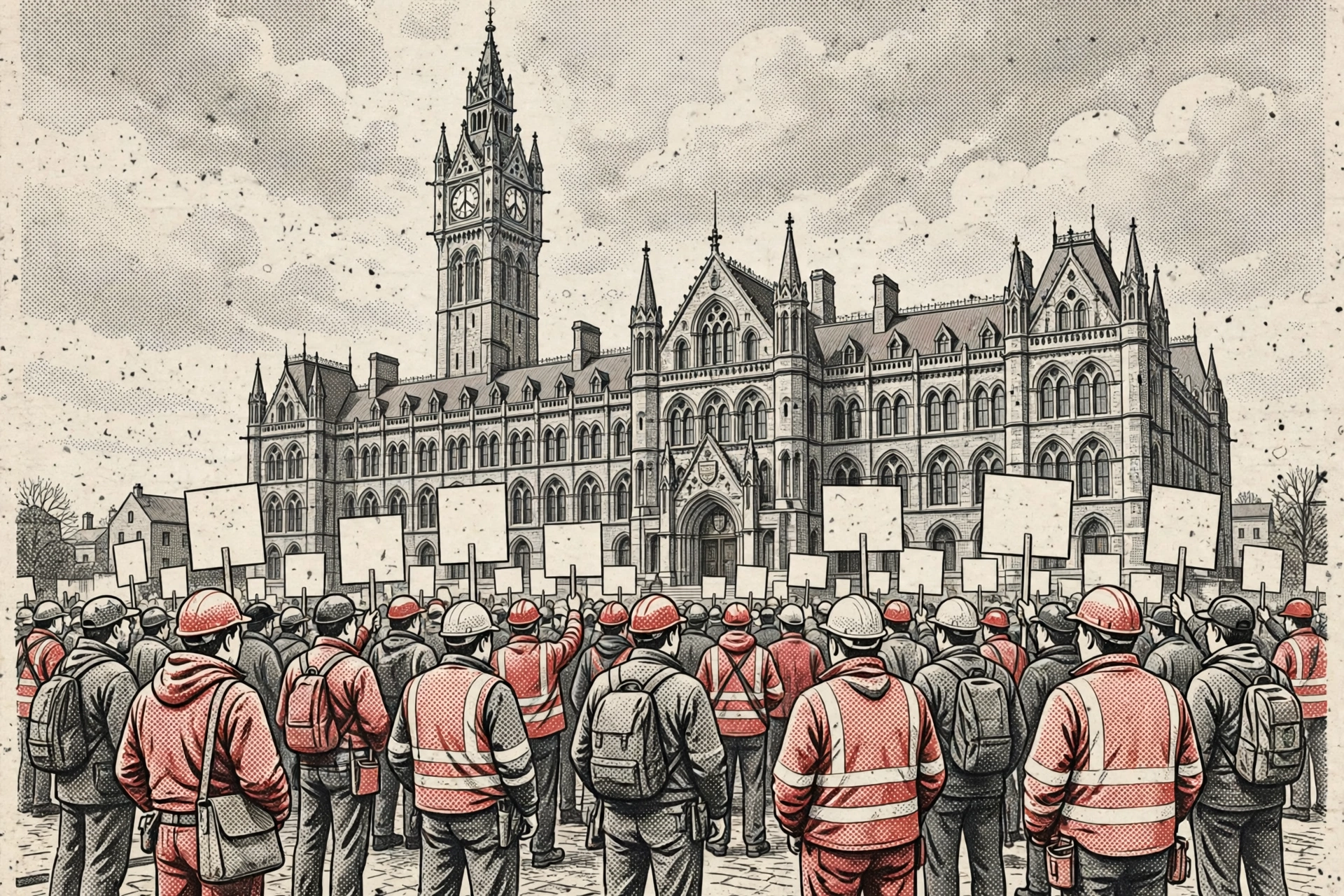
Workers in 21 communities across Canada rallied outside MPs' constituency offices on Friday, Oct. 16, as part of a National Day of Action organized by the Canadian Labour Congress against Bill C-39, according to the labour federation. The demonstrations, timed for the week MPs spend in their home ridings, took place outside the offices of Prime Minister Mark Carney and several federal cabinet ministers.
"These changes will increase labour unrest across Canada," said Bea Bruske, president of the Canadian Labour Congress. "The government cannot credibly claim to be protecting labour stability while introducing legislation that will make disputes harder to resolve and more disruptive." The federation said some of Canada's largest unions have already pledged to defy the proposed restrictions if they become law.
Nearly 95 percent of federally regulated labour disputes are resolved without a work stoppage, the CLC said, warning that giving employers reason to expect government intervention will encourage them to hold out at the bargaining table.
What Bill C-39 would do
The legislation, formally the Building Canada Strong Act and known in Parliament as Bill C-39, was tabled by Carney's government on Sept. 21. It passed second reading in the House of Commons on Oct. 8 by a vote of 296 to 26, with the Conservatives joining the governing Liberals, according to The Canadian Press, and now sits with a special committee.
Its labour provisions would write the federal labour minister's Section 107 intervention powers into the Canada Labour Code in explicit terms, replacing years of ad hoc executive orders with a formal process, according to an analysis by Canadian HR Reporter. Under the bill, the minister could appoint a special mediator up to 75 days into conciliation, with 21 days to help the parties settle. Once a legal strike or lockout began, the minister could direct the Canada Industrial Relations Board to order a return to work, extend the collective agreement, or impose binding arbitration — but only after considering the mediator's report and concluding the national interest is affected.
Ottawa has used Section 107 about ten times since 2023 to end disputes or send them to arbitration at Canada Post, CN and CPKC railways, and the ports of British Columbia and Montreal, The Canadian Press reported. Several of those interventions are now being challenged in court as violations of constitutional freedom of association.
What comes next
The bill is now before a special House committee, where the labour provisions will face line-by-line scrutiny — and organized labour has signalled it will fight them there and beyond. The CLC says weeks of grassroots mobilization, a national advertising campaign, direct lobbying of MPs, and international condemnation have preceded Friday's rallies, and it is calling on the government to strip the strike restrictions from the bill entirely.
For Carney's government, the fight is a test of its balancing act: Bill C-39 is sold as a certainty tool for investors and nation-building projects, but the labour movement sees the strike provisions as the price workers are being asked to pay.
What matters
What happened
Union members rallied outside MPs' offices in 21 communities on Oct. 16 in a Canadian Labour Congress National Day of Action against Bill C-39's proposed limits on the right to strike.
Why it matters
The bill would formalize the labour minister's power to end legal strikes judged against the national interest — a major shift in Canadian labour law backed by a 296-to-26 Commons vote.
What we know
The provisions would apply only after a special mediator's report and a national-interest finding; some of Canada's largest unions say they will defy the restrictions if they become law; earlier Section 107 interventions are already being challenged in court.
What we don’t
Whether the committee will amend or strip the strike provisions, and how far union defiance would go if the law passes.
What’s next
The bill sits with a special committee for detailed study; the labour provisions are expected to be the most contested section.
Sources
- Canadian Labour Congress, via CNW/Newswire — Workers rally at MPs' offices across Canada to defend right to strike · other
- Canadian Labour Congress — Workers rally at MPs' offices across Canada to defend right to strike · other
- Canadian HR Reporter — Bill C-39 clears second reading, putting federal strike rules under review · other
Mark CarneyBill C-39right to strikeCanadian Labour Congresslabourunions
Newsletter
News. Context. What matters.
One essential briefing, written for people who would rather understand the story than scroll it.
Unsubscribe anytime. We don’t sell addresses.
Recommended

Canada
Ottawa tables bill to let Canadians request assisted dying in advance — and drops the mental-illness expansion
Bill C-41 would let adults diagnosed with an incurable illness that will take away their decision-making capacity consent to medical assistance in dying in advance, while the government says it will not proceed with eligibility based solely on mental illness.
Canada
Trump says a Canada tariff deal is coming 'pretty soon' — but offers no terms
At a Michigan border rally Sunday, the U.S. president predicted the trade dispute would be settled soon while repeating his claim Canada has been "ripping off" the U.S. — and Ottawa did not immediately respond.
Canada
B.C. Conservatives win majority government — and David Eby is stepping down as NDP leader
CTV News declared a Conservative majority Saturday night as interim leader Lorne Doerkson's party surged to a commanding lead, ending nine years of NDP government and giving B.C. its first Conservative government in nearly a century.