Canada
Carney’s pipeline push revives the oilsands’ untreated wastewater problem as Alberta races Ottawa on treat-and-release rules
Tailings ponds have grown about 50 per cent since 2014 with no federal authorization to release treated water; Alberta plans quality standards by year-end while Indigenous leaders warn against rushing into the Athabasca River.
Published: October 13, 2026 · Updated: October 13, 2026 · 3 min read
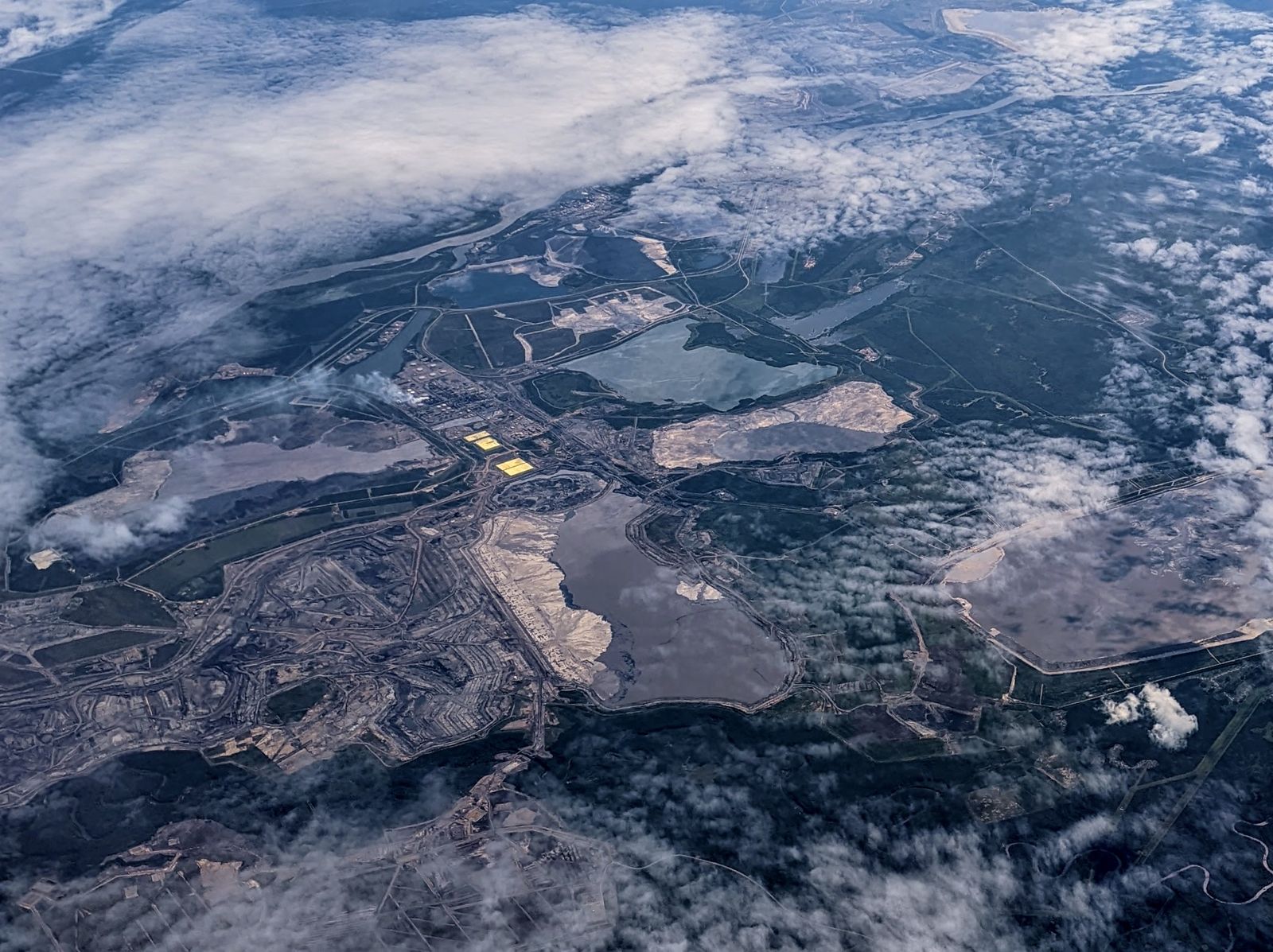
Prime Minister Mark Carney’s decision to fast-track a new oil export pipeline to the West Coast is putting fresh pressure on Ottawa to decide what to do with decades of oilsands mining wastewater stored in northern Alberta’s tailings ponds, CBC News reported on Oct. 13. Oil output in the region is set to grow, and the Alberta government wants to double crude production, even as operators remain barred from releasing any process-affected water into fish-bearing waters.
Ever since the first oilsands mine opened about 60 years ago, the industry has been banned from releasing that water. The result is a network of ponds CBC News likened to 600,000 Olympic-sized swimming pools, or the Island of Montreal under three metres of water. The Alberta Energy Regulator says the volume of tailings fluid grew about 50 per cent between 2014 and 2024. Air cannons and scarecrows ring the ponds to keep birds off the toxic surface.
Environment and Climate Change Canada says oilsands process-affected water can contain metals, salts, naphthenic acids, petroleum hydrocarbons and polycyclic aromatic hydrocarbons. Under the Fisheries Act, depositing deleterious substances into fish-bearing waters is prohibited unless a federal regulation authorizes it. No such regulation exists for oilsands mines today, so there is currently no federal authorization to release treated effluent.
Alberta Environment Minister Grant Hunter told CBC News in Fort McMurray that ponds are at capacity and that more storage lakes are not the answer. “The solution isn’t just to keep doing nothing and put our head in the sand. The solution is to actually prove out the science,” he said. “We cannot say to industry, ‘we want you to double production,’ and then not give them the tools to be able to do proper treat-and-release.” The province plans to publish proposed water-quality standards by the end of the year; Ottawa would still have to adopt, amend or reject them because the waterways are under federal jurisdiction.
Industry executives say treatment technology is ready and that reclaiming the landscape depends on emptying the ponds. “Treating and release is really critical to enabling the large-scale reclamation of these facilities,” Suncor Energy vice-president Claire Greenwood said at a Fort McMurray energy conference, according to CBC News. Imperial Oil sustainability manager Jessica Dillabough said combining treatment technology with monitoring should give confidence that releases can be environmentally protective. If treat-and-release is approved, treated water would be pumped into the Athabasca River, which flows north past Indigenous communities toward the Northwest Territories and the Arctic Ocean.
Support is not unanimous on the river. Lenny Hansen, a Fort McMurray Métis District 17 member and retired oilsands worker who runs river tours, told CBC News he thinks treat-and-release is “a great idea.” Mikisew Cree First Nation Chief Melody Lepine said protesters met a Suncor visit to Fort Chipewyan last month and that her nation would consider legal action if treat-and-release threatened the community. “It is a situation of environmental racism. We often say if the rivers flew in the opposite direction to non-Indigenous communities, would things be like this?” she said.
Ron Quintal, chief executive of Indigenous-led Tũ Nipi Water Solutions, which recently received conditional approval for a $4.6-million provincial research grant, said his community cannot support treat-and-release and wants treat-and-reuse options instead. The federal environment minister declined CBC interview requests and a spokesperson gave no decision timeline. Natural Resources Minister Tim Hodgson said in Alberta last month that regulations would be ready by the end of 2027, then a spokesperson told CBC News he had misspoken and that there is no timeline.
Sources: CBC News via Yahoo News Canada (Oct. 13, 2026); CBC News (Oct. 13, 2026); Environment and Climate Change Canada, oil sands mining effluent.
Sources
- CBC News via Yahoo News Canada · news
- Environment and Climate Change Canada · government
- CBC News · news
Newsletter
News. Context. What matters.
One essential briefing, written for people who would rather understand the story than scroll it.
Unsubscribe anytime. We don’t sell addresses.
Recommended

Canada
Ottawa tables bill to let Canadians request assisted dying in advance — and drops the mental-illness expansion
Bill C-41 would let adults diagnosed with an incurable illness that will take away their decision-making capacity consent to medical assistance in dying in advance, while the government says it will not proceed with eligibility based solely on mental illness.
Canada
Trump says a Canada tariff deal is coming 'pretty soon' — but offers no terms
At a Michigan border rally Sunday, the U.S. president predicted the trade dispute would be settled soon while repeating his claim Canada has been "ripping off" the U.S. — and Ottawa did not immediately respond.
Canada
B.C. Conservatives win majority government — and David Eby is stepping down as NDP leader
CTV News declared a Conservative majority Saturday night as interim leader Lorne Doerkson's party surged to a commanding lead, ending nine years of NDP government and giving B.C. its first Conservative government in nearly a century.