Business
Pacific Link national-interest listing puts oilsands producers on the hook for billions in growth
Ottawa’s first Building Canada Act designation fast-tracks a million-barrel-a-day Alberta-to-B.C. line — and raises the bill for filling it alongside other expansions.
Published: October 4, 2026 · 2 min read
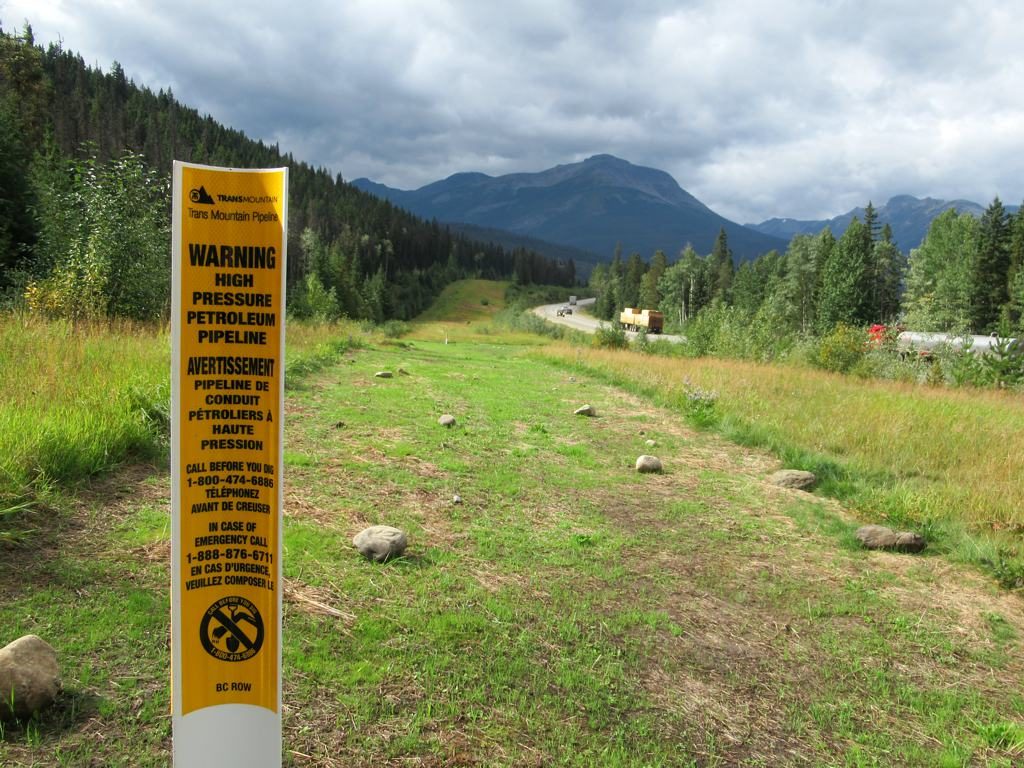
Canada’s oilsands producers are being pushed from a decade of carefully paced growth toward a harder commercial choice: spend billions to raise output if Ottawa and Alberta’s newly designated Pacific Link pipeline is built — or watch rival conduits compete for the same barrels.
Prime Minister Mark Carney announced in Fort McMurray that the West Coast oil pipeline, now officially named Pacific Link, is the first project listed as being in the national interest under Schedule 1 of the Building Canada Act. The designation shifts the federal question from whether the line should proceed to how it will be approved, consolidating reviews through the Major Projects Office with a target of finalising conditions by Sept. 1, 2027 and aiming for service around 2032–33. Officials say the roughly 1,200-kilometre route from Bruderheim, Alta., to a southern B.C. terminal near Delta would move about one million barrels a day, with Canada and Alberta each owning 45 per cent during development, Pembina Pipeline holding 10 per cent through construction, and Indigenous communities offered at least a 10 per cent ownership stake financed through loan-guarantee programs, according to the Prime Minister’s Office and CBC News.
The commercial catch, detailed by the Globe and Mail, is that Pacific Link arrives alongside other proposed capacity additions — including South Bow’s Prairie Connector and expansions on Trans Mountain and Enbridge’s Mainline — that together could add roughly 940,000 barrels a day even before Pacific Link. Filling all of those pipes could require nearly two million extra barrels a day of Alberta supply. Companies such as Suncor Energy, Canadian Natural Resources and Cenovus have spent recent high-price years cutting debt and buying back shares while favouring brownfield debottlenecking over greenfield megaprojects. TD Cowen analyst Menno Hulshof said investors would likely welcome 3 to 5 per cent annual production growth, not a return to the overheated build-out of the mid-2000s.
Ottawa and Alberta plan to unveil production-focused incentives on Nov. 15 under a July memorandum with the five largest oilsands firms that also advances the Pathways carbon-capture project. Carney has tied the permanent “productivity mega deduction” immediate-expensing rules to the investment case. Natural Resources Minister Tim Hodgson said Asian and European buyers have signalled appetite for more West Coast crude, though Pacific Link’s spring open season will be the first hard test of shipper commitments. Queen’s University’s Institute of Sustainable Finance research notes energy stocks already jumped after earlier Pacific Link agreements, while University of Calgary professor Yrjo Koskinen argued a final investment decision might sensibly wait until late 2028 or early 2029 given long-term demand uncertainty.
Business groups including the Canadian Chamber of Commerce welcomed upfront regulatory backing; environmental organisations such as Greenpeace and the Pembina Institute warned new oilsands and pipeline capacity would raise absolute emissions even if intensity falls. NDP Leader Avi Lewis accused Liberals of sweeping aside protections; Conservative Leader Pierre Poilievre said Canada needs “a pipeline in the ground, not just on a list.”
Sources: CBC News; The Globe and Mail; Prime Minister of Canada; CBC Edmonton.
Sources
- CBC News · other
- The Globe and Mail · other
- Prime Minister of Canada · other
- CBC Edmonton · other
Newsletter
News. Context. What matters.
One essential briefing, written for people who would rather understand the story than scroll it.
Unsubscribe anytime. We don’t sell addresses.
Recommended
Business
Quebecor just made a $31-billion bid for Telus — and Telus is pushing back
The owner of Freedom Mobile and Videotron went public Monday with an unsolicited cash-and-stock offer worth $19.45 a share, a 60% premium. Telus says the price is too low, the governance is a problem, and regulators may never approve it.
Business
Jensen Huang is out at Nvidia — Colette Kress takes over as interim CEO
Nvidia's board announced Thursday that Huang resigned as president, chief executive and director, effective immediately, days after reports it was preparing to remove him. Shares plunged as much as 13 per cent before closing down about 4.3 per cent, and the chipmaker's value has fallen roughly $1.6 trillion since early October.
Business
U.S. added 165,000 jobs in October — and now a December rate hike looks likely
Payrolls blew past forecasts of 65,000 and unemployment fell to 4.1 per cent. Traders now price a roughly 80 per cent chance the Fed hikes in December — a move that would ripple through Canadian mortgage rates and the loonie.